

 Phoenix 24
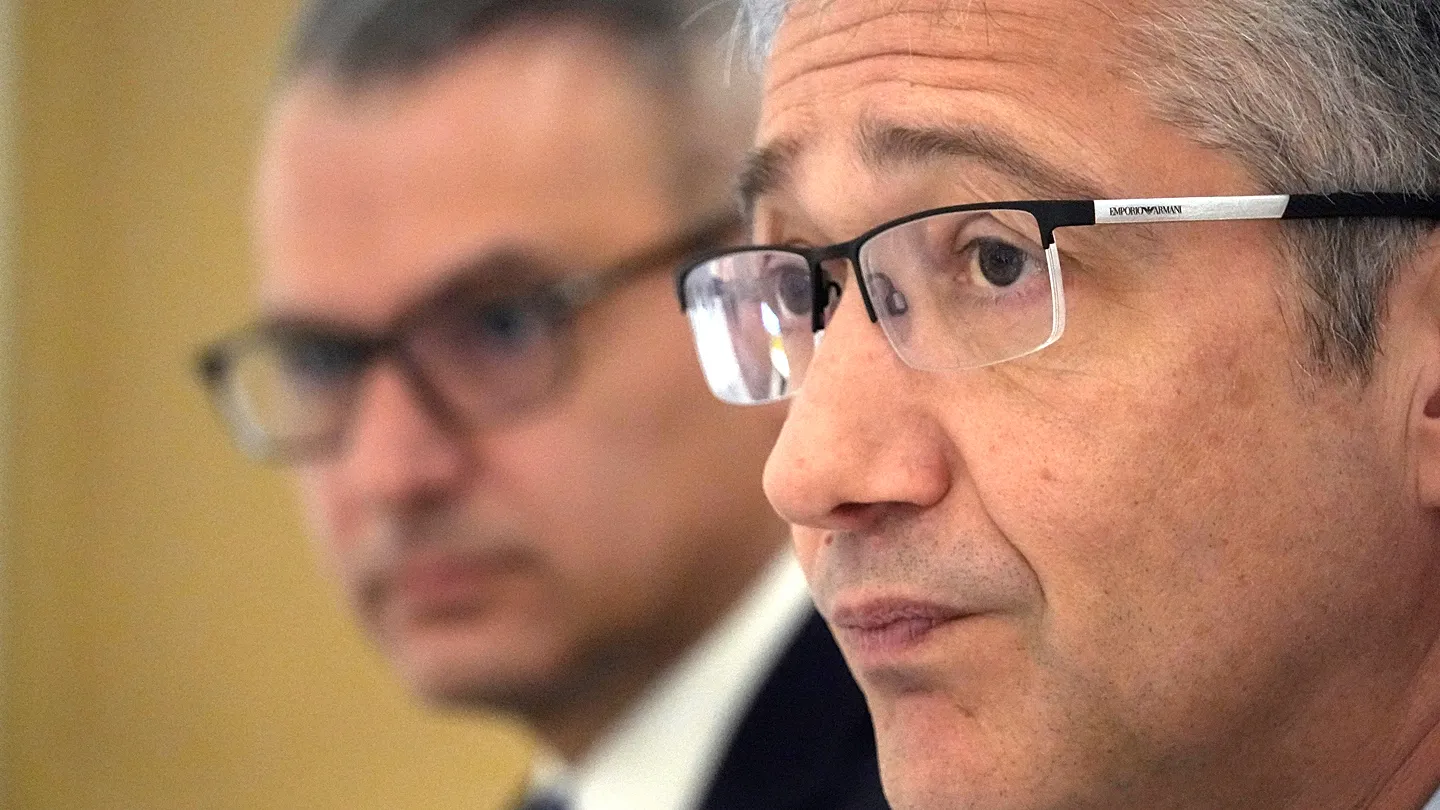
Europe’s monetary leadership enters a decisive political transition.
DUBLIN, Ireland. France and Germany are moving closer to an agreement that could make Spanish economist Pablo Hernández de Cos the next president of the European Central Bank (ECB), replacing Christine Lagarde. The negotiations, discussed during an informal European Union summit on November 13, form part of a broader arrangement to redistribute three influential positions within the institution’s Executive Board.
Hernández de Cos, a former governor of the Bank of Spain and current general manager of the Bank for International Settlements (BIS), is competing against Klaas Knot, the former governor of the Dutch central bank. Both candidates have been formally presented to the Eurogroup, although no final appointment has been announced.
German Chancellor Friedrich Merz acknowledged that discussions with French President Emmanuel Macron had advanced considerably but emphasized that an agreement remained pending. Berlin must still consult its governing coalition before presenting a definitive position.
Under the emerging arrangement, Spain would secure the ECB presidency, Germany would obtain the chief economist position currently held by Philip Lane, and France would assume responsibility for market operations, a portfolio currently overseen by Isabel Schnabel.
German economist Markus Brunnermeier, a Princeton University professor, has emerged as a potential candidate for the chief economist position. The proposed distribution would give Europe’s largest economies substantial representation in the institution’s leadership.
France reportedly favors Hernández de Cos partly because of his comparatively moderate approach to monetary policy. His experience managing financial stability and building institutional consensus has also attracted support from Spanish officials, including Economy Minister Carlos Cuerpo.
The succession process is advancing rapidly. European Council President António Costa has established November 18 as the deadline for nominations to the remaining Executive Board vacancies, with consultations involving the European Parliament and the ECB’s Governing Council expected to begin around November 26.
If appointed, Hernández de Cos would become the first Spaniard to lead the ECB. His departure from the BIS, which he has headed since July 2025, would also create another significant leadership vacancy within international central banking.
The negotiations carry implications beyond institutional representation. The ECB determines monetary policy for the eurozone, influencing inflation, borrowing costs, financial markets and economic growth across its member states.
Although national governments negotiate appointments, the central bank’s monetary decisions must remain independent of political direction.
For Europe, the outcome will test whether political consensus can deliver a leadership transition that preserves institutional independence while addressing the eurozone’s evolving economic challenges.
Behind Every Decision, a Larger Consequence.