

 Phoenix 24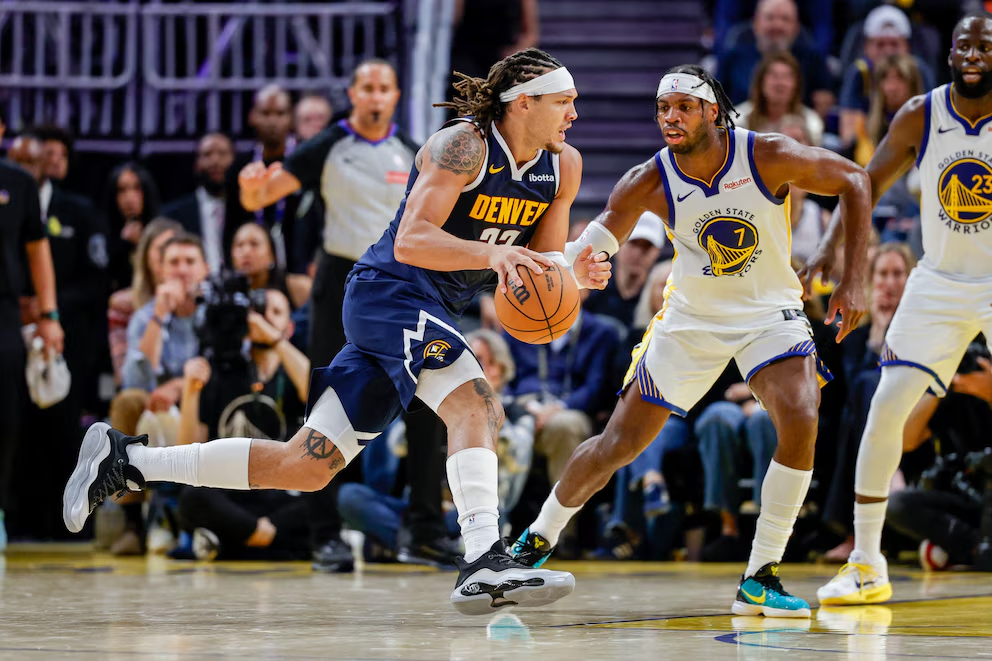
A flawless 50-point performance ended in defeat, proving once more that in the NBA even brilliance has its limits.
San Francisco, October 2025
It was supposed to be the night of a new generation, but Stephen Curry reminded everyone that experience still rewrites the script. The Golden State Warriors edged the Oklahoma City Thunder in a match that oscillated between spectacle and survival, leaving behind one of the most memorable duels of the young season.
From the first quarter, the game carried the rhythm of a playoff clash. The Thunder’s rising star—relentless, fearless, and in perfect shooting form—built momentum through three quarters that seemed destined to end with an upset. Every possession became a statement: he drove past double teams, absorbed contact, and still found a way to score. The arena, however, remained split, torn between admiration for youth and loyalty to the dynasty that has shaped a decade of basketball.
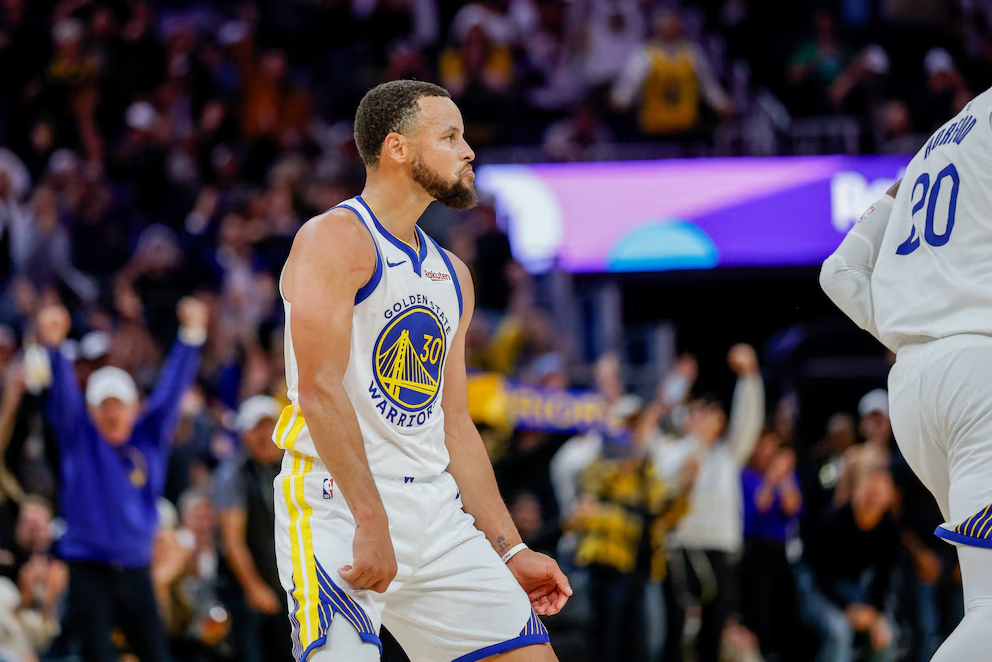
Curry began quietly, reading the floor as he always does, pacing the tempo with calculated patience. Then came the familiar surge: a step-back three from the logo, a sudden drive between defenders, a floating layup kissed off the glass. Each movement chipped away at the Thunder’s confidence. When the fourth quarter arrived, the scoreboard and the story were both tied—an open invitation for drama.
With just over a minute left, Oklahoma City led by two. Then Curry found a rhythm that belongs to no system and no coach. Three consecutive three-pointers silenced doubt and erupted the Chase Center crowd. The Warriors closed the game with defensive discipline, forcing turnovers and denying passing lanes. The final buzzer captured the contrast: a losing scorer with fifty points and a winning team led by a man who has made defying probability routine.
In the post-game press room, the tone was respectful but reflective. The Thunder’s coach called the duel “a learning curve disguised as heartbreak.” He admitted that his young roster had executed its plan almost perfectly but failed to close against the best closer in the modern game. Across the hallway, Steve Kerr emphasized collective effort, praising not only Curry but also the second unit that contained Oklahoma City’s energy when it mattered most.
Reporters asked Curry if he had sensed the weight of the moment. He smiled and replied that games like this “remind you why details matter—spacing, timing, trust.” The statement spread instantly through sports networks, reinforcing his image as both leader and philosopher of precision basketball.
The league’s analysts highlighted that the game represents a symbolic passing of eras. The Thunder’s young scorer—still in his early twenties—embodies the league’s transition to faster, positionless play. Meanwhile, Curry’s sustained dominance at thirty-seven continues to challenge the limits of age and adaptation. Commentators from ESPN and international broadcasters agreed that this duel might foreshadow a new Western rivalry capable of shaping the next playoff narrative.
Statistically, the night was extraordinary. The Thunder shot nearly 55 percent from the field, hit twenty-three triples, and still lost. Golden State’s bench contributed thirty-two points, compensating for the defensive gaps left by early foul trouble. The Warriors improved their record to 5–2, securing their place among the top four teams in the Western Conference after a week filled with controversy over officiating and scheduling.
Off the court, the game reverberated across social media. Clips of Curry’s final sequence reached millions of views within hours. Hashtags celebrating both performances trended simultaneously, a rare moment where fandom unified under pure admiration for excellence. Even rival players commented online, acknowledging the magnitude of what they had just witnessed.
In the locker rooms, the emotions were opposite yet intertwined. The Thunder’s scorer sat quietly, surrounded by cameras that sought to capture disappointment disguised as composure. He had scored fifty, but victory had slipped away to the sound of applause for someone else. For Curry, the win added another chapter to a career built on moments when logic collapses under artistry.
The broader narrative now turns to what comes next. The Thunder, still among the youngest rosters in the league, will use this loss as a blueprint for growth. The Warriors, veterans of countless battles, understand that early-season statements mean little without endurance. Yet, nights like this remind everyone why basketball remains the most unpredictable theater in sport—a blend of calculation, instinct, and emotion that no algorithm can script.
As the arena emptied and reporters filed their final lines, one truth remained: brilliance is fragile, and even fifty points can vanish against the rhythm of a legend.
Phoenix24: the visible and the hidden, in context. / Phoenix24: lo visible y lo oculto, en contexto.