

 Phoenix 24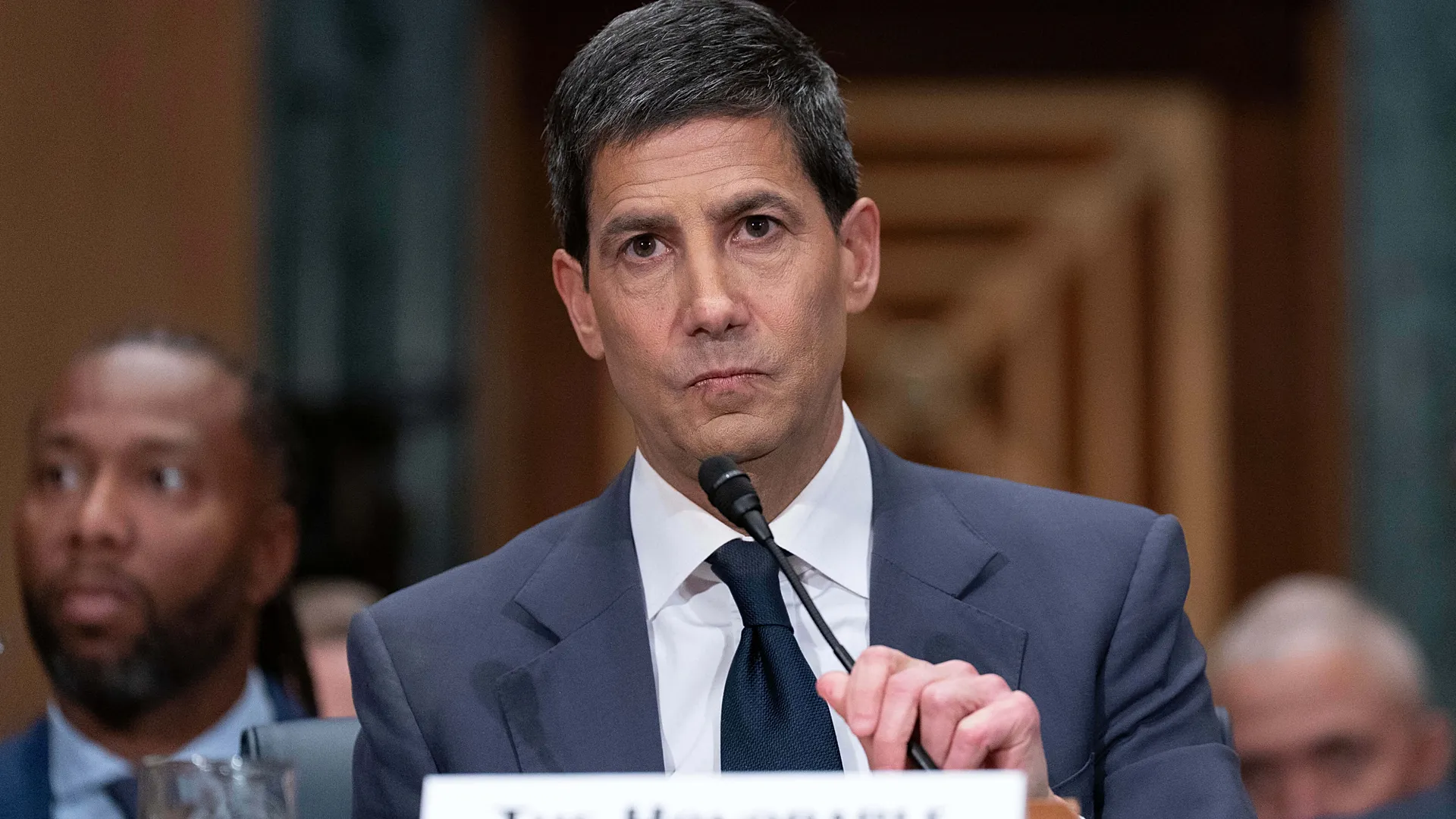
Monetary control now moves through political gates.
Washington, April 2026.
The path to reshaping U.S. monetary power has cleared after a key Republican senator lifted his blockade on Kevin Warsh’s nomination to lead the Federal Reserve. Senator Thom Tillis, whose opposition had stalled the process, reversed his position after the closure of a federal investigation into current Fed Chair Jerome Powell. The move removes the main institutional obstacle and places Warsh closer to confirmation in a Senate where Republicans hold the numerical advantage.
The blockade was never merely procedural; it was strategic. Tillis had tied his resistance to concerns that the investigation into Powell could compromise the independence of the central bank, turning the nomination battle into a test of institutional credibility. Once that investigation was closed, the political justification for resistance weakened. With that shift, the balance of power inside the confirmation process changed decisively.
Kevin Warsh, a former Federal Reserve governor and long-time figure in U.S. financial circles, now stands at the threshold of one of the most influential positions in the global economy. His nomination by Donald Trump has been interpreted as part of a broader attempt to realign monetary policy with the administration’s economic agenda. The central concern is not only who leads the Fed, but whether the institution can preserve independence under direct political pressure.
The timing intensifies the stakes. Jerome Powell’s term is approaching its end, meaning that any delay in confirmation could create uncertainty at the top of the Federal Reserve. The Senate Banking Committee is expected to move quickly, while Democrats are likely to oppose the nomination over concerns about institutional autonomy. In this context, speed becomes political strategy.
This transition is not merely administrative. It could alter how the Federal Reserve interprets its mandate in a polarized environment shaped by inflation, interest rates, market volatility and presidential pressure. Warsh has defended the importance of central bank independence, but the context of his nomination complicates that message. His rise comes after sustained criticism from Trump toward the Fed’s previous policy direction.
Markets are watching closely because leadership at the Federal Reserve is never symbolic. The Fed influences interest rates, liquidity conditions, inflation expectations, borrowing costs, currencies and global capital flows. A change in leadership can shift not only policy decisions, but also the tone through which investors interpret future risk. In global finance, perception often moves faster than formal action.
The deeper tension lies in the fragility of technocratic authority. Central banks were designed to operate at a distance from short-term political cycles, but that distance is increasingly contested. The Warsh nomination shows how monetary governance can become entangled with partisan leverage, institutional suspicion and executive ambition. A single senator’s reversal now has consequences for the world’s most important central bank.
For Trump, the moment represents a strategic opening. A new Fed chair aligned with, or at least more receptive to, his economic vision could influence the cost of credit, the rhythm of investment and the political mood around growth. For critics, the risk is precedent. Once central bank leadership becomes openly linked to presidential preference, restoring the perception of neutrality becomes harder.
What is unfolding is not only a confirmation process. It is a redefinition of the boundary between political authority and monetary autonomy. The Federal Reserve, long presented as a technocratic institution, is being pulled deeper into the logic of power negotiation. The result will shape not only U.S. monetary policy, but the credibility of institutional independence in an era of executive pressure.
Warsh’s confirmation may resolve a nomination battle, but it opens a larger debate about central banking in a fractured political age. The question is no longer whether the Fed is independent in theory. It is whether that independence can survive when political power learns to move through institutional appointments.
Monetary power bends when political gates open.
El poder monetario se dobla cuando se abren las compuertas políticas.