

 Phoenix 24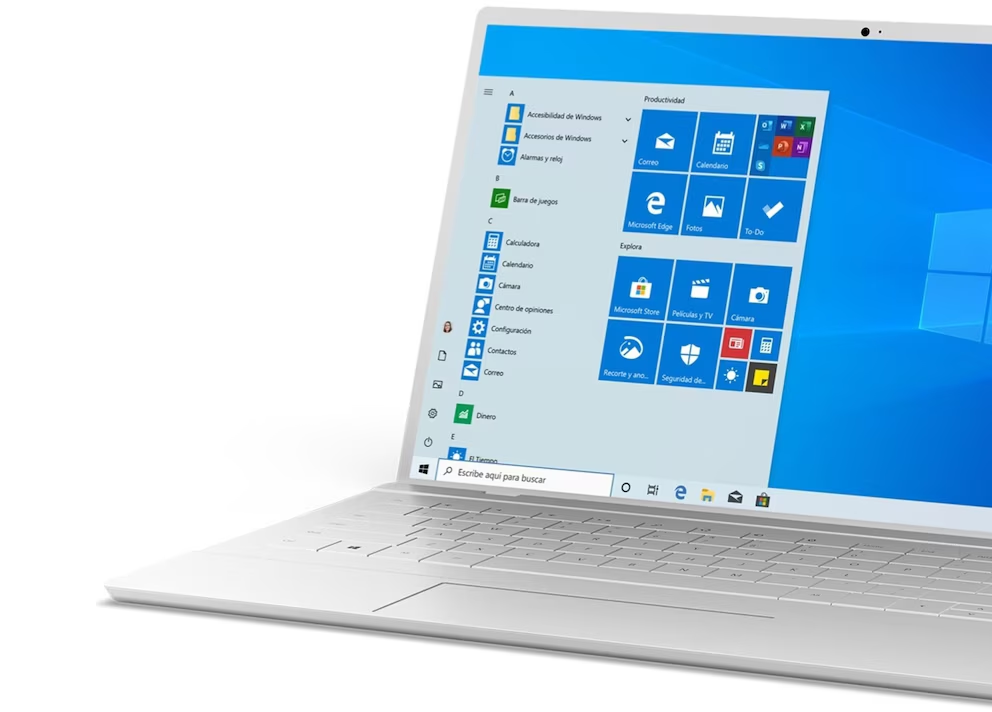
When an operating system dies, the silence it leaves behind is measured not in code, but in mountains of discarded machines.
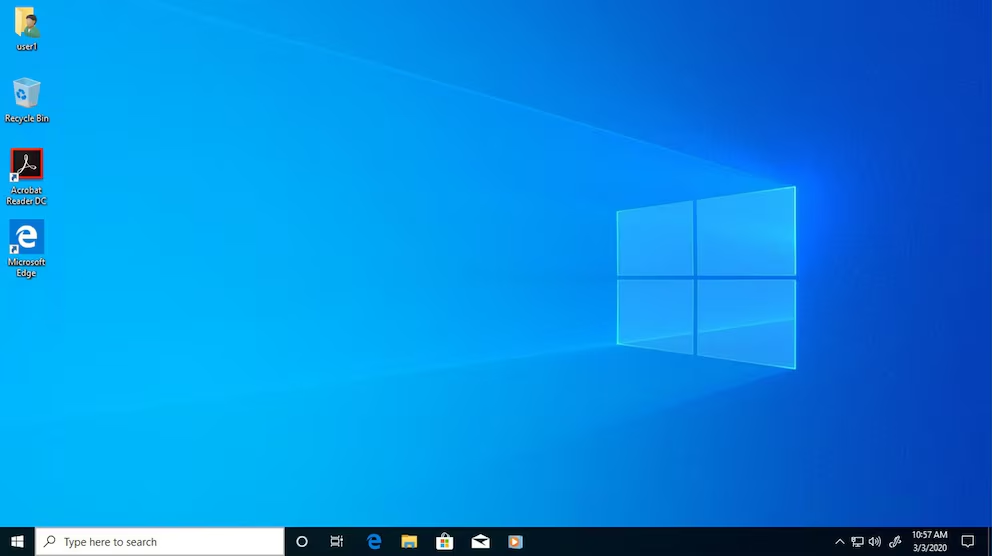
Redmond, October 2025. The official end of Windows 10 marks a historic milestone in the digital era, yet its consequences reach far beyond the software industry. More than four hundred million computers worldwide have suddenly become obsolete, not because they have failed, but because the system that gave them life has been retired. What appears as a technological transition is, in reality, an ecological crisis waiting to unfold.
Experts warn that millions of perfectly functional computers will soon be discarded as corporations, schools, and individual users migrate toward Windows 11. The new version demands more powerful processors and updated security modules, requirements that many older devices cannot meet. For countless users, the choice is simple but cruel: remain exposed to security risks or buy new equipment. Either way, the planet pays the price.
Environmental organizations describe this phenomenon as a form of planned obsolescence hidden beneath a software upgrade. Devices that could operate for years are abandoned because their digital ecosystem no longer supports them. Each computer that ends up in a landfill represents not only metal and plastic, but also the cobalt, lithium, and rare earth elements extracted to build it. Recycling such materials is technically complex and economically unprofitable, meaning that most of the waste simply remains buried.
The scale of the problem is staggering. Analysts estimate that the end of Windows 10 could generate millions of tons of electronic waste over the next three years. This is equivalent to the mass of hundreds of Eiffel Towers compressed into toxic residue. Developing countries will suffer the most, as many shipments of used devices are redirected toward their informal recycling industries, where workers often handle hazardous materials without protection.
In Europe, the debate has already reached political institutions. Lawmakers are discussing the possibility of imposing longer update cycles on software companies, reinforcing what activists call the right to repair. Their argument is simple: software support determines the lifespan of hardware, and cutting that support prematurely is a direct attack on sustainability. Without regulation, each corporate decision in Silicon Valley or Redmond translates into environmental damage across the globe.
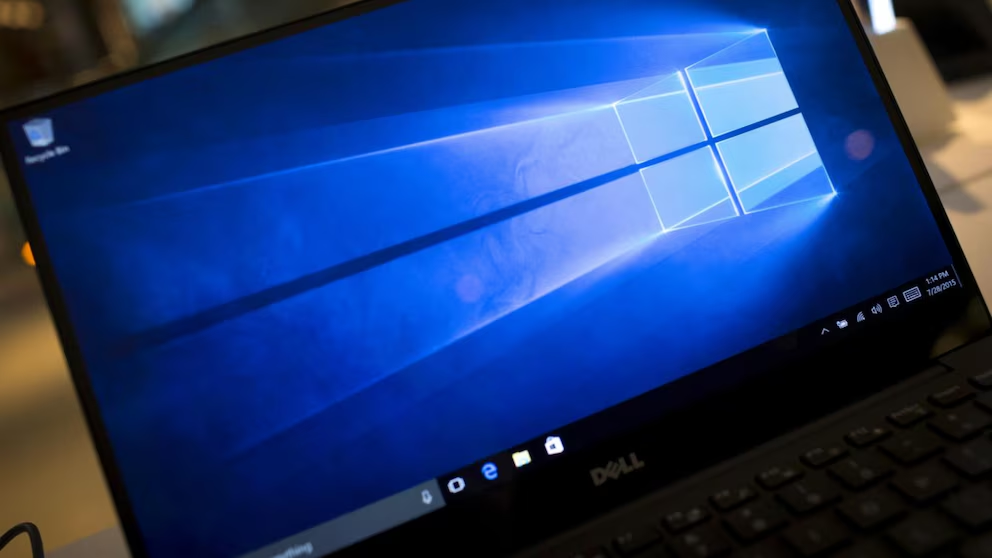
Microsoft, for its part, defends the transition. The company claims that Windows 11 enhances cybersecurity and adapts to the architecture of modern devices. In a statement, representatives insisted that technological evolution requires progress in both hardware and software. Yet the company’s position also highlights a paradox: the more innovation accelerates, the faster obsolescence grows.
Industry experts suggest potential solutions that go beyond corporate responsibility. Extending the lifespan of devices through open-source systems, lightweight operating environments, and circular economy incentives could reduce the ecological impact. Some NGOs are already repurposing outdated computers for educational projects in vulnerable regions, demonstrating that digital utility does not depend solely on the latest version number.
But the real challenge lies in changing perception. For decades, technological culture has equated novelty with value. The release of a new operating system has been celebrated as progress, while the act of keeping an old computer running has been dismissed as resistance or poverty. Today, that narrative must evolve. Sustainability requires admiration for durability, not for replacement.
Behind every discarded computer hides a contradiction of modern civilization: progress built on waste. The death of Windows 10 exposes the hidden costs of the digital age and forces a difficult question. How can humanity reconcile its hunger for innovation with the finite limits of the Earth that sustains it? The answer may not come from the next update, but from the decision to slow down.
Phoenix24: against propaganda, memory. / Phoenix24: contra la propaganda, memoria.