

 Phoenix 24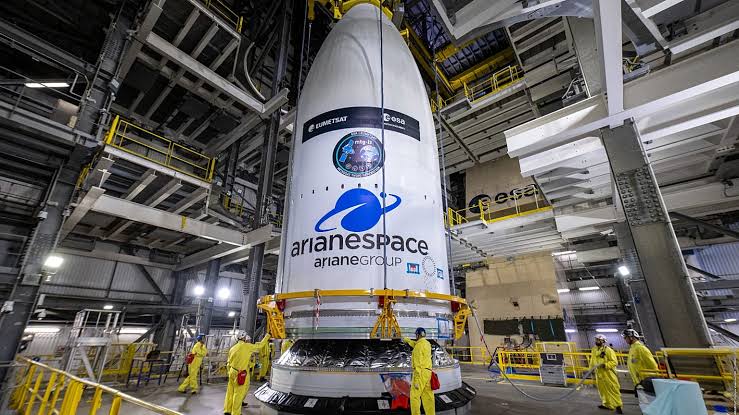
Faster observations can provide precious warning time, but satellites cannot prevent the hazards themselves.
KOUROU, FRENCH GUIANA
Europe’s newest meteorological satellite has begun its journey toward operational service after extensive preparation at the Guiana Space Centre. The Meteosat Third Generation Imager 2, known as MTG-I2, was inspected, fueled and enclosed inside an Ariane 6 rocket before its successful launch into geostationary transfer orbit. It will eventually operate approximately 36,000 kilometers above Earth.
MTG-I2 carries two principal instruments. Its Flexible Combined Imager will observe rapidly evolving cloud systems and generate updated images of Europe and northern Africa every two and a half minutes. A Lightning Imager will continuously detect individual lightning events during both day and night, helping meteorologists identify intensifying thunderstorms before their most dangerous effects reach populated areas.
The satellite completes the first three-spacecraft Meteosat Third Generation constellation. MTG-I1 provides detailed imagery, while MTG-S1 examines different layers of the atmosphere using infrared measurements. Combining their observations will allow specialists to create three-dimensional representations of clouds, winds, lightning and atmospheric gases. Once fully operational, the system is expected to generate at least 50 times more data than the previous Meteosat generation.
The information will support short-term forecasting, aviation safety and earlier warnings for severe storms, floods, fog and wildfires. Emergency agencies may gain additional time to evacuate exposed communities, redirect aircraft or position response teams. The satellite cannot stop hurricanes, floods or fires from occurring, however. Its contribution lies in reducing uncertainty and improving decisions before and during an emergency.
The program also demonstrates the industrial scale of Europe’s space cooperation. More than 17 countries, 70 companies, 200 subcontracting arrangements and approximately 2,200 workers participated in its development. ESA managed the satellite program, European industries led by Thales Alenia Space constructed the spacecraft, Eumetsat will operate it, and Ariane 6 provided independent European access to orbit. MTG-I2 is therefore both a scientific instrument and a strategic infrastructure project designed to strengthen Europe’s resilience in an era of increasingly destructive weather extremes.
Detrás de cada dato, la intención. / Behind every data point, the intention.