

 Phoenix 24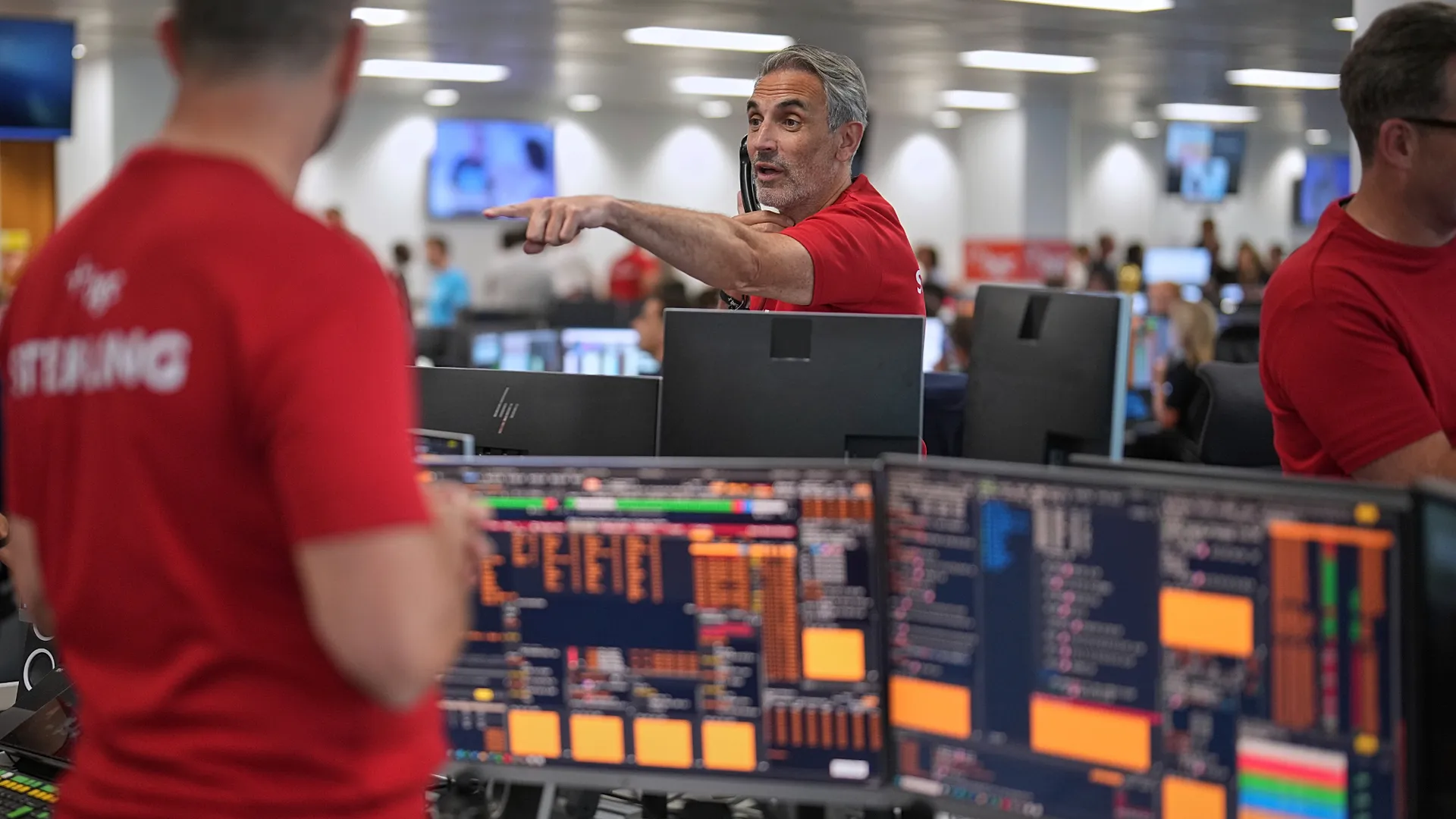
Stocks surged on hope, not certainty.
Brussels, February 2026
European stock markets pushed to record highs as fears over new U.S. tariffs eased, but the move is best understood as a relief rally rather than a full resolution of risk. The immediate reaction reflected a familiar market pattern. When trade threats appear less imminent, investors quickly rotate back into equities, especially in sectors that had been priced for disruption. That is what happened across Europe, where benchmark indexes climbed to fresh peaks as traders recalibrated the probability of near term tariff damage.
The rise was not driven by one factor alone. Alongside reduced trade anxiety, markets also received support from stronger sentiment in financial stocks and a partial cooling of recent panic around AI disruption headlines. This matters because European equities have recently been trading inside a dense mix of narratives, tariff uncertainty, AI related repricing, earnings surprises, and expectations around U.S. policy signals. When even one of those pressure points softens, the rebound can look larger than the underlying certainty actually justifies.
What makes the tariff angle especially important is that investors are responding not only to policy decisions, but to policy volatility. The problem for markets has not been just the possibility of tariffs, it has been the unpredictability of announcements, reversals, and legal challenges surrounding them. In that environment, a moment of apparent easing can produce strong upside because traders are not simply rewarding growth prospects. They are pricing out a layer of immediate political risk. Relief, in other words, becomes a market catalyst in its own right.
The European rally also reveals how sensitive the region remains to U.S. trade signaling. Even when domestic earnings and sector specific developments matter, tariff expectations in Washington can still reshape sentiment in Frankfurt, Paris, Milan, and London within hours. That dependence is structural, not psychological alone. European exporters, manufacturers, and multinational firms remain exposed to shifts in U.S. trade posture, so markets treat American tariff rhetoric as a variable in European valuation models, not just as distant political theater.
At the same time, record highs should not be confused with strategic clarity. Markets can reach new peaks while still carrying unresolved vulnerability beneath the surface. Trade uncertainty has eased, but it has not disappeared. Investors still face open questions about the durability of current tariff policy signals, the legal framework around future measures, and the broader direction of U.S. economic strategy after recent political shocks. The rally therefore says more about short term repricing than long term confidence.
There is also a second layer to this moment, sector leadership. Financial stocks and selected industrial names helped lift indexes, reinforcing the idea that markets are still rewarding companies seen as resilient under shifting macro narratives. That pattern is important because it suggests investors are not buying Europe indiscriminately. They are selecting for businesses that can survive policy noise, absorb cost pressure, and defend margins if volatility returns. Record highs at the index level can hide that selective behavior, but the composition of the move often reveals the real risk appetite.
This is why the current milestone should be read with caution and context. New highs are politically useful and psychologically powerful, yet they can coexist with fragile conviction. Traders may be celebrating an immediate reduction in tariff fears while remaining fully aware that the trade file can reheat quickly. In fact, modern markets often rise on temporary clarity and then reverse when rhetoric changes again. The speed of the rebound is therefore part of the story, because it reflects how much cash was waiting on the sidelines for a reason to reenter.
The deeper pattern is one Europe has faced repeatedly in recent years. Markets are increasingly driven by episodic policy shocks from outside the region, while local fundamentals compete with global narratives for influence. When external pressure eases, European equities can move sharply higher and even print records. But the quality of that rally depends on whether relief turns into durable policy stability or simply another pause in a cycle of uncertainty.
For now, investors have chosen to treat the reduction in tariff anxiety as enough to push markets higher. That choice may prove justified if policy signals remain stable and earnings continue to support valuations. If not, these record highs could be remembered less as the start of a new phase and more as a powerful bounce built on temporary breathing room. The rally is real. The certainty behind it is still under negotiation.
Más allá de la noticia, el patrón. / Beyond the news, the pattern.