

 Phoenix 24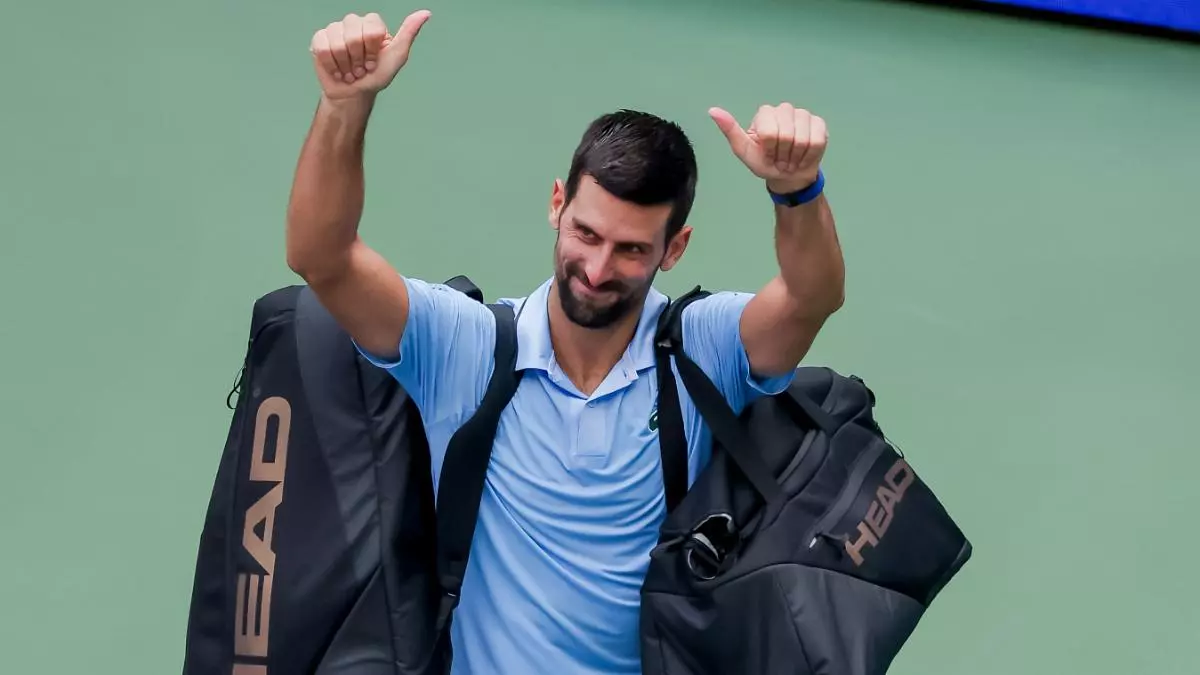
The hero who endures through the fractures of his own body.
New York, September 2025
Novak Djokovic enters the autumn of his career as an elegant survivor. He has reached the semifinals of all four Grand Slams this season, a feat so remarkable it almost overshadows the fact that he has not lifted a major title since 2017. Yet he admits it with disarming honesty: “I feel I arrive at matches with the tank half empty,” he said after losing to Carlos Alcaraz at the US Open. That simple, human metaphor resonated more powerfully than any statistic.
This sincerity is not a sign of weakness. On the contrary, it reflects ambition in its purest form. At 38, he does not deny his belief that another Slam is possible, even as the physical cost rises. He acknowledges that best-of-five matches against younger rivals such as Alcaraz and Jannik Sinner expose his limits more clearly than ever. Still, as long as conviction remains, he insists on pushing boundaries.
The balance between ambition and reality is evident in his calendar. Djokovic has not yet decided if he will play a full Grand Slam schedule in 2026, though he made clear that the majors remain his main driving force. He admits that his odds might be better in shorter formats, but his determination, built on discipline and legacy, has not diminished.
Beyond numbers, his 2025 season reaffirms another narrative: resilience. By speaking openly about his physical wear and tear, he reminds everyone that his strength lies in commitment. He seems to prefer a spark of authentic glory rather than a prolonged illusion. That fire still burns thanks to the affection of the fans, the thrill of competition, and the conviction that as long as challenges remain, his career is not finished.
This year also adds to his uniqueness in tennis history. Djokovic is the only player to have reached the semifinals of all four Grand Slams in a season both at age 20 and now at 38. That duality underlines the exceptional longevity of his career. It also highlights the humanist dimension of his outlook: though he rarely puts it into such words, his ability to balance family life, discipline, and philosophy sustains him against the physical storms of elite sport.
Yet Djokovic no longer competes only against opponents. He competes against time itself, and against the narrative of his own decline. The questions he faces are less about trophies and more about the inner dialogue of an athlete: How much longer can the body and mind endure this tension? How can limits be redefined without conceding defeat? His answer is simple. As long as the flame inside him burns, he will continue to face the present without turning his back on it.
In the end, Djokovic remains a symbol of the sport not because he denies fatigue but because he confronts it with fierce honesty. He knows the path ahead narrows, yet he chooses to keep walking it with dignity, discipline, and an ambition that neither fades nor disguises itself. In that meeting point between humanity and inevitability, he continues to stand as the last of the classics.
The visible and the hidden, in context.
Lo visible y lo oculto, en contexto.