

 Phoenix 24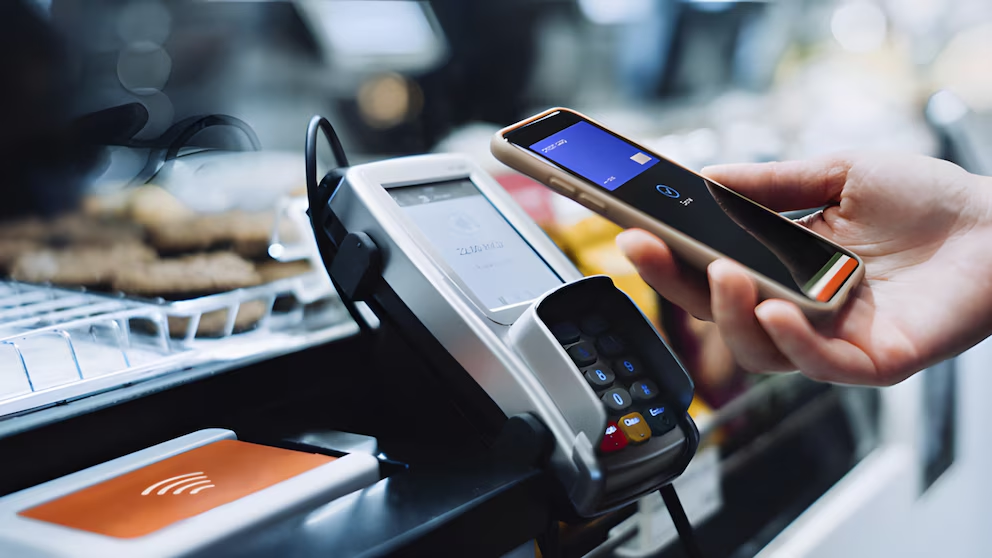
Convenience has a price, and in the race for faster transactions, security may be the slowest runner.
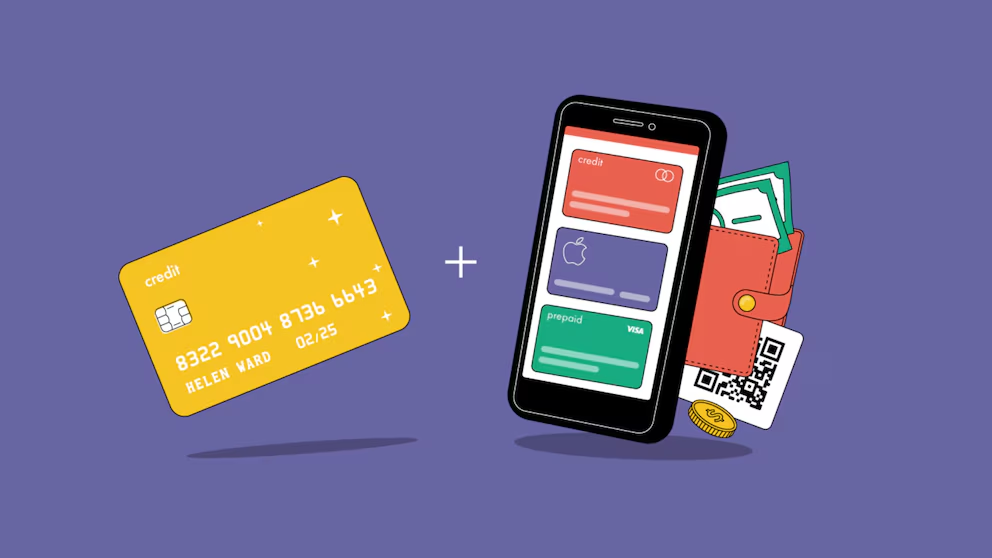
New York, October 2025. The accelerated adoption of digital wallets and contactless payments has reshaped consumer habits worldwide, but cybersecurity experts warn that the perception of safety often exceeds the reality of current protection systems. A comparative analysis from financial security researchers concludes that while digital wallets offer encryption and biometric authentication, they also expose users to new vulnerabilities that physical cards rarely face.
Specialists in banking infrastructure highlight that digital payment systems depend on a chain of trust involving applications, devices and networks. Any weak link, such as an outdated operating system, a cloned app or a compromised Wi-Fi connection, can allow intrusions capable of intercepting or manipulating transactions. In contrast, traditional physical cards, though still vulnerable to skimming and theft, operate largely offline and under clearer regulatory frameworks.
Cyber risk analysts in the United States note that digital wallets are frequent targets of phishing and credential harvesting campaigns. Fake interfaces and cloned platforms simulate login pages of popular payment services, stealing passwords and verification codes before the user realizes the breach. Experts point out that this type of attack, known as session hijacking, is increasing as more retailers accept mobile payments and as smartphones become essential financial tools.
European regulators emphasize that, despite advanced encryption and tokenization, digital payments remain dependent on user behaviour. The most sophisticated security layers are neutralized when users recycle passwords, download unofficial apps or authorize permissions without reading conditions. In addition, the spread of malicious software hidden within seemingly harmless apps has revived debates about the limits of consumer education as a defence mechanism.
In Latin America, where digital wallets have grown exponentially, banking associations warn that the region’s unequal connectivity and lack of uniform standards amplify risk exposure. Users often switch between secure networks and open hotspots, making it easier for attackers to insert data stealing scripts. Some governments have begun to design national cybersecurity protocols to harmonize the protection of payment gateways, but experts admit that implementation remains uneven.
The rise of embedded finance, where digital payments are integrated into social media, delivery platforms and transport services, has further blurred accountability lines. When a transaction fails or fraud occurs, the user may not know whether the responsibility lies with the platform, the financial intermediary or the authentication provider. Legal frameworks lag behind, creating grey zones that criminals exploit.
Security consultants recommend applying a double blind strategy: activating multifactor authentication, avoiding public networks and verifying that each payment application has updated security certificates. They also suggest separating personal and professional devices to reduce exposure. For physical cards, the classic precautions such as not sharing PIN codes and monitoring account statements remain effective and comparatively simpler.
From the consumer’s perspective, convenience remains decisive. Surveys indicate that younger users prefer mobile payments for their immediacy, while older generations still associate physical cards with trust and control. Yet both groups agree on one point: financial safety depends increasingly on invisible defences that few understand.
The convergence of fintech and cybersecurity will define the next stage of this transition. As experts warn, the goal is not to choose between digital wallets and physical cards but to demand transparency, resilience and responsibility from every actor in the payment chain. In a world where money moves at the speed of data, confidence is the currency that must never devalue.
Phoenix24: clarity in the grey zone. / Phoenix24: claridad en la zona gris.