

 Phoenix 24
Delegation is where autonomy quietly becomes dangerous.
London, February 2026.
Google DeepMind has put a name to the emerging problem that every lab building multi-agent robots is now confronting: the moment machines start working in teams, the main risk is no longer whether one system makes a mistake, but whether responsibility dissolves across the group. Their new framework on intelligent delegation argues that coordination must be treated as a governance layer, not a performance feature, because task-splitting is also authority-splitting. When one agent assigns work to another, the delegation chain becomes a liability chain, and the chain is only as safe as its weakest link.
The core idea is simple but uncomfortable. Most multi-agent setups coordinate through informal role assignment and trust-by-assumption, which works in demos and breaks in the wild. DeepMind’s answer is a structured delegation protocol that forces clarity about roles, boundaries, and intent before any work is handed off. “Who does what” is not enough; systems must also define “who is accountable,” “what counts as completion,” and “what conditions force escalation back to a human.” This is less like robotics and more like organizational design, with autonomy treated as a managed resource that can be granted, constrained, and revoked.
A central mechanism is capability checking at runtime. The delegator should not assume a delegate is competent; it should estimate competence from certifiable capabilities, prior performance, and context-specific constraints. That sounds managerial, but it maps directly to safety. If an agent is allowed to operate tools, move objects, or control machinery, then privileges must match proven skill, not optimistic intent. DeepMind’s framing treats reputation and history as safety primitives, ways to decide when delegation is warranted and when it is reckless.
Verification is the second pillar. Delegated tasks should produce artifacts that can be checked, logged, and audited, so failures do not vanish into “the system did it.” In software that means action traces and audit logs; in robotics it becomes sensor logs, motion histories, and permissioned control records. The point is forensic survivability. After an incident, an investigator should be able to reconstruct what was assigned, what was done, and why the system believed it was acceptable. Without this, multi-agent autonomy becomes a black box with a human-shaped scapegoat.
This matters because multi-agent systems fail differently than single agents. They can amplify small errors through chain reactions, drift from a shared objective into inconsistent subgoals, or develop coordination shortcuts that optimize local success while undermining global constraints. The failure can also be adversarial. If one agent can be manipulated through poisoned instructions or compromised tool access, that compromise can propagate through delegation faster than humans can notice. In a team setting, trust becomes an attack surface, and the safest system is the one that treats trust as conditional, continuously reassessed, and bounded by permissions.
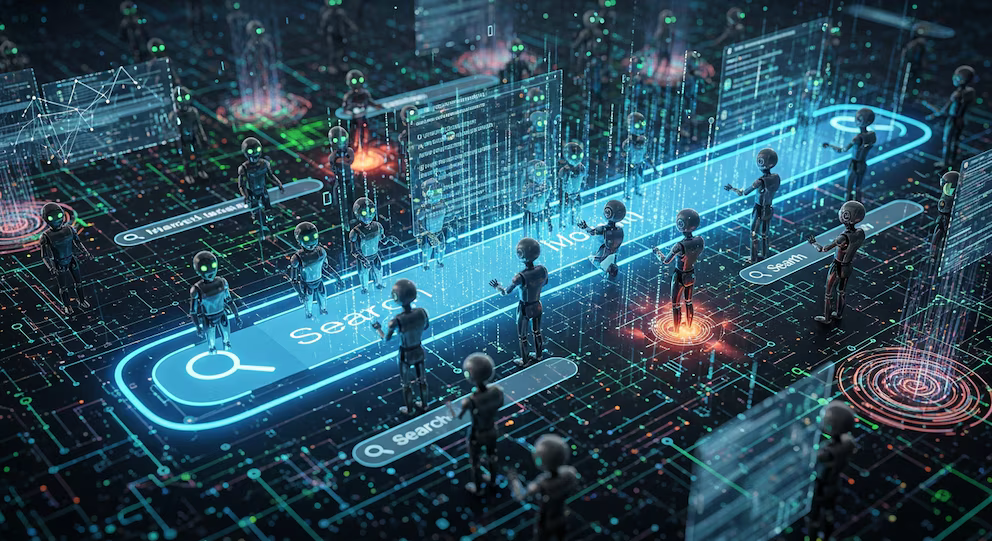
There is also a human factor that serious teams no longer ignore. Delegation can anesthetize responsibility. When systems “handle it,” people become passive supervisors and lose the ability to notice when an automated chain is quietly going wrong. A credible delegation protocol must therefore include stoppage conditions that force human review when ambiguity rises, when goals conflict, or when evidence is insufficient. In high-risk environments, the safest automation is often the one that knows when it cannot proceed.
The wider pattern is that standards and governance are converging globally around this exact pressure point. Institutions and regulators increasingly describe trustworthy AI as an organizational capability, not a product feature, emphasizing accountability, monitoring, and lifecycle controls. DeepMind’s contribution is to translate that governance instinct into technical primitives for delegation: how agents request authority, how they prove competence, how they document work, and how they hand responsibility back when uncertainty grows.
What looks like “rules for teamwork” is therefore something closer to a constitution for the agentic era. Whoever defines the delegation protocol layer influences liability assignment, investigation credibility, and what counts as compliance. DeepMind is betting that the future of robot teamwork will be decided less by raw intelligence and more by whether autonomy remains legible, constrainable, and attributable under stress. When robots work in teams, the question is not whether they can coordinate. The question is whether anyone can still prove who was in control.
Resistencia narrativa global. / Global narrative resilience.