

 Phoenix 24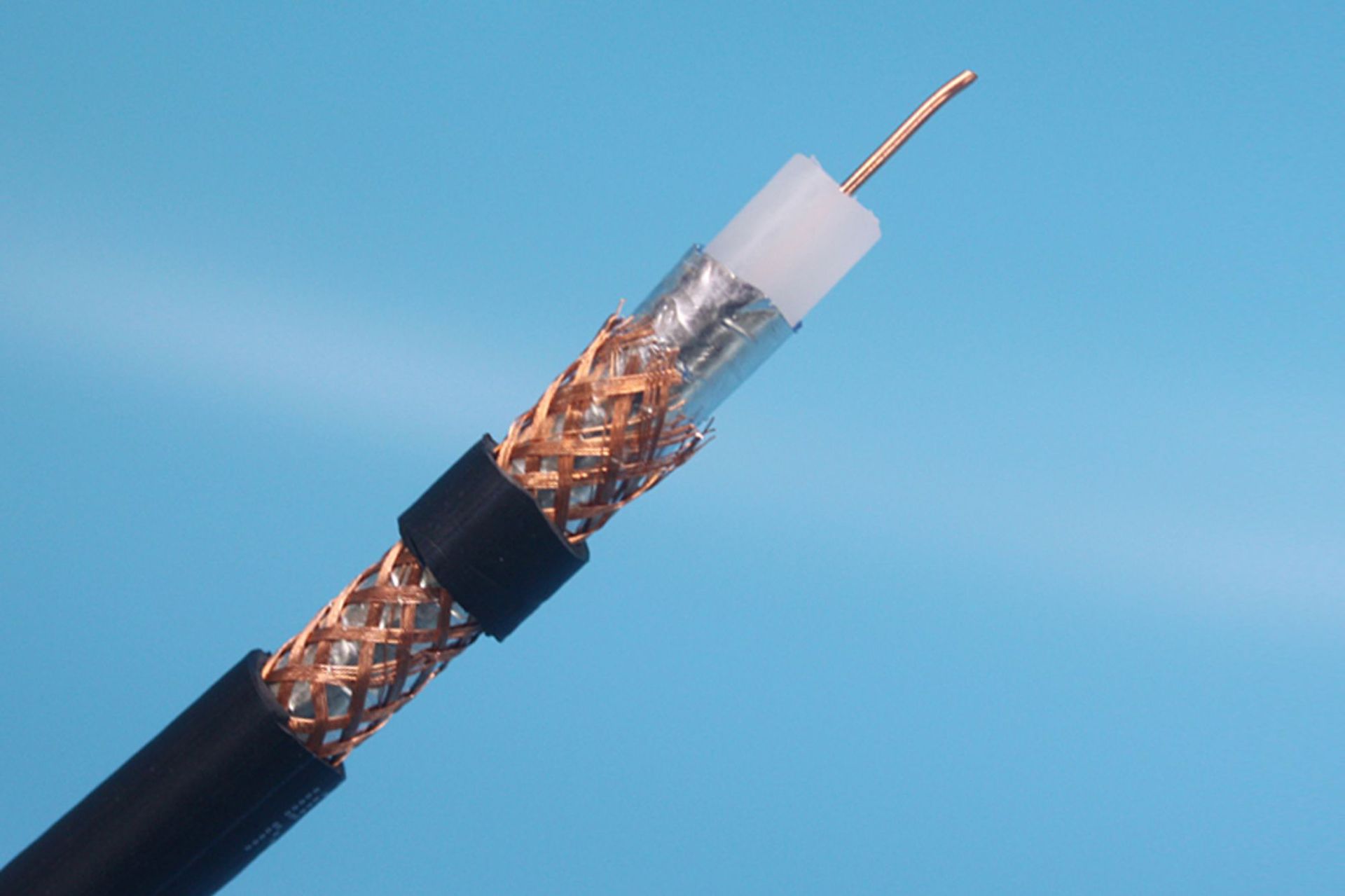
A simple wire still protects image and sound quality
Mexico City, Mexico | June 2026
Coaxial cable remains one of the most reliable solutions for transmitting television signals without major interference, even in a digital environment dominated by streaming platforms, wireless connections and smart devices. Its internal design allows audio, video and data signals to travel with stability, reducing the effect of electromagnetic noise that can affect image quality, sound clarity and connection performance. Although many users rarely pay attention to the cable behind their television, this component continues to play a key role in homes, buildings and telecommunications systems. Its importance lies in a simple principle: a well-installed coaxial cable can make the difference between a clear signal and constant interruptions.
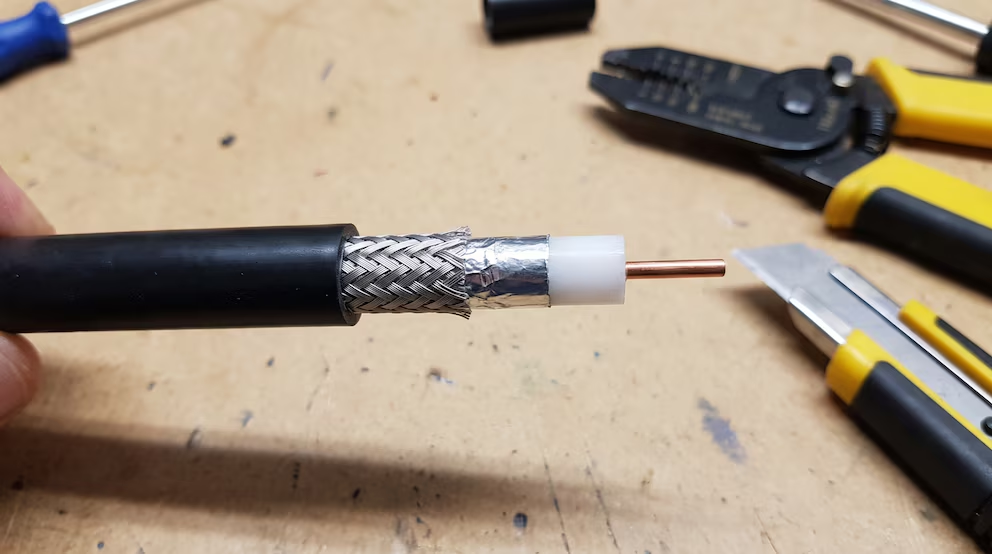
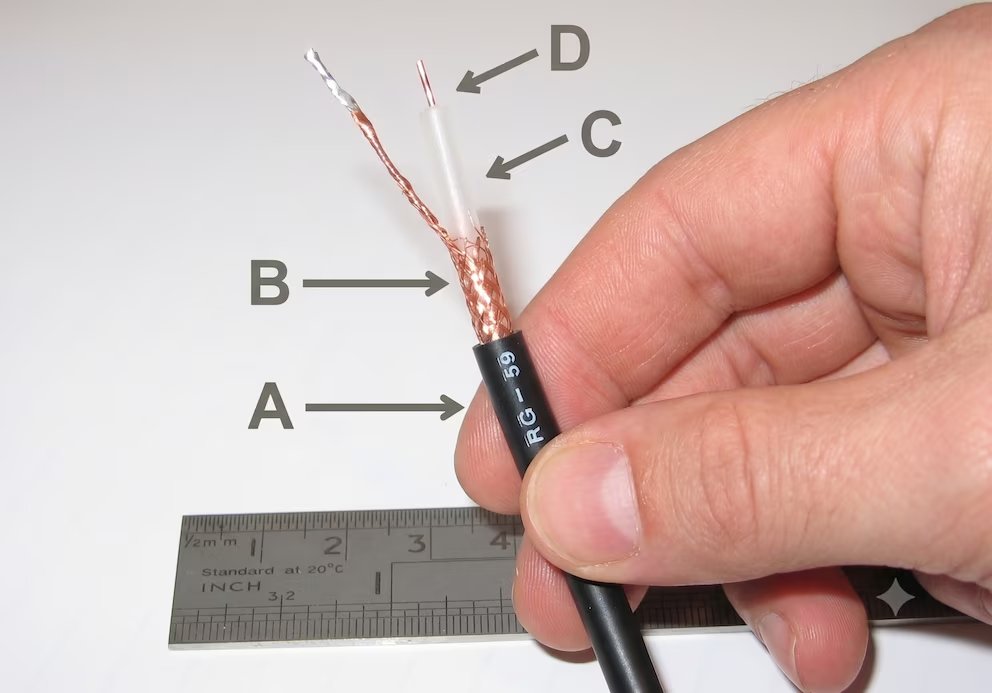
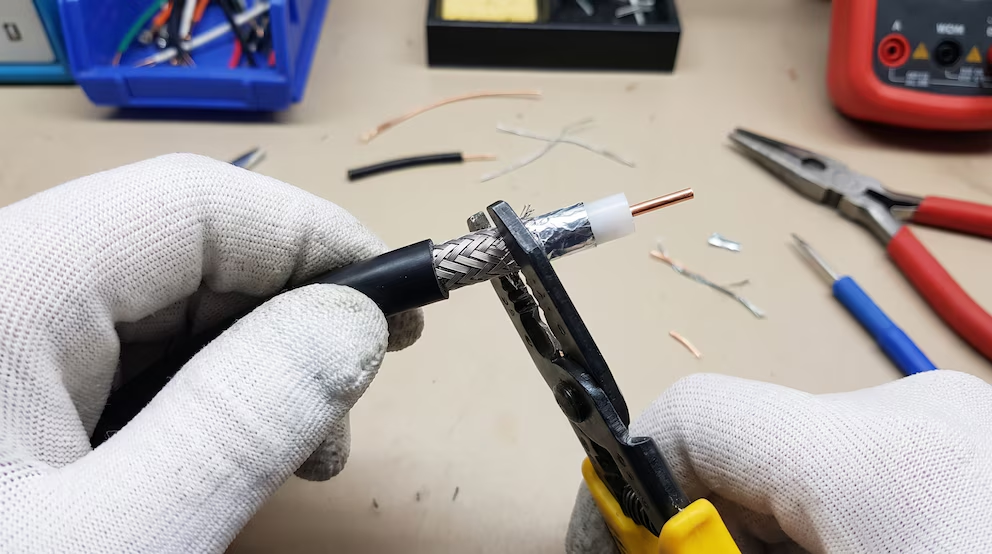
The structure of a coaxial cable is designed to protect the signal from external interference. It normally includes a central copper conductor, an insulating layer, a metallic shield and an external protective cover. The central conductor carries the signal, while the shielding helps block electrical noise from other devices, power lines or nearby electronic equipment. This combination allows the cable to maintain signal integrity over distance, which explains why it has been widely used in television, internet services, security cameras and radio-frequency systems.
For television users, the quality of the coaxial cable can directly affect the viewing experience. A damaged, poorly connected or low-quality cable may cause pixelation, image freezing, weak reception or loss of channels. In analog systems, the result may appear as static or visual noise, while in digital television the problem is often seen as signal cuts or complete loss of transmission. For this reason, proper installation, tight connectors and cables in good condition are essential for maintaining stable service.
One of the most common mistakes is assuming that all coaxial cables are the same. In practice, different cable types are used depending on the application, distance and signal requirements. RG-6 is one of the most common options for modern television and internet installations because it offers better shielding and lower signal loss than older or thinner cables. Using the correct cable type is especially important when the signal must travel through walls, across long distances or toward multiple devices through splitters.
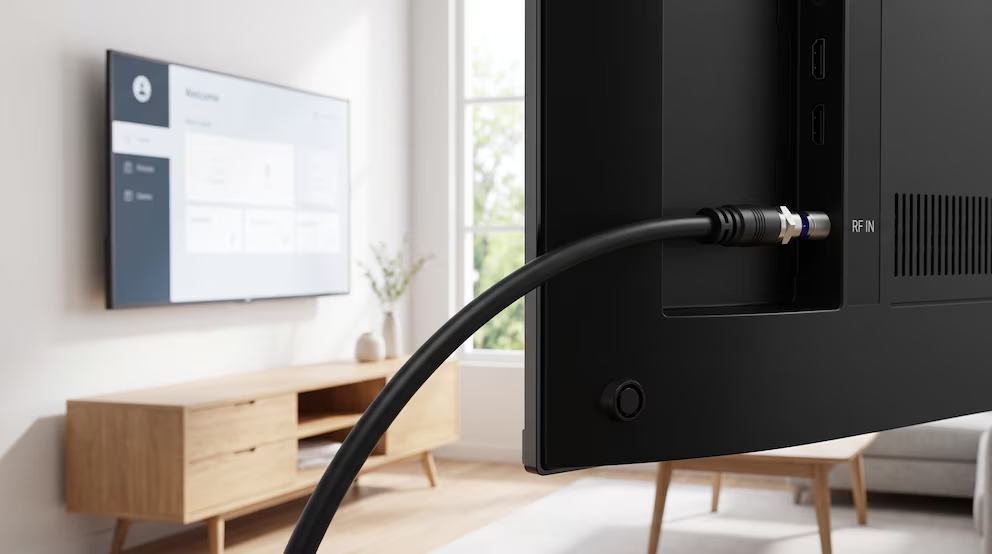
Connectors also matter. Even a good cable can perform poorly if the connector is loose, corroded or incorrectly installed. F-type connectors are commonly used in television and broadband systems, and they must be firmly attached to avoid signal leakage or interruption. Users should also avoid bending the cable sharply, placing it under heavy furniture or exposing it to moisture, since physical damage can weaken the internal conductor or shielding. A clean and protected installation helps extend the cable’s useful life and preserves signal quality.
Coaxial cable is also valued because it can transmit high-frequency signals with relatively low loss. This makes it useful not only for traditional television but also for cable internet and closed-circuit security systems. In many homes, the same basic technology supports broadband connectivity, pay television and antenna reception. While fiber optics and wireless systems have expanded rapidly, coaxial infrastructure remains present because it is durable, affordable and compatible with many existing networks.
Interference is one of the main enemies of any signal transmission system. Household appliances, routers, electrical cables and poorly shielded devices can all create electromagnetic noise. The shielding inside coaxial cable reduces that risk by creating a protective barrier around the central conductor. This is why replacing a worn or low-quality cable with a better-shielded one can sometimes improve reception without changing the television, decoder or antenna.
For users who experience signal problems, the first step should be checking the simplest elements. The cable should be inspected for visible damage, loose connectors, excessive bending or signs of corrosion. It is also useful to verify that splitters are in good condition and that the signal is not being divided too many times, since each division can reduce strength. In many cases, improving the cable route or replacing an old segment is enough to restore a cleaner and more stable signal.
The persistence of coaxial cable shows that not every useful technology disappears when newer systems emerge. Its design is decades old, but its effectiveness continues to make it relevant in modern communication networks. For television viewers, understanding its role helps prevent unnecessary equipment changes and supports better installation decisions. A clear signal often begins with something as basic as a good cable, properly connected and protected from interference.
Phoenix24 News | Information with responsibility.