

 Phoenix 24
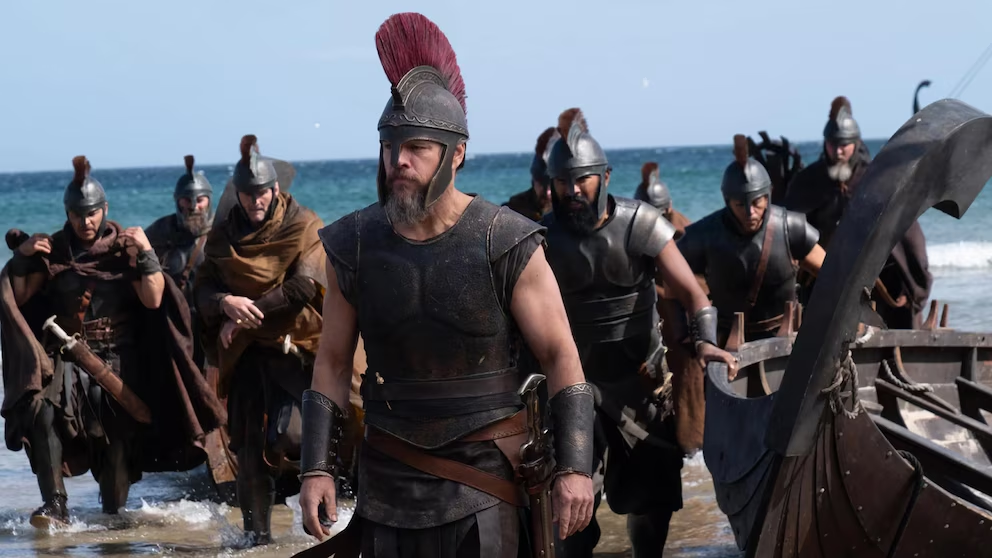
The filmmaker defends artistic vision over expanded editions.
Los Angeles, United States
Christopher Nolan has ruled out releasing an extended version of The Odyssey, confirming that numerous deleted scenes from his record-breaking historical epic will never be made available to audiences. The Oscar-winning filmmaker explained his decision in an interview with The Independent published on November 18, coinciding with the film’s home entertainment release. His position reinforces a longstanding creative philosophy in which the theatrical version represents the definitive artistic expression of a film rather than one of several possible interpretations.
The announcement comes after The Odyssey became the highest-grossing film of Nolan’s career, generating approximately $1.84 billion worldwide and surpassing the commercial performance of The Dark Knight Rises. The adaptation of Homer’s ancient Greek epic, starring Matt Damon as Odysseus, also established a technological milestone as the first feature film shot entirely using IMAX cameras. Its commercial achievements have intensified interest in the production process and the possibility of additional material being released.
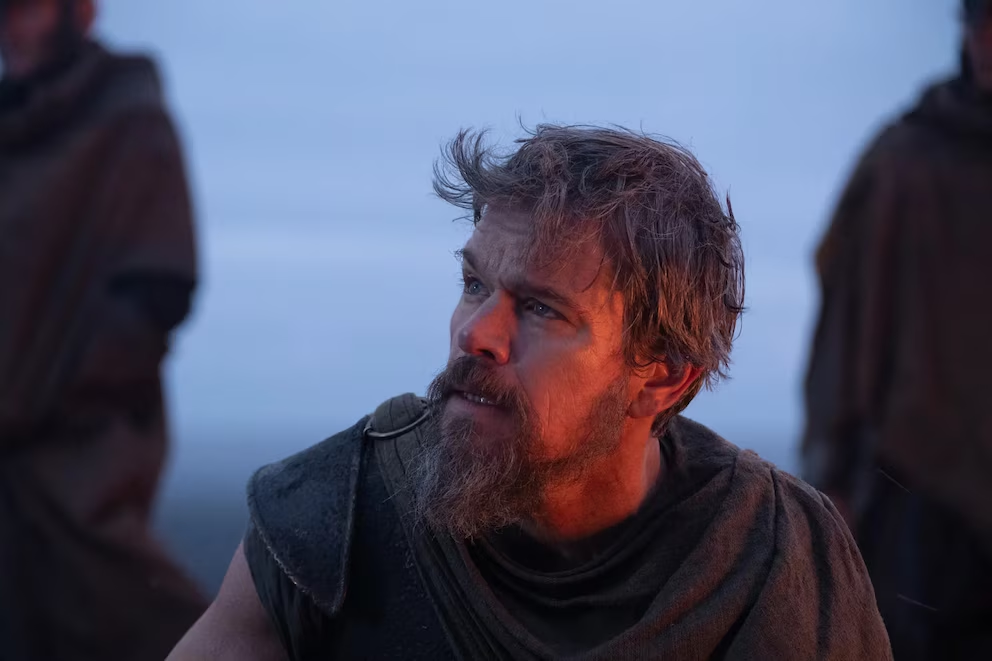
Nolan, however, has made clear that financial success and audience enthusiasm do not justify revisiting a finished film. Although significant footage was excluded from the theatrical release, he considers those decisions an essential part of the creative process. The filmmaker rejected the conventional notion of a director’s cut, explaining that his responsibility is to defend the version selected for cinemas rather than present an alternative after its release.
His reasoning reflects an unusually disciplined approach to filmmaking. As both screenwriter and director, Nolan attempts to eliminate unnecessary sequences during script development, reducing the likelihood of investing substantial resources in material that will ultimately be discarded. This methodology becomes particularly important in productions involving elaborate locations, complex logistics and expensive analog cinematography.
Filming The Odyssey required demanding conditions across multiple international locations, including sequences involving mountainous terrain, challenging weather and maritime environments. Nolan argued that spending an entire production day capturing material unlikely to appear in the finished film represents an inefficient use of time, energy and financial resources. His approach emphasizes making deliberate narrative decisions before and during production rather than relying on extensive reconstruction afterward.
The director also described filmmaking as a fundamentally collaborative process. He credited the creative contributions of his production team, including longtime producing partner Emma Thomas, production designer Ruth de Jong, visual effects supervisor Andrew Jackson and sound mixer Willie Burton. Their work illustrates how large-scale cinematic achievements emerge through coordinated technical expertise rather than the actions of a single individual.
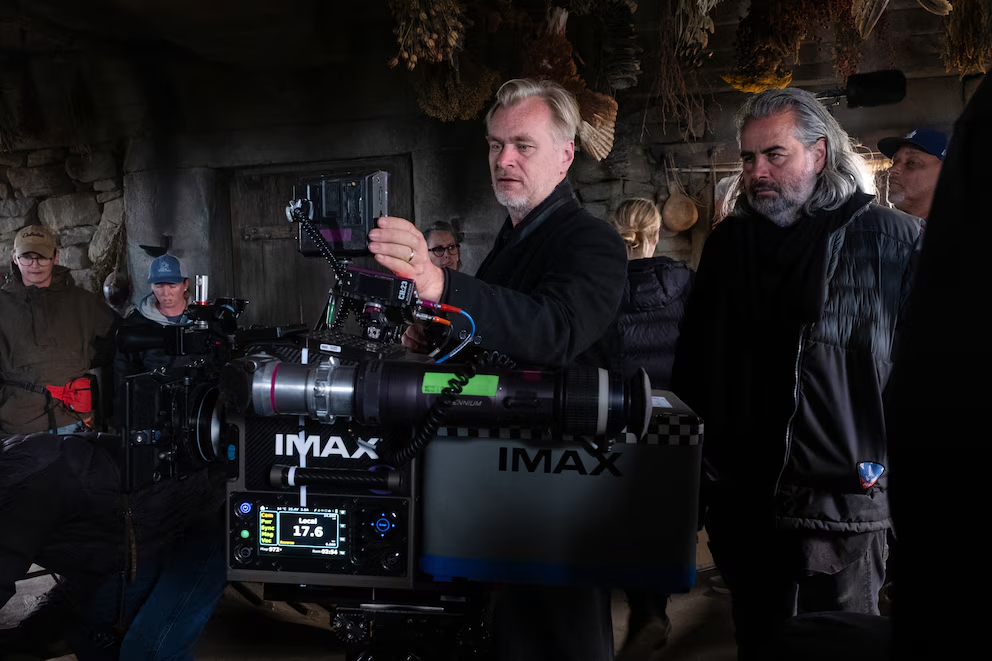
The production reportedly involved challenges that initially appeared difficult or impossible to overcome within established schedules. Nolan explained that his role often consists of encouraging collaborators to reconsider conventional solutions and develop alternative approaches. For him, creative leadership involves maintaining demanding standards while enabling specialists to contribute their knowledge to a shared artistic objective.
The debate surrounding extended editions is not new to Hollywood. Filmmakers such as Ridley Scott and Francis Ford Coppola have released alternative versions of major productions, occasionally revising narrative structures or restoring material omitted from earlier releases. These editions can offer audiences different interpretations of established works, particularly when initial theatrical versions were influenced by commercial or studio-imposed constraints.
Nolan’s philosophy differs because he prioritizes achieving the intended version before its initial release. His position does not suggest that alternate cuts are inherently without artistic value, but rather that his own filmmaking method is designed to avoid requiring them. The distinction reflects competing understandings of creative finality within an industry where additional releases can generate renewed commercial interest.
His approach has also been acknowledged by performers who have participated in his productions. During the promotion of Oppenheimer, actor Cillian Murphy described Nolan’s scripts as exceptionally precise, emphasizing that relatively little filmed material remains unused. The comments reinforced the director’s reputation for extensive preparation and deliberate storytelling choices.
Despite declining an extended edition, The Odyssey continues to generate commercial opportunities. The production is scheduled to return to approximately 1,000 theaters across the United States and Canada beginning December 11, including IMAX presentations. The limited rerelease reflects the continuing importance of premium theatrical experiences in the film’s distribution strategy without requiring changes to the original narrative.
Beyond the immediate decision, Nolan’s position raises questions about artistic authority in contemporary entertainment. Streaming platforms, home video editions and digital distribution have expanded opportunities to revisit established works, sometimes encouraging filmmakers and studios to release alternative versions long after theatrical premieres. Yet greater technological flexibility does not necessarily mean that additional content improves a film’s artistic coherence.
For Nolan, the value of filmmaking appears closely connected to making difficult creative decisions and accepting their consequences. The discarded scenes from The Odyssey may attract curiosity, but their exclusion forms part of the narrative judgment that shaped the final production.
His refusal to release an extended version ultimately reinforces an increasingly distinctive principle in modern cinema: artistic completeness is not determined by how much material audiences receive, but by how precisely the finished work communicates its intended story.
Beyond the Hype, Reality Matters.