

 Phoenix 24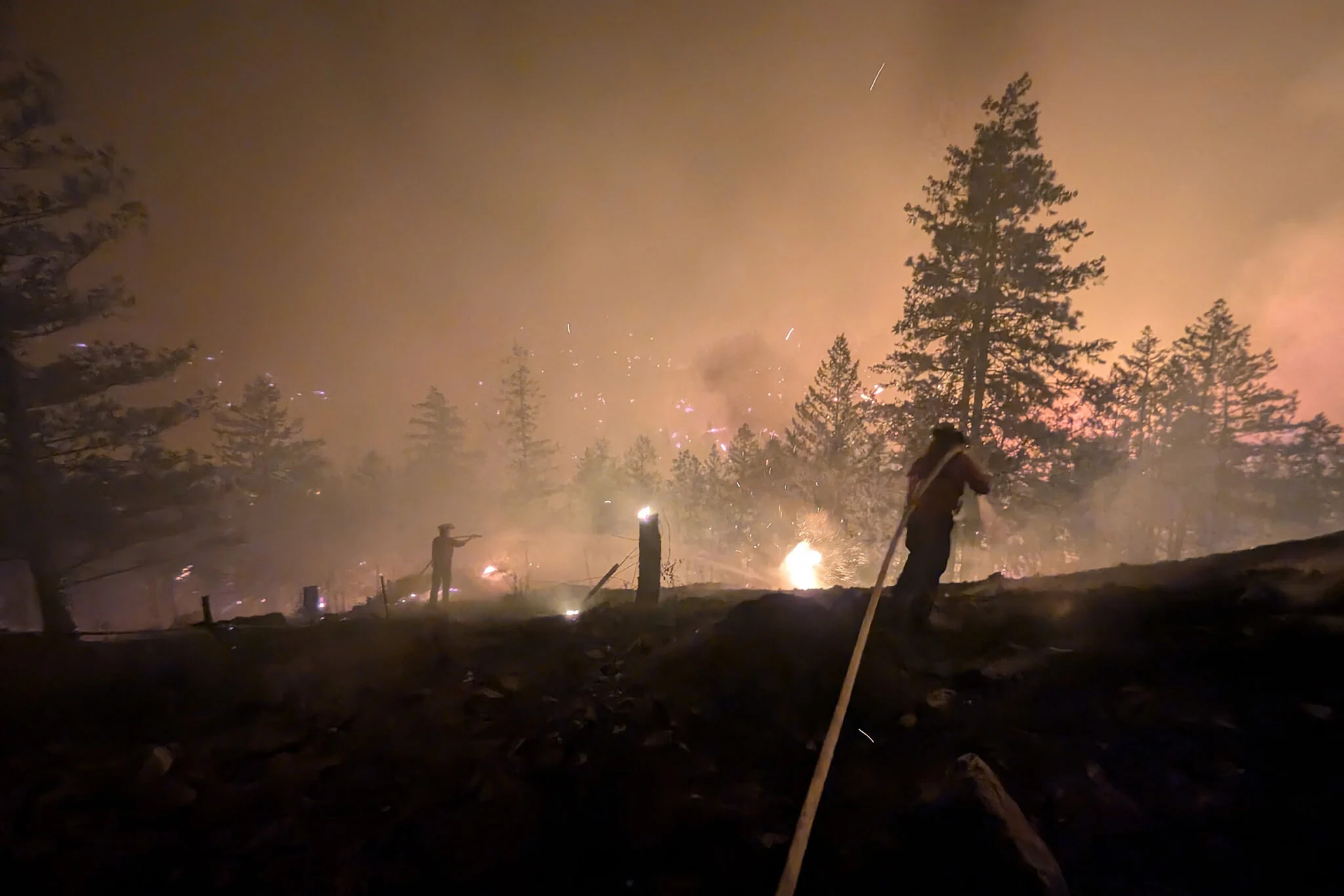
Explosive fire conditions are overwhelming entire communities.
British Columbia, August 2026.
More than 20,000 people have been forced to leave their homes as rapidly spreading wildfires tear through British Columbia, prompting the Canadian province to declare a state of emergency. The crisis intensified over the weekend around Summerland and Peachland, two communities near Okanagan Lake that came under sweeping evacuation orders. Authorities warned that extreme heat, powerful winds and prolonged drought had created explosive conditions capable of threatening additional population centers with little warning. The emergency represents the largest wildfire evacuation recorded in British Columbia so far this summer.
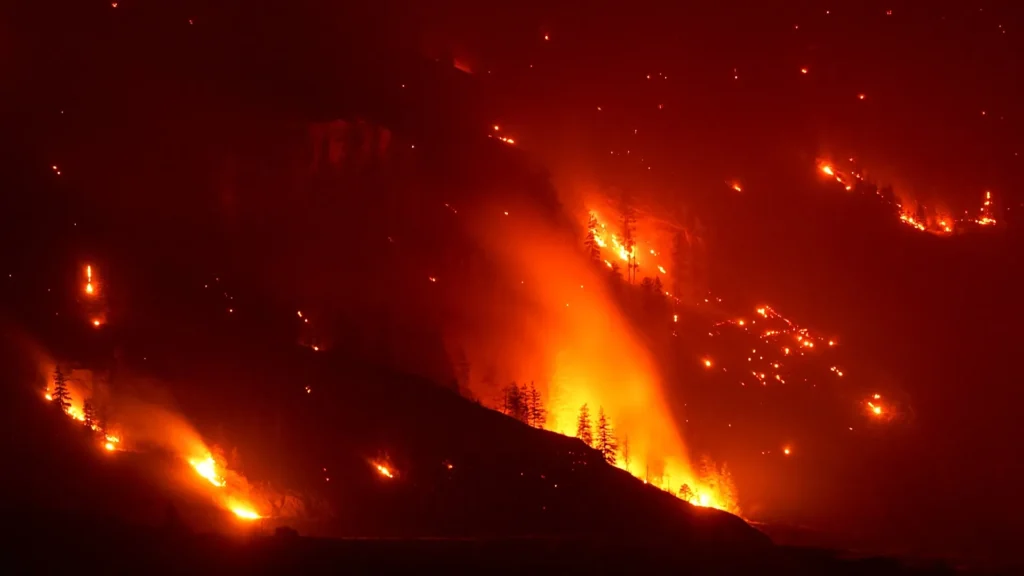
The Bald Range Fire, first detected west of Summerland on Friday, expanded with unusual speed and nearly doubled in size overnight. By Saturday night, it had burned more than 10,300 hectares, overwhelming local response systems and forcing emergency officials themselves to abandon operational areas. Summerland, with approximately 12,000 residents, was ordered to evacuate, along with thousands of people from Peachland and surrounding districts. Major roads became congested as families fled north toward Kelowna or south toward Penticton before sections of the highway were closed.
British Columbia Premier David Eby described the escalation as extraordinary and said a senior firefighting official had compared the fire’s behavior to a bomb exploding. Flames were racing through the crowns of trees approximately 30 meters high and rising another 60 meters above them. The intensity became powerful enough for the fire to create its own weather system, generating lightning capable of igniting new areas and reinforcing the blaze. Officials warned that similarly abrupt changes could occur elsewhere as unstable atmospheric conditions continued across the province.
The speed of the fire trapped some residents beyond the advancing perimeter and required authorities to organize air evacuations. Rescue aircraft removed dozens of people from isolated areas while search teams worked to locate others who had been unable to leave by road. The Royal Canadian Mounted Police began investigating a possible death near Summerland, although dangerous conditions prevented immediate confirmation. Authorities also reported significant structural losses, but active flames and dense smoke made a complete assessment of damaged homes, farms and businesses impossible.
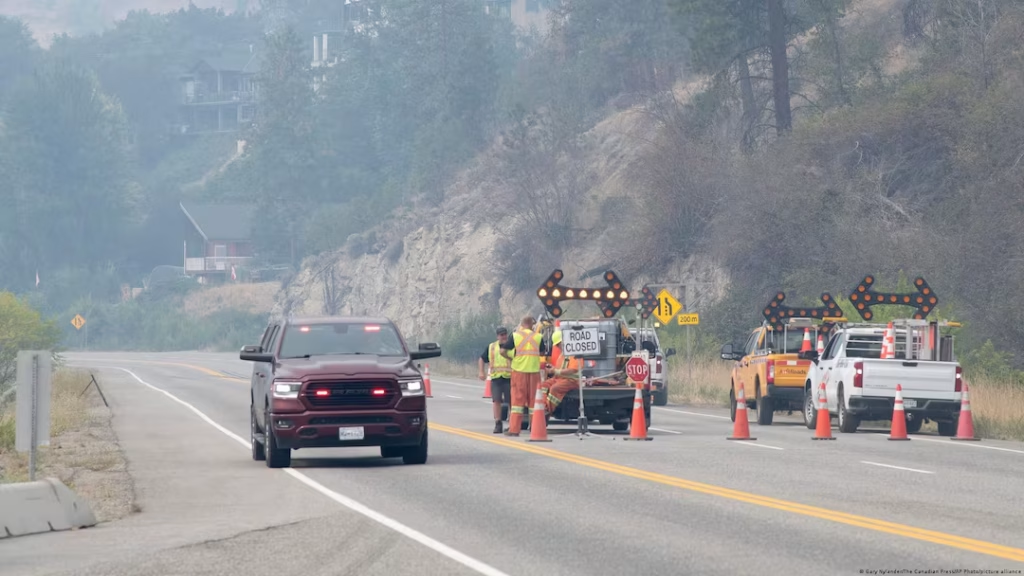
The provincial state of emergency gives British Columbia additional powers to coordinate rescue operations, restrict travel and protect essential supplies during the crisis. Emergency reception centers were established for displaced residents, with Penticton serving as one of the principal host communities. Local agencies began providing meals, temporary accommodation, medical assistance and support for residents evacuating with pets or livestock. Some affected areas also experienced electricity disruptions, road closures and warnings regarding the safety of local water supplies.
Canadian Prime Minister Mark Carney said the federal government was prepared to support British Columbia and thanked firefighters and emergency personnel for working under exceptionally dangerous conditions. Federal Emergency Management Minister Eleanor Olszewski approved assistance focused on shelter and accommodation for displaced families. International crews have also joined the response, including firefighters and specialists from Mexico, Australia and New Zealand. Helicopters, aircraft equipped for nighttime operations and hundreds of ground personnel were deployed, although heavy smoke and turbulence repeatedly limited their effectiveness.
By early Sunday, the BC Wildfire Service was monitoring 102 active fires across British Columbia, with nearly half classified as out of control. The Bald Range Fire remained the most urgent threat, but officials cautioned that the same combination of intense heat, dry vegetation and strong winds could accelerate other fires. Canada has recorded approximately four million hectares burned since the beginning of 2026, according to national wildfire monitoring data. The scale of the destruction is placing sustained pressure on provincial resources and increasing Canada’s reliance on federal coordination and international assistance.
Researchers examining Canada’s recent wildfire seasons have linked the growing frequency of extreme fire conditions to human-driven climate change. Higher temperatures, longer droughts and increasingly dry vegetation allow fires to spread more rapidly and continue burning through periods that once provided relief. In British Columbia, officials warned that some fires were no longer weakening significantly overnight, reducing the window in which crews could safely build containment lines. Communities near forests and grasslands are consequently facing shorter evacuation times and greater uncertainty as fire behavior becomes more difficult to predict.
The immediate priority remains protecting residents, reaching isolated communities and preventing further loss of life. Officials have urged people under evacuation orders to leave immediately and warned others in surrounding areas to remain prepared to depart with little notice. The full extent of the destruction around Summerland and Peachland will not be known until conditions allow assessment teams to enter the affected zones. Firefighting operations are expected to continue as hot, dry and windy weather sustains the risk of further expansion.
Más allá de la noticia, el patrón. / Beyond the news, the pattern.