

 Phoenix 24
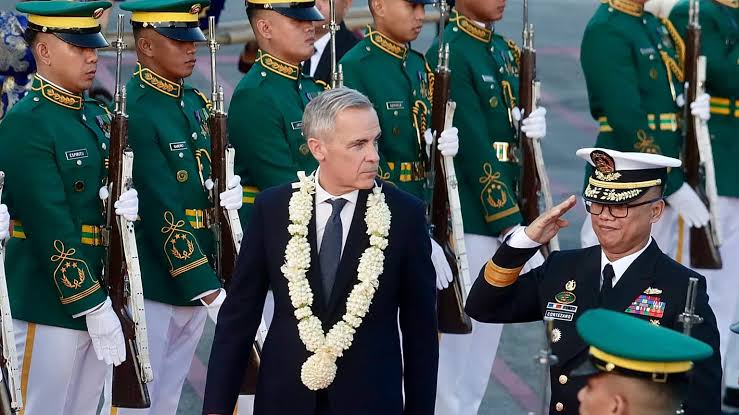
Ottawa accelerates its strategy to diversify beyond the United States.
MANILA, Philippines. Canada and the Philippines have concluded negotiations on a bilateral free trade agreement, marking a significant step in Ottawa’s efforts to diversify international trade and reduce its economic dependence on the United States. The announcement followed a meeting between Canadian Prime Minister Mark Carney and Philippine President Ferdinand Marcos Jr. during the 49th Association of Southeast Asian Nations (ASEAN) Summit in Manila.
The agreement, negotiated in approximately one year, is expected to be formally signed in 2027. Both governments are working toward implementation, although its entry into force will depend on the completion of the necessary legal and ratification procedures.
Carney described the initiative as an opportunity to expand Canadian participation in one of Asia’s fastest-growing economies. The Philippines represents a market of more than 110 million consumers, with economic activity valued at approximately $680 billion.
The proposed agreement covers trade in goods and services, investment, digital commerce and opportunities for small and medium-sized enterprises. Canadian industries including agriculture, aerospace, forestry, mining and energy are expected to benefit from improved market access and greater commercial predictability.
According to the Canadian government, bilateral merchandise trade reached approximately CAD 3.4 billion in 2025, increasing 7.4% from the previous year. Ottawa estimates that the agreement could help triple Canadian exports to the Philippines by 2035, although this remains a projection rather than a guaranteed economic outcome.
The announcement also coincided with substantial progress in negotiations for a broader free trade agreement between Canada and ASEAN. That prospective arrangement would provide Canadian businesses with improved access to a regional market approaching 700 million people.
Canadian authorities estimate that the ASEAN agreement could eventually contribute nearly CAD 2 billion to national economic output and support approximately 14,000 jobs once implemented.
The agreements form part of Carney’s strategy to double Canadian exports to markets outside the United States by 2035. Trade disagreements with Washington have reinforced Ottawa’s interest in developing commercial relationships that reduce exposure to disruptions involving its largest trading partner.
Beyond trade, Canada and the Philippines announced initiatives involving maritime security, renewable energy, digital technologies and infrastructure investment, strengthening cooperation across the wider Indo-Pacific region.
For both countries, the next challenge is converting diplomatic commitments into enforceable trade arrangements capable of generating measurable benefits for businesses and consumers.
The agreement illustrates how international trade diversification is increasingly becoming both an economic priority and an instrument of strategic resilience.
Beyond the Headlines, the Economic Pattern.