

 Phoenix 24
The image shifts, but the standard remains.
Los Angeles, March 2026
Cameron Diaz has offered a reflection on what it means to maintain beauty as time passes, addressing a subject that continues to shape the public lives of actresses far beyond their work on screen. Her comments speak to a familiar tension in celebrity culture: women are expected to preserve youth, but are also judged for how they try to do it.

What gives the reflection weight is that Diaz is not speaking from the position of a newcomer confronting fame for the first time. She belongs to a generation of actresses whose image has been monitored for decades, which makes any statement about aging, appearance and self-perception more than a casual remark. It becomes part of a wider conversation about how public women are taught to see themselves.

The subject remains especially sensitive because beauty in Hollywood is rarely treated as a neutral attribute. It is tied to value, visibility and staying power. For actresses, aging is often framed not simply as a natural process, but as a test of whether they can remain legible inside an industry that still rewards youth disproportionately. Diaz’s reflection enters that debate from a position of experience rather than defensiveness.
What emerges from her remarks is a more measured view of beauty over time. Instead of treating aging as a failure to be hidden, the reflection points toward acceptance, change and the need to resist standards that ask women to remain visually static while life continues to move forward. That perspective matters because it shifts the conversation from preservation to relationship: not how to stop time, but how to live with it without surrendering self-worth.

The broader significance of the moment lies in how familiar the issue remains. Public discourse around actresses still returns obsessively to faces, bodies and signs of age, often more quickly than it returns to performance, work or authorship. In that environment, even modest reflections on beauty can carry unusual force because they push against a culture built on constant visual scrutiny.

Diaz’s comments also fit into a larger pattern among women in entertainment who are increasingly speaking about the emotional and symbolic burden of appearance. The point is no longer only whether beauty fades or survives. It is how much of a person’s public identity has been forced to revolve around that question in the first place.
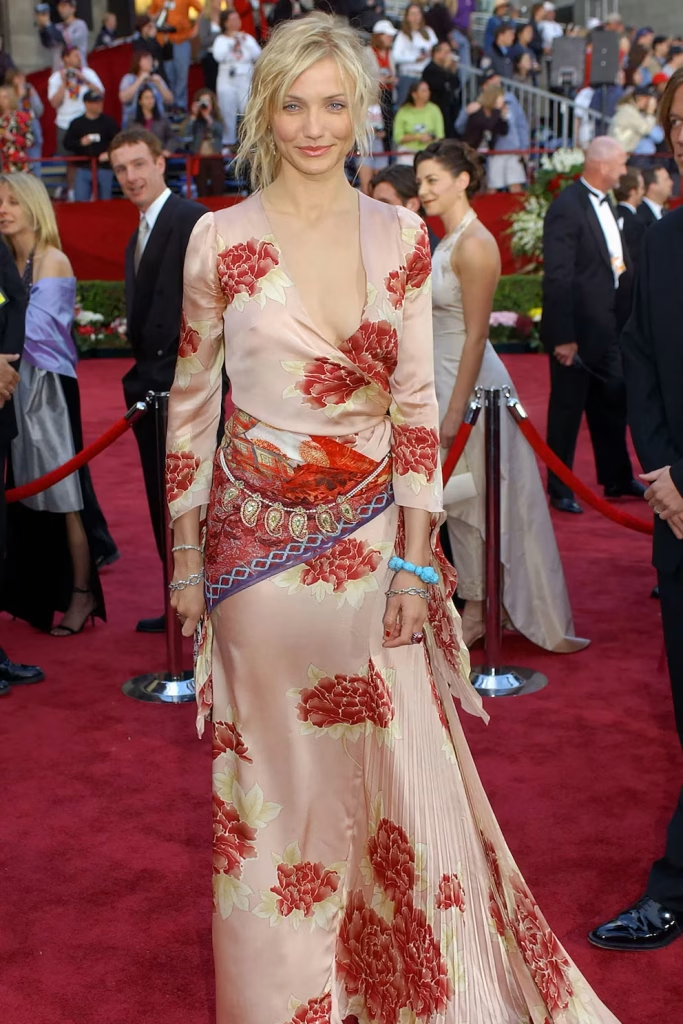
For now, her reflection leaves a clear impression. Beauty under the pressure of time is not only an aesthetic issue. It is also a cultural and psychological one, especially for women whose image has long been treated as public property. What Diaz seems to suggest is that the challenge is not simply to age well, but to refuse the idea that aging must always be defended.
Phoenix24: journalism without borders. / Phoenix24: journalism without borders.