

 Phoenix 24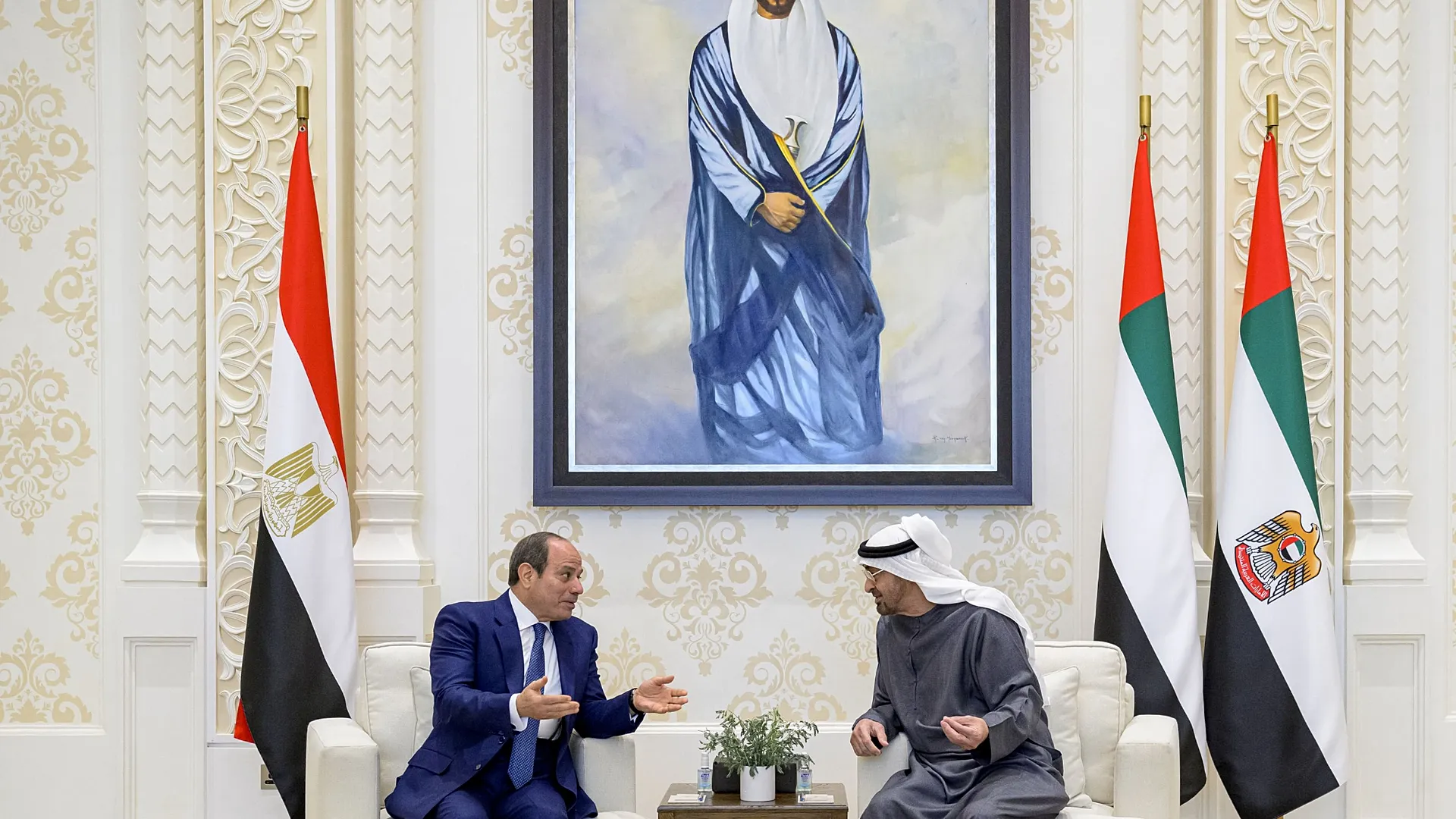
Diplomacy becomes survival, not influence.
Cairo, March 2026. Egypt has accelerated its diplomatic activity across the Middle East as tensions surrounding Iran intensify, positioning itself as a stabilizing intermediary in an increasingly volatile regional system. Rather than projecting hard power, Cairo is operating through calibrated engagement, strengthening ties with Gulf allies while preserving communication channels with Tehran in an effort to contain escalation before it reaches a broader regional rupture.
The shift reflects a rapidly deteriorating geopolitical environment. Recent developments involving Iran, the United States, and Israel have elevated the risk of multi-actor confrontation, while energy infrastructure and strategic maritime routes remain exposed to disruption. In this context, Egypt’s diplomatic activation is not optional—it is a defensive necessity shaped by proximity, economic exposure, and regional interdependence.
President Abdel Fattah el-Sisi’s recent engagements with Gulf leadership signal more than routine coordination. They represent a strategic alignment built on shared vulnerability. Cairo has reinforced the idea that Gulf stability is inseparable from its own national security, framing diplomacy not as mediation but as an extension of internal defense. This framing allows Egypt to operate within alliances without fully committing to confrontation dynamics.
At the same time, Egypt has deliberately avoided severing dialogue with Iran. High-level communication channels remain active, reflecting a dual-track strategy designed to preserve de-escalation pathways. This balancing posture—alignment without rupture, engagement without endorsement—reveals a calculated effort to maintain maneuverability in an environment where rigid positioning could quickly become a liability.
Egypt’s approach underscores a structural limitation shared by many regional actors. It lacks the military leverage to dictate outcomes in a conflict involving major powers, but retains diplomatic capital accumulated through decades of mediation in regional crises. In moments of heightened tension, that capital becomes its primary instrument. Influence is exercised not through dominance, but through connectivity.
This is why Cairo’s messaging has emphasized coordination over leadership. Rather than attempting to dominate the diplomatic space, Egypt is positioning itself as part of a collective containment framework. The underlying warning is implicit but clear: the region is approaching a threshold where escalation could become self-sustaining, with consequences extending far beyond immediate actors.
The risk is not abstract. Disruptions to key maritime corridors and energy flows have already demonstrated how quickly regional instability can translate into global economic impact. For Egypt, whose economy remains sensitive to external shocks, this represents a direct internal threat. Inflation, supply chain pressure, and reduced investment flows are not distant scenarios—they are immediate risks tied to regional escalation.
In this sense, Egypt’s diplomacy functions as economic defense. Stabilizing the region is not only a geopolitical objective but a domestic imperative. The country’s strategic behavior reflects an understanding that internal stability is increasingly dependent on external containment.
More broadly, this moment illustrates how middle powers are adapting to contemporary conflict dynamics. Without the capacity to impose outcomes militarily, they operate through layered diplomacy, strategic ambiguity, and networked alliances. Their objective is not to win conflicts, but to prevent them from expanding beyond controllable limits.
Egypt’s current posture embodies this logic. By maintaining relationships across opposing blocs, it preserves strategic flexibility. By aligning with Gulf concerns, it reinforces regional cohesion. By keeping channels open with Iran, it sustains the possibility of dialogue in a context where communication itself is becoming scarce.
The durability of this strategy remains uncertain. As tensions escalate, the space for neutral or intermediary positioning tends to narrow, forcing actors into more explicit alignments. Egypt is attempting to delay that inflection point, extending the lifespan of diplomacy in a system increasingly defined by confrontation.
Ultimately, Cairo’s intensified diplomatic activity is less about projecting power than about managing risk. It reflects a recognition that in the current Middle Eastern landscape, the most valuable strategic outcome may not be influence, but containment.
Behind every datum, there is an intention. Behind every silence, a structure.