

 Phoenix 24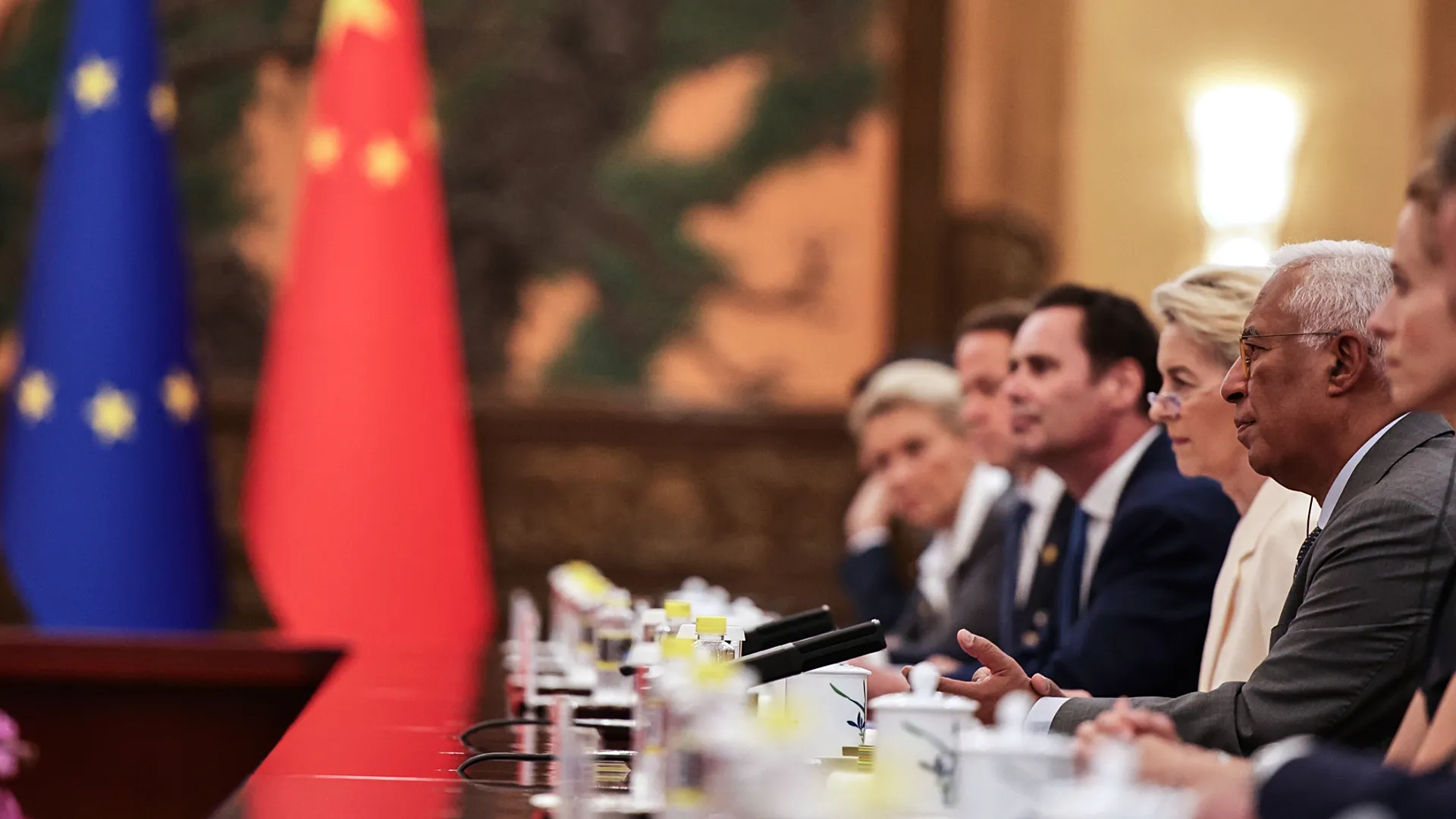
Europe moves from caution to economic defense
Brussels, April 2026. The European Commission is hardening its tone toward China as pressure grows inside Brussels to deploy stronger trade instruments against Beijing. For years, the European Union tried to preserve a careful balance: cooperate where possible, compete where necessary and confront only when unavoidable. That balance is now breaking under the weight of industrial anxiety, trade deficits and fears of strategic dependency.
The shift is being driven by a widening perception that Europe’s current tools are too slow for the scale of the challenge. Chinese exports, particularly in electric vehicles, clean technologies, batteries and critical industrial components, are testing Europe’s manufacturing base at a moment of economic fragility. What Brussels once framed as trade imbalance is now increasingly described as a question of sovereignty.
At the center of the debate is the Anti-Coercion Instrument, a mechanism that could allow the EU to respond more aggressively to economic pressure from third countries. Its potential use against China would mark a significant escalation. Tariffs, procurement restrictions, investment limits and intellectual property measures are no longer theoretical options; they are becoming part of Europe’s defensive vocabulary.
Yet the EU’s internal division remains the decisive obstacle. Some member states want a firmer line, fearing industrial decline and technological dependence. Others worry that escalation could provoke retaliation against exporters, investors and supply chains deeply tied to China. This is the central contradiction of European power: Brussels wants strategic autonomy, but its members do not share the same exposure to risk.
China has already warned against Europe’s “Made in Europe” industrial push, arguing that it discriminates against foreign investment. For Brussels, however, the policy is presented as a corrective measure after years of dependency and uneven competition. The dispute is no longer only about market access; it is about who controls the next industrial cycle.
The confrontation also exposes a deeper psychological shift inside Europe. After the energy rupture with Russia, dependency is no longer viewed as a neutral economic condition. It is treated as a strategic vulnerability. That lesson now shapes the China debate, where supply chains, rare earths, electric vehicles and green technologies have become instruments of geopolitical leverage.
Europe is not yet entering a full trade war with China, but it is preparing for a harder phase. The language of engagement has not disappeared, but it is being surrounded by defensive architecture. Brussels is learning that in the new global economy, openness without leverage can become exposure.
The question is whether the EU can turn concern into collective action. If member states remain divided, China will continue to exploit asymmetry through scale, speed and market pressure. If Europe aligns its instruments, the bloc may finally convert its market size into geopolitical force.
Phoenix24: intelligence for free audiences. / Phoenix24: inteligencia para audiencias libres.