

 Phoenix 24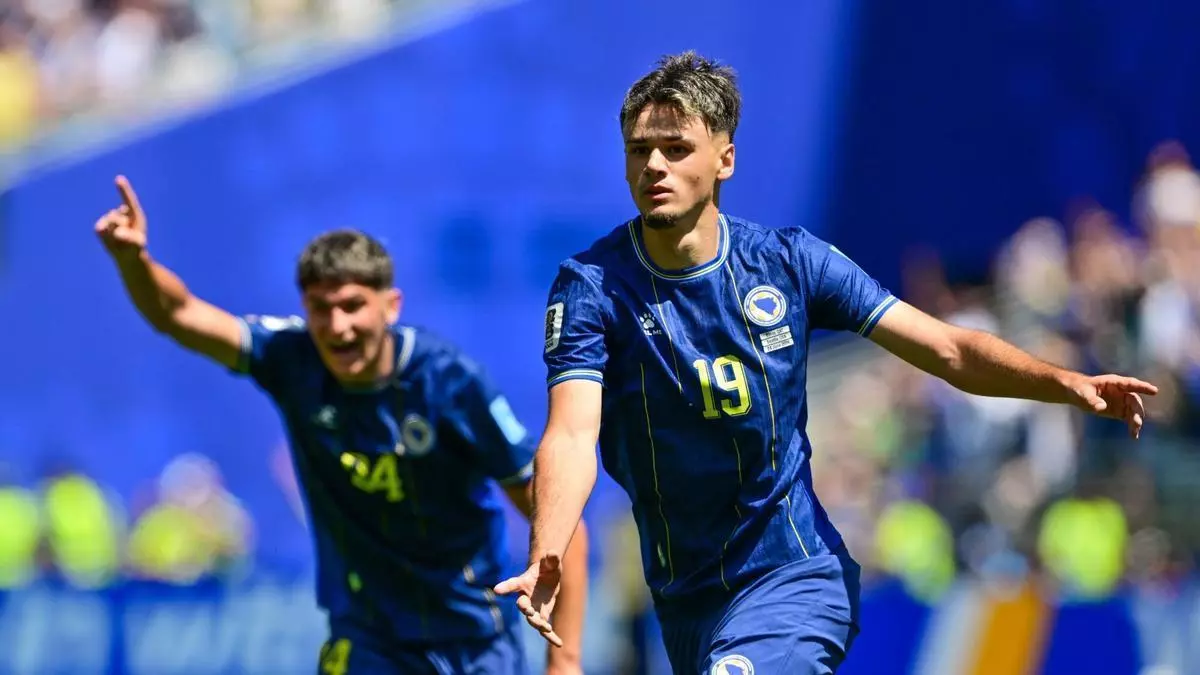
A teenage breakthrough keeps the Balkan dream alive.
Seattle, June 2026
Bosnia and Herzegovina strengthened its chances of reaching the World Cup knockout stage after defeating Qatar 3-1 in its final Group B match. The European side completed the group phase with four points and finished third behind Switzerland and Canada, placing itself in a favorable position within the ranking of the tournament’s best third-placed teams. Qatar, meanwhile, ended its campaign at the bottom of the group with one point. Bosnia must still await the completion of the remaining groups before its qualification becomes mathematically definitive.
Kerim Alajbegovic gave Bosnia the lead in the 29th minute with an outstanding individual goal that transformed the rhythm of the match. The 18-year-old winger escaped two challenges before striking powerfully from outside the penalty area, leaving the Qatari goalkeeper without a realistic opportunity to intervene. His finish rewarded Bosnia’s more aggressive opening and confirmed his emergence as one of the youngest players to make a significant impact at the tournament. The goal also relieved a team that had entered the match knowing only victory could preserve its hopes.
Bosnia doubled its advantage five minutes later after captain Edin Dzeko delivered a dangerous ball into the area. The action ended with the ball entering the net following a deflection from a Qatari defender, giving the European team a 2-0 lead before the interval. Dzeko, making his 150th appearance for his national side, remained influential despite not scoring. His leadership and positioning continued to provide Bosnia with an attacking reference during a match defined by urgency.
Qatar responded shortly before halftime through Hassan Al-Haydos, who reduced the deficit in the 42nd minute. The goal briefly changed the emotional balance of the contest and gave Julen Lopetegui’s team an opportunity to recover after a difficult opening period. Qatar entered the second half searching for an equalizer that could have damaged Bosnia’s qualification prospects. However, its possession did not produce enough clear opportunities to overcome the Bosnian defence.
Bosnia resisted the pressure and gradually regained control as Qatar became more exposed. Substitute Ermin Mahmic secured the victory in the 80th minute with the third goal, eliminating the possibility of a late comeback. His finish allowed Bosnia to manage the closing stages without the anxiety that had accompanied much of the second half. The final whistle confirmed the country’s first victory of the tournament and preserved its chance of advancing beyond the group stage for the first time.
The result left Bosnia level with Canada on four points, although the North American host retained second place because of its superior goal difference. Switzerland finished first with seven points after defeating Canada in the other Group B match. Bosnia therefore entered the separate ranking used to compare the 12 teams finishing third in their respective groups. Under the expanded World Cup format, eight of those 12 countries qualify for the round of 32.
Four points have historically represented a strong total for a third-placed team, but the new 48-team tournament creates a more complex and unpredictable qualification process. Teams are compared first through points, followed by goal difference, goals scored, disciplinary records and, if necessary, their position in the FIFA ranking. Bosnia’s negative goal difference after three matches may still influence its final placement. Nevertheless, the victory over Qatar placed the team in a considerably stronger position than it occupied before kickoff.
The Bosnians began the tournament with a draw against Canada before suffering a heavy defeat against Switzerland. That loss increased the pressure surrounding the final match because another setback would have ended their campaign immediately. The team responded with greater attacking conviction and a more direct approach against Qatar. Alajbegovic’s early intervention provided the creativity and confidence required to convert that urgency into a decisive result.
The teenager’s performance represented one of the most encouraging elements of Bosnia’s group campaign. Alajbegovic combined technical ability with the willingness to attack defenders, offering a dynamic complement to the experience of Dzeko. His goal against Qatar may become one of the defining images of Bosnia’s return to the World Cup. It also suggested that the national team’s future will not depend exclusively on the generation that carried the country to its first tournament appearance in 2014.
For Dzeko, the match carried additional symbolic importance. The veteran forward reached 150 international appearances and once again served as the emotional leader of the team. Although he struck the post and was unable to add to his scoring record, his involvement in Bosnia’s second goal proved valuable. His continued presence connects the current squad with the country’s earlier World Cup history while younger players begin assuming greater responsibility.
Qatar’s elimination completed another disappointing World Cup campaign after the country also departed during the group stage as host in 2022. Lopetegui’s side demonstrated periods of improvement and managed to score against Bosnia, but defensive errors and limited attacking precision proved costly. The team finished without a victory and was unable to convert its moments of possession into sustained danger. The result may now lead to a broader evaluation of Qatar’s sporting project and its progress since hosting the previous tournament.
Bosnia’s attention now turns toward the results produced in the remaining groups. Qualification would create a probable round-of-32 meeting with the United States, which secured first place in Group D. Such a matchup would present a major challenge against one of the tournament hosts and a team supported by large home crowds. It would also represent a historic opportunity for Bosnia to reach the knockout phase in only its second World Cup appearance.
The victory over Qatar did not guarantee Bosnia’s future, but it allowed the team to complete the responsibility within its control. A spectacular goal from its youngest emerging figure, the influence of its most experienced captain and a disciplined response under pressure kept the campaign alive. Bosnia has done its part and now waits for the tournament’s remaining results to determine whether its four points are enough to continue.
Hechos que no se doblan. / Facts that do not bend.