

 Phoenix 24
Salary pressure is exposing a deeper national imbalance.
La Paz, April 2026
The latest confrontation between Bolivia’s business sector and the Central Obrera Boliviana is not just another annual wage dispute. It is a sharper sign that the country’s economic model is entering a more fragile phase, where inflation, eroding purchasing power and private sector weakness are colliding in public view. Employers rejected the COB’s demand for a 20 percent wage increase and warned of inflationary effects, but the real conflict runs deeper than the argument over payroll costs.

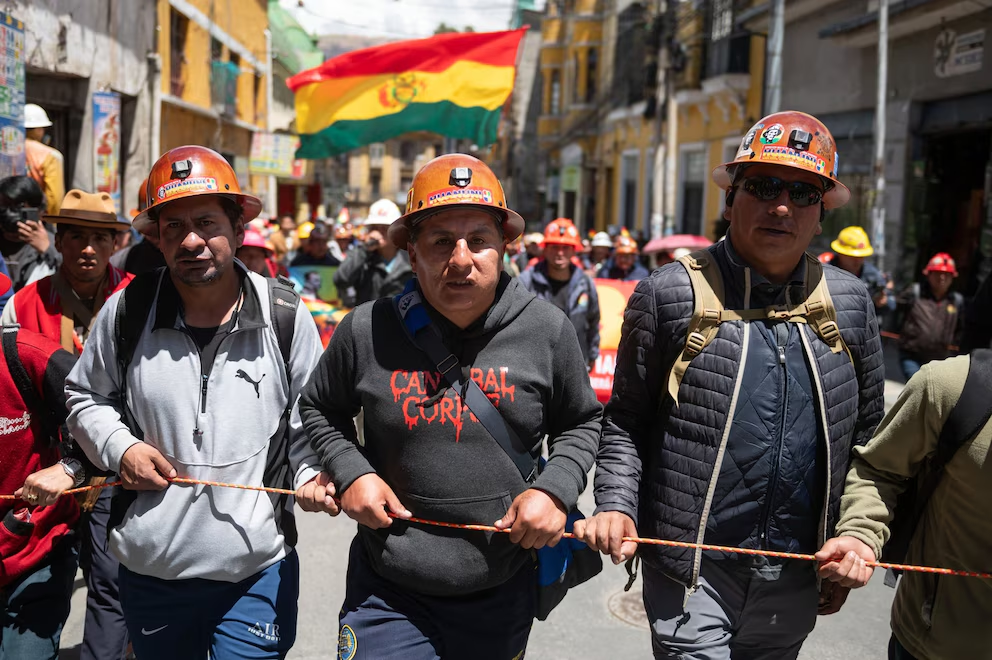
Labor is pushing from a position that is socially understandable. When inflation accelerates and households feel that wages are no longer protecting basic consumption, organized workers do what unions are supposed to do: demand compensation, visibility and a political response. In that sense, the 20 percent request is not simply an act of economic irresponsibility, as business leaders claim. It is also a symptom of how severely price instability has begun to reshape expectations inside the social pact.
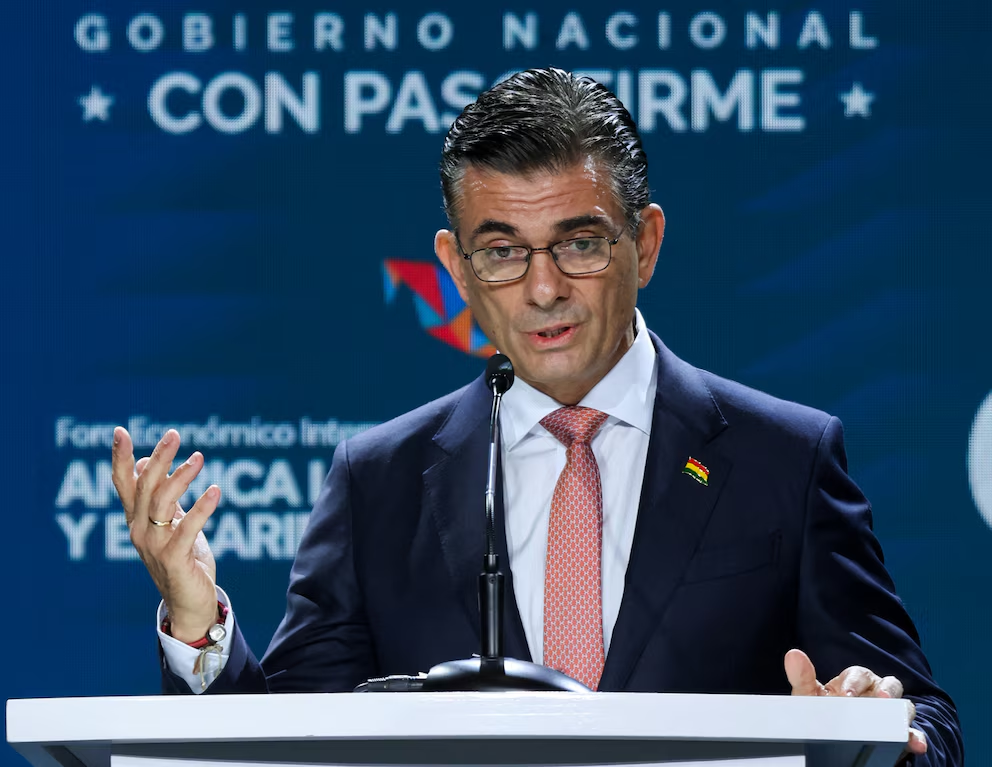
Yet the business response also reveals a hard constraint. Employers are arguing that another broad wage hike would intensify inflation, weaken formal employment and place additional strain on productive sectors already operating under low confidence, legal uncertainty and weak growth conditions. That position is not only ideological. It reflects a structural fear that Bolivia is reaching the point where compensating social pain through decrees and wage adjustments begins to reproduce the very instability those measures are meant to contain.
This is what makes the dispute more significant than it first appears. Bolivia is no longer debating wages inside a context of relative macroeconomic calm. It is debating them inside a deteriorating environment marked by inflation, energy pressure, lower room for maneuver and growing distrust over how long the state can continue cushioning economic tensions without deeper reforms. Once that happens, salary negotiations stop being merely distributive. They become political tests of whether the system still has a credible anchor.
There is also a deeper asymmetry in the fight. A strong wage increase may temporarily help some workers preserve income, but it does little for those outside formal employment, those in more precarious sectors or those whose consumption will later be hit by pass-through inflation. This is why salary battles in stressed economies often produce moral clarity but economic ambiguity. The demand feels fair, the warning feels credible and the government is left trapped between social legitimacy and macroeconomic risk.

What Bolivia is experiencing, then, is not just a negotiation over percentages. It is a visible clash between two survival logics. Labor wants to defend purchasing power before inflation destroys it further. Business wants to prevent labor costs from accelerating a broader deterioration that could wipe out jobs and investment. Both are reacting to the same underlying problem: an economy that is losing the capacity to absorb distributive conflict without amplifying it.

That is why this episode matters. It shows that inflation is no longer just a statistical issue in Bolivia. It is becoming a political solvent, dissolving old assumptions about what the state, the unions and the productive sector can still promise one another. In that environment, wage demands become more than social petitions. They become signals that the country’s economic equilibrium is under far more pressure than official narratives are willing to admit.
Detrás de cada dato, hay una intención. Detrás de cada silencio, una estructura.
Behind every datum, there is an intention. Behind every silence, a structure.