

 Phoenix 24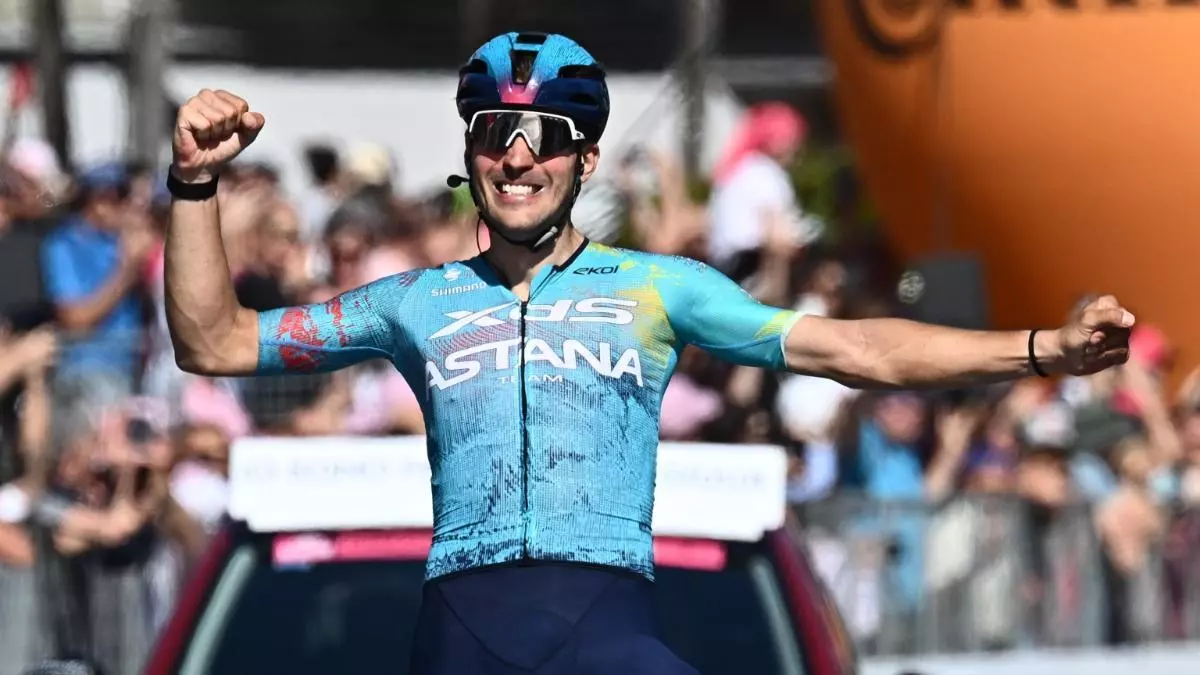
The Giro still rewards courage at full speed.
Verbania, May 2026
Alberto Bettiol imposed himself in Verbania with the kind of solo victory that gives cycling its old emotional grammar: attack, resistance, descent, and release. The Italian rider moved at the decisive moment on the final climb, caught Andreas Leknessund near the summit of Ungiasca, and then used the descent not as a transition but as a weapon. Five years after his last stage victory, Bettiol did not simply win; he recovered a public version of himself.
The stage had been shaped by a large breakaway that slowly emptied the main peloton of relevance for the day. By the time the road hardened inside the final kilometers, the race had already separated ambition from calculation. Leknessund tried to anticipate the finish with a solo move, but Bettiol read the terrain with colder precision and turned local knowledge into tactical superiority.
His victory also carried an intimate layer. Verbania was not just another finish line, because part of his personal life was rooted there through his girlfriend and her family. That detail matters in cycling, where geography is never neutral. Roads become memory, pressure, and sometimes redemption.
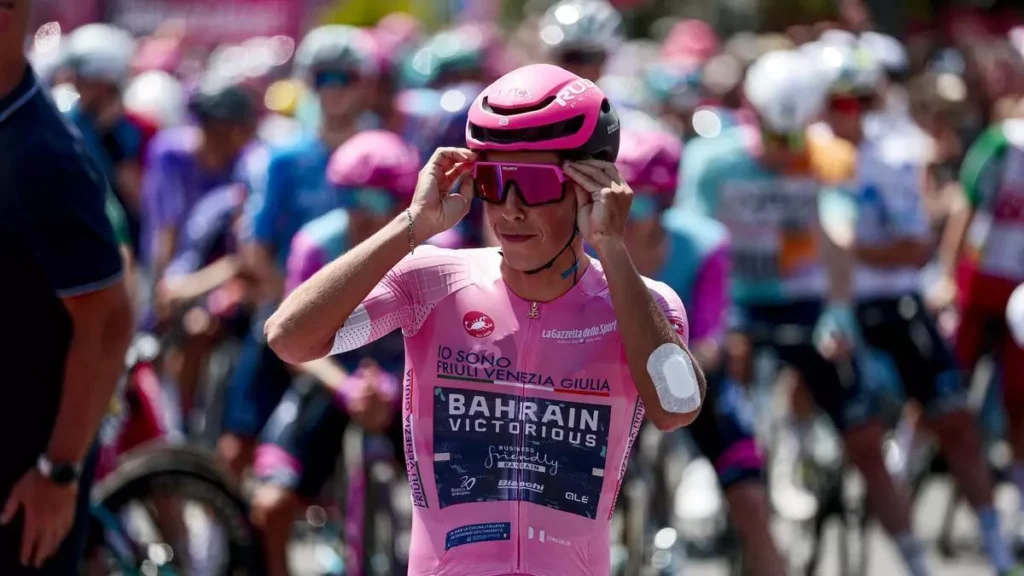
Behind Bettiol’s triumph, Afonso Eulálio preserved the pink jersey and confirmed that his leadership is no longer a passing surprise. The Portuguese rider finished safely with the main group, keeping his advantage over Jonas Vingegaard and extending the narrative tension of this Giro. Every stage now asks the same question: is Eulálio managing a dream, or defending something increasingly real?
The coming mountain stage will test that answer with greater brutality. Bettiol’s day belonged to instinct and execution, but the general classification now moves into terrain where illusions are usually destroyed. The Giro remains open, nervous, and wonderfully unstable.
For now, Verbania belongs to Bettiol. Not because he was the strongest name on paper, but because he understood the moment before the others did. In cycling, that half-second of recognition can still become history.
La narrativa también es poder. / Narrative is power too.