

 Phoenix 24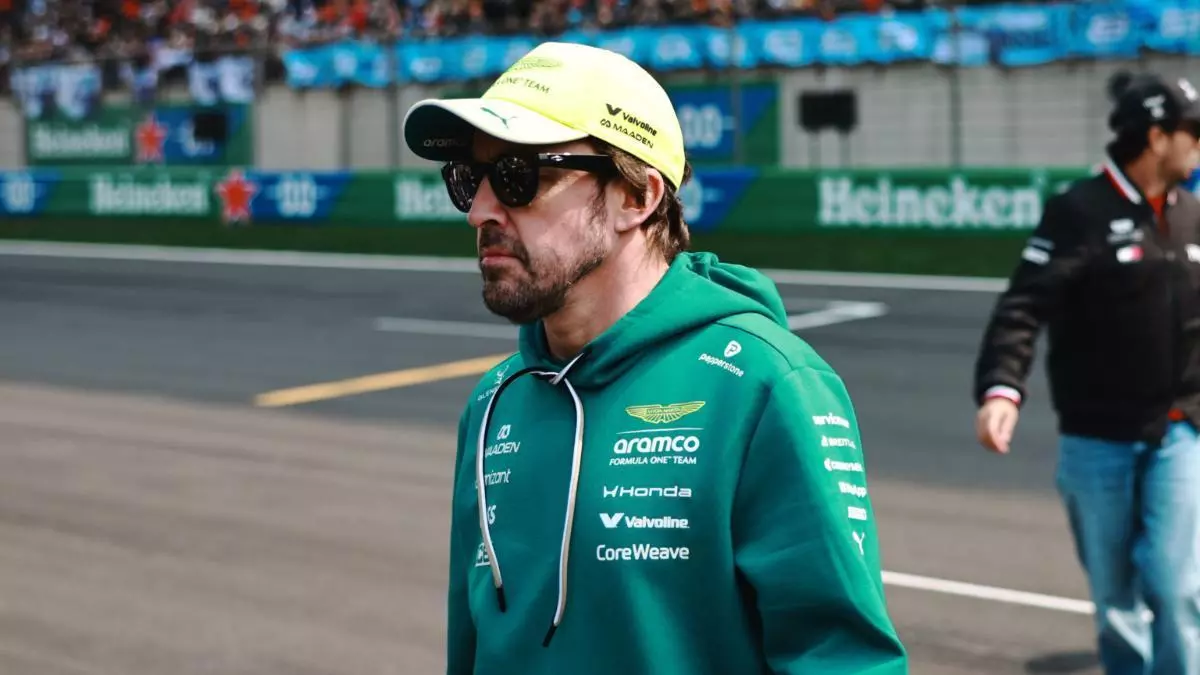
Even elite drivers cannot repair a broken structure.
Silverstone, March 2026.
Aston Martin’s turbulent start to the 2026 Formula 1 season has entered a sharper and more uncomfortable phase after former engineer Jock Clear questioned whether Fernando Alonso is the right kind of driver to pull the team out of its current crisis. The comment matters not because Alonso’s talent is suddenly in doubt, but because it introduces a more structural question: what kind of leadership is actually needed when a team is no longer fighting for positions, but trying to understand why its project is failing so badly.
Clear’s view is especially striking because it does not attack Alonso’s speed or intelligence behind the wheel. On the contrary, it acknowledges his brilliance. The point is different. Alonso, in this reading, is not the type of driver best suited to stabilize a team buried in technical confusion, performance deficits and strategic uncertainty. That distinction is important. Formula 1 does not only demand fast drivers. At certain moments, it demands figures capable of absorbing chaos without the entire structure beginning to fracture around them.
The timing makes the criticism heavier. Aston Martin has opened the year in deep trouble, with its Honda package struggling badly and the team already facing questions about whether meaningful recovery is even possible before 2027. When a former engineer with top level pedigree suggests the current season may already be beyond rescue, the debate shifts. It stops being about one bad weekend and becomes about whether the project itself is misaligned.
That is where Alonso becomes a symbolic figure in a larger problem. He remains one of the most gifted and demanding drivers in the paddock, but that intensity can cut both ways in a moment of prolonged underperformance. A driver like Alonso is exceptional at extracting speed, identifying weaknesses and pushing standards upward. Yet when a team’s problems are systemic, those same qualities may not be enough to generate recovery. Pressure can expose issues, but it cannot by itself solve them.
The deeper problem for Aston Martin is expectation. This is no longer a team judged as a hopeful outsider. It is judged as a major project built around investment, elite recruitment and the promise of a climb toward the front. Under those conditions, failure is interpreted less as delay and more as evidence that the structure still lacks internal coherence. Comments like Clear’s resonate because they feed that perception.
None of this means Alonso has become the problem. It means the team may be in a phase where even a driver of his caliber cannot function as the solution people want him to be. In Formula 1, there are moments when talent can mask structural weakness. Aston Martin appears to be moving beyond that threshold.
What emerges from this episode is a harsher reading of the season ahead. The real question may no longer be whether Alonso can rescue Aston Martin, but whether Aston Martin has built a machine capable of being rescued at all.
Phoenix24: claridad en la zona gris. / Phoenix24: clarity in the grey zone.