

 Phoenix 24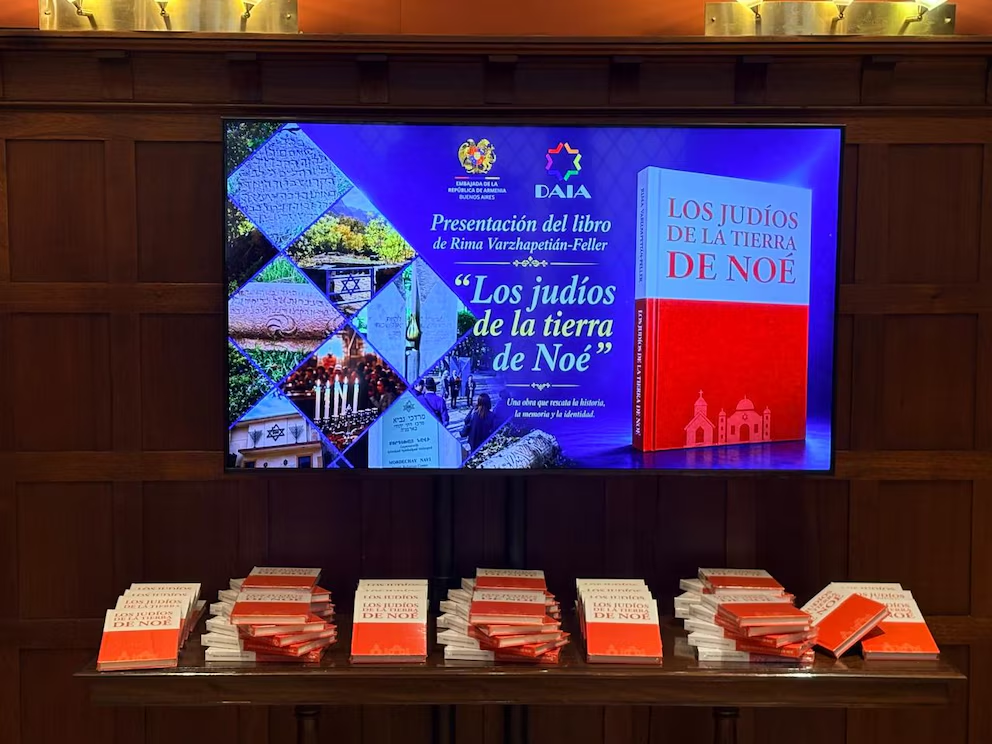
A book becomes a bridge between two historical wounds
Buenos Aires, April 2026. The Embassy of Armenia and DAIA presented The Jews of the Land of Noah, a cultural event that goes far beyond a literary launch. The book places Armenian and Jewish memory in direct conversation, linking two communities shaped by exile, survival, genocide, religious continuity and the long defense of historical truth.
The title carries symbolic weight. “The Land of Noah” evokes Armenia not only as a territory, but as a civilizational reference point where biblical memory, national identity and diaspora consciousness intersect. By focusing on Jewish life in that space, the work expands the map of shared memory between peoples often studied separately but historically connected through displacement and resilience.
The presentation also has diplomatic meaning. Armenia and Jewish institutions are using culture as a language of recognition, not merely as heritage celebration. In a world where denialism, historical revisionism and antisemitism continue to mutate, books like this become instruments of civic defense.
For Argentina, the event resonates with particular force. The country hosts one of Latin America’s most important Jewish communities and a historically influential Armenian diaspora. That makes Buenos Aires a natural stage for this kind of encounter, where memory is not abstract scholarship but part of living communal identity.

The deeper value of the book lies in its refusal to isolate suffering. Armenian and Jewish histories are distinct, but both reveal how communities preserve identity under pressure through language, ritual, archives, testimony and institutions. Memory survives when it becomes organized, transmitted and defended.
This is why the presentation matters beyond the cultural agenda. It reflects a broader struggle over who controls historical narrative in the twenty-first century. When communities document their presence, they are not only remembering the past; they are resisting erasure in the present.
The book therefore operates as an archive, a gesture and a warning. It reminds readers that civilizations are not sustained only by territory or power, but by the capacity to protect memory from silence. In that sense, The Jews of the Land of Noah is not just about a shared past. It is about the fragile architecture that allows truth to remain visible.
Contra la propaganda, memoria. / Against propaganda, memory.