

 Phoenix 24
Heat and prolonged full charges accelerate chemical aging.
CUPERTINO, UNITED STATES — July 2026. Apple recommends using the charging protections built into iOS to reduce battery wear across current and previous iPhone generations. The guidance applies to the iPhone 17 family and older compatible models. Lithium-ion batteries naturally lose capacity over time, but charging habits can influence how quickly that deterioration occurs.
Optimized Battery Charging learns the user’s routine and delays charging beyond 80 percent when the device is expected to remain connected for several hours. On iPhone 15 and later models, users can also select a charging limit between 80 and 100 percent. The phone may occasionally reach 100 percent to maintain accurate battery-level estimates.
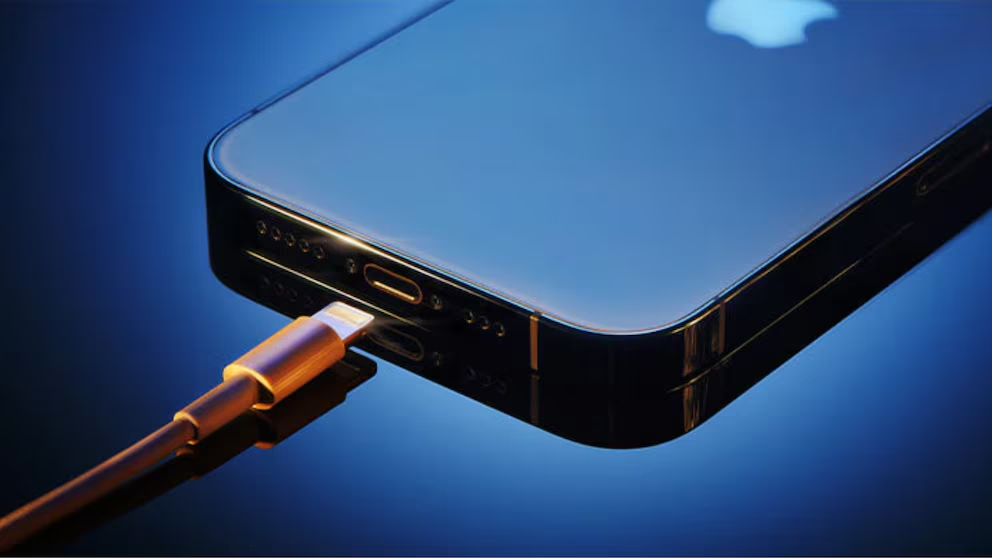
Apple identifies excessive heat as one of the greatest threats to battery longevity. Charging may slow or stop automatically when the device becomes too warm. Users should avoid direct sunlight, hot vehicles and demanding activities such as gaming or extended video recording while the phone is charging.
Allowing the battery to reach zero repeatedly is also discouraged. Partial and more frequent charging generally places less stress on lithium-ion cells than regular complete discharges. Leaving a modern iPhone connected overnight does not cause conventional overcharging, although limiting prolonged exposure to full charge and heat can reduce long-term wear.
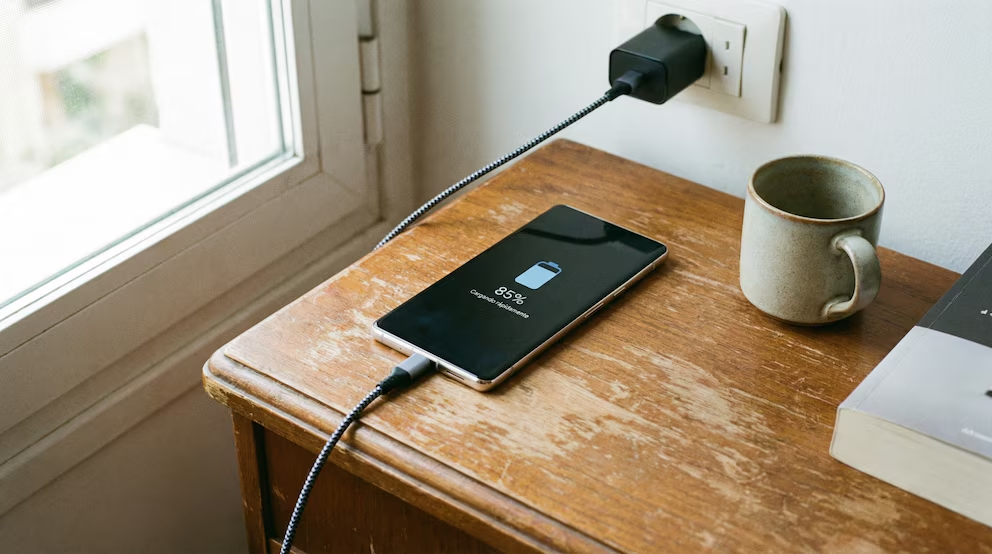
Apple also advises using compatible, properly certified cables and power adapters while keeping iOS updated. Battery condition can be reviewed under the Battery section in Settings, where the system displays maximum capacity and any service recommendation.
The safest charging routine is not about reaching 100 percent—it is about controlling heat, time and battery stress.