

 Phoenix 24
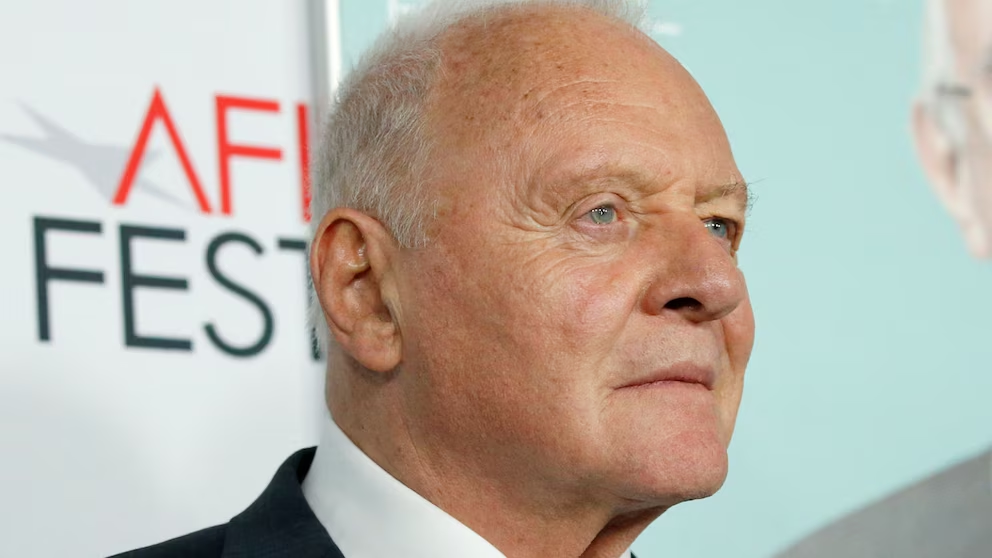
Endurance is not measured by fame, but by the discipline to remain present over time.
London, December 29, 2025.
Anthony Hopkins marked fifty years of sobriety, a milestone that extends far beyond personal celebration and enters the territory of cultural meaning. In an industry historically shaped by excess, volatility, and self destruction, his reflection on five decades without alcohol reframes success as something quieter, more demanding, and ultimately more durable than public recognition.
Hopkins has built a career defined by intensity, emotional depth, and psychological precision. Yet parallel to his artistic trajectory runs a less visible but equally consequential discipline. Choosing sobriety half a century ago was not a singular act of redemption but the beginning of a sustained practice. It required consistency, restraint, and a continuous recalibration of identity in an environment that rarely rewards moderation. The significance of this choice lies not in its announcement, but in its repetition across decades.

Sobriety, in this sense, functions as an architecture of life rather than a symbolic achievement. It shaped how Hopkins approached his craft, his relationships, and his understanding of time. Remaining mentally present allowed for longevity in a profession that often consumes its own. His continued relevance is not accidental. It is the result of coherence between personal governance and professional commitment.

Publicly acknowledging this milestone also alters the narrative around celebrity. Instead of reinforcing myths of torment as the engine of creativity, Hopkins offers a counter model. His example suggests that clarity can coexist with artistic depth, and that sustained discipline does not diminish expression but refines it. In a media culture that amplifies breakdowns, the quiet persistence of balance becomes a form of resistance.
The broader cultural implication is significant. Conversations about mental health and addiction often focus on crisis moments. Hopkins’ story shifts attention toward duration. Fifty years is long enough to witness generational change, shifts in cultural values, and the evolution of the entertainment industry itself. Maintaining sobriety across that span suggests that recovery is not an endpoint but a structure that must adapt as life changes.

There is also an implicit commentary on aging. In fields obsessed with novelty, longevity is often framed as decline. Hopkins challenges that assumption by presenting age as accumulated clarity rather than erosion. His continued work underscores that relevance does not require excess energy, but sustained intention.
What resonates most is not moral instruction but structural insight. A life rebuilt around conscious choice creates space for endurance. The absence of alcohol did not narrow his world. It expanded it, allowing for presence, continuity, and authorship over his own trajectory. That perspective reframes achievement as something measured internally, through alignment rather than applause.

Fifty years of sobriety do not erase struggle. They demonstrate that struggle can be organized, managed, and transformed into a stable foundation. In an era inclined toward immediacy, Hopkins’ story asserts the value of long arcs and repeated decisions made without spectacle.
Detrás de cada dato, hay una intención. Detrás de cada silencio, una estructura.
Behind every data point, there is an intention. Behind every silence, there is a structure.