

 Phoenix 24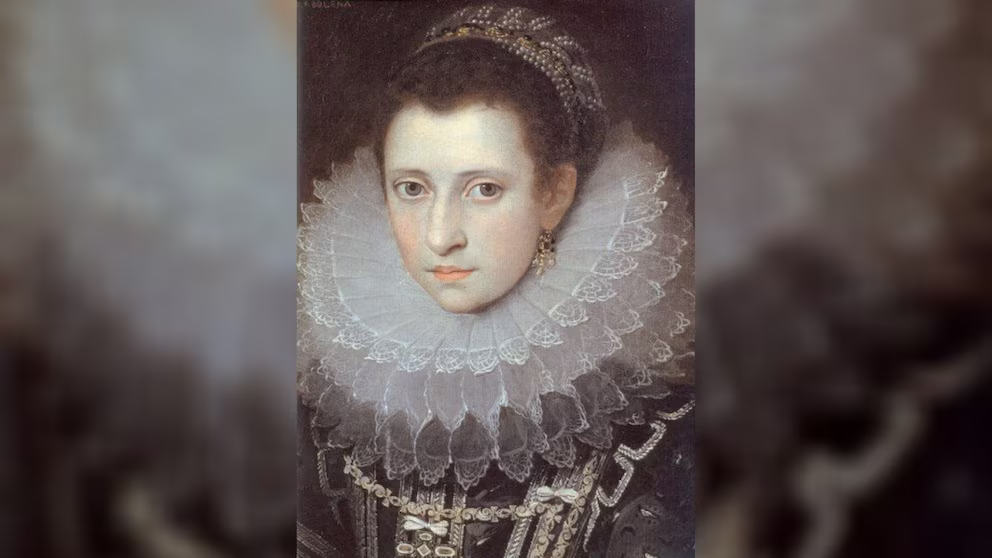
The image survived, the certainty did not.
London, March 2026
Anne Boleyn remains one of the most written about figures of the Tudor world, yet one of the most basic questions surrounding her still resists a definitive answer: what did she actually look like, and why did her appearance leave such a powerful impression on contemporaries and later generations? The enduring fascination with her beauty has less to do with a single, fixed image than with the combination of fragmentary portraits, miniature traditions, political hostility, and centuries of mythmaking that have turned her face into a historical puzzle rather than a settled fact.
Part of the difficulty begins with the evidence itself. Unlike other royal figures whose likenesses were widely standardised, Anne Boleyn was executed in 1536 and much of her visual legacy was shaped after her death, often through copies, reworkings, or symbolic reconstructions rather than undisputed contemporary portraits. That has left historians working through a patchwork of miniatures, later paintings, and written descriptions that do not always agree with one another. The result is not a single authoritative face, but a contested archive in which beauty becomes inseparable from politics, memory, and representation.
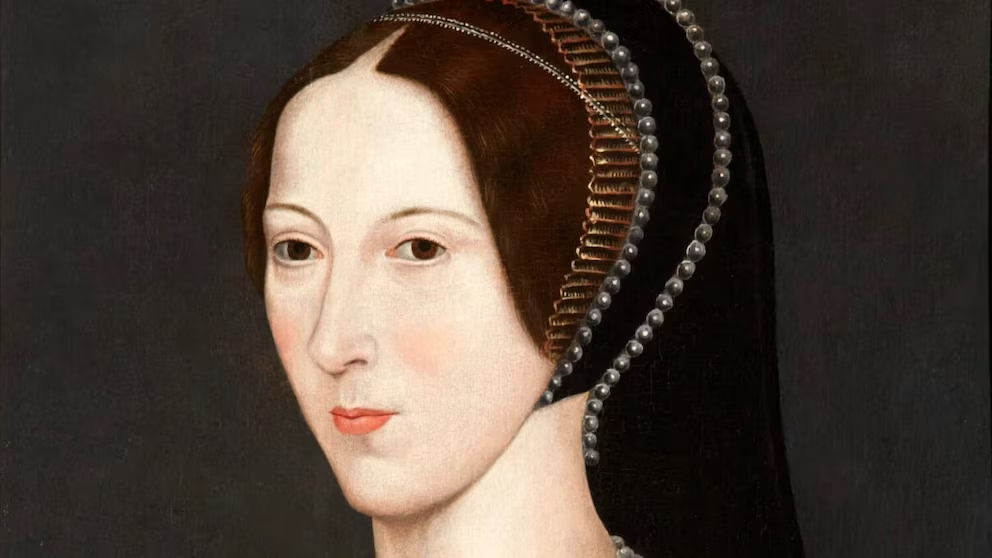
Miniatures occupy an important place in that debate because they were never merely decorative objects. In Tudor culture, miniature portraiture could function as a token of intimacy, status, affection, and dynastic messaging. A small likeness carried emotional and political weight, and in the case of Anne Boleyn, later visual culture often treated her image less as neutral documentation than as a statement about legitimacy, desire, scandal, or rehabilitation. That is why the question of her appearance cannot be separated from the uses made of her memory after her fall.
What emerges from the historical record is not consensus, but tension. Some descriptions emphasise elegance, dark features, expressive eyes, and a distinctive presence at court rather than conventional fairness. Others, especially hostile accounts, distort her body and face with traits that feel less observational than defamatory. Over time, those negative portrayals became entangled with the broader campaign to recast her not just as politically dangerous, but as morally and physically suspect. In that framework, the body itself became part of the accusation.
That is one reason modern historians tend to treat the subject with more caution than popular retellings often allow. The issue is no longer simply whether Anne Boleyn was beautiful in conventional terms, but how standards of beauty, charisma, fashion, intellect, and courtly performance operated in the sixteenth century. A woman could be described as captivating not because she matched one static visual ideal, but because she embodied movement, style, wit, self possession, and an unusual command of attention. In Anne’s case, those qualities may be more historically meaningful than any attempt to reconstruct her face with total certainty.
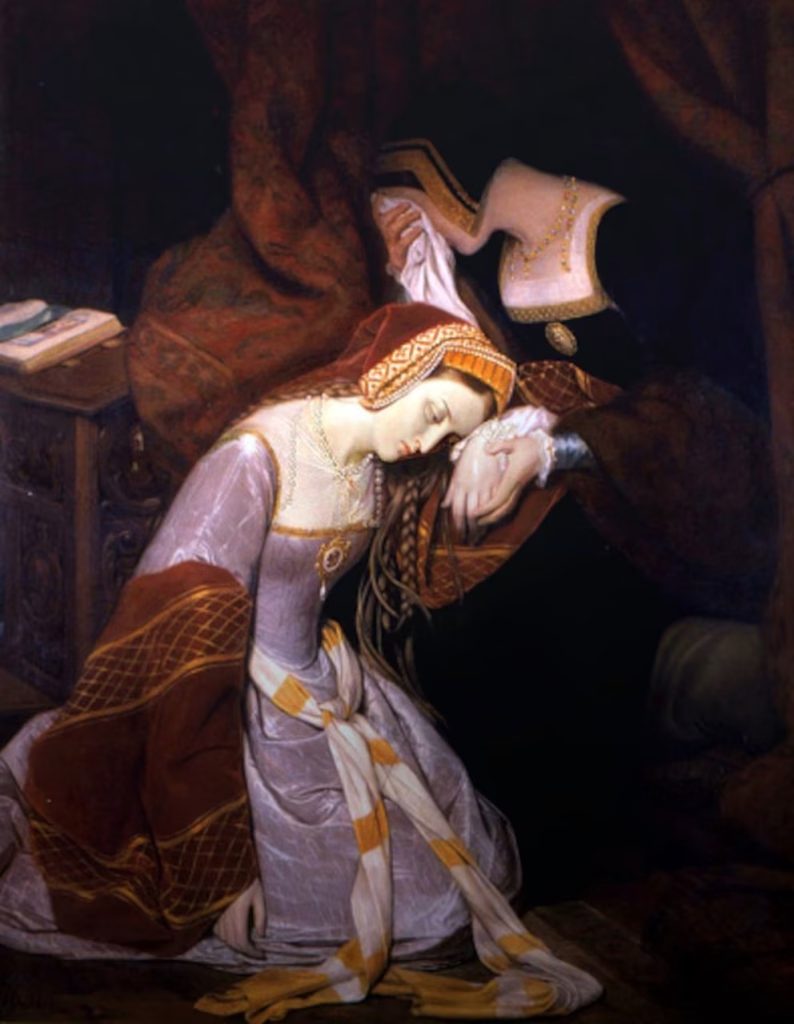
The debate has also been sharpened by recent renewed interest in portrait analysis, especially around Tudor visual culture and the way later artists adapted inherited templates. When historians and curators re examine paintings associated with Anne Boleyn, they are not only asking whether a likeness is authentic, but whether it was altered to answer rumours, soften hostility, or align her image with later political needs. That makes every surviving representation carry a second question beneath the first: not only is this Anne, but why was Anne shown this way?
In that sense, the enigma of her beauty survives because it sits at the intersection of image and power. Anne Boleyn was never just a queen consort. She became a figure through whom England’s religious rupture, dynastic anxiety, sexual politics, and propaganda wars were refracted. Once that happened, even her appearance ceased to belong purely to biography. Her face became part of the struggle over what she meant, who had the right to define her, and how history would remember the woman whose rise and destruction helped transform the Tudor monarchy.
That is why the mystery remains productive rather than frustrating. The uncertainty does not weaken Anne Boleyn’s historical presence. It strengthens it. Every miniature, every disputed portrait, every hostile description, and every romantic rehabilitation reveals less about a final answer to her beauty than about the layers of power that kept rewriting her. The question endures because the evidence is incomplete, but also because Anne Boleyn has never existed in history as a simple image. She survives instead as a contested face shaped by fascination, fear, politics, and the long afterlife of Tudor memory.
The visible and the hidden, in context. / The visible and the hidden, in context.