

 Phoenix 24
Survival does not end when the abuse stops.
Madrid, February 2026.
The most disturbing part of this case is not only that a footballer says she was secretly recorded by her coach for four years. It is what came after: the ordinary acts that no longer felt ordinary. She said she now checks showers before entering them, a habit that sounds small until you understand what it means. It means the abuse did not end with the recording. It moved into memory, into vigilance, into the body’s permanent expectation of threat.
That is why this story should not be treated as a scandal of voyeurism alone. It is a story about coercive power inside sport and the way institutional trust can be weaponized. A coach is not just another adult in an athlete’s life. A coach can shape selection, playing time, confidence, reputation, and future opportunities. When someone in that position records a player in secret over a long period, the act is not merely invasive. It is a form of domination built on proximity, routine, and asymmetry.
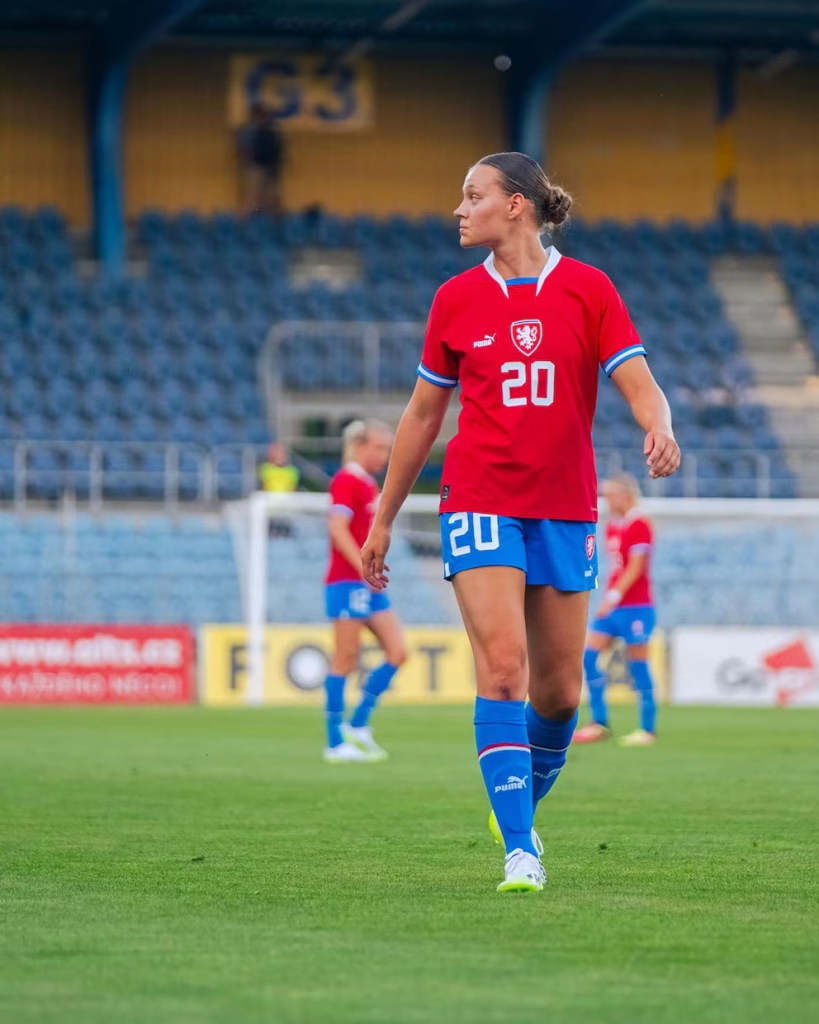
The athlete’s statement about the shower reveals the psychological architecture of that harm. Trauma often rewrites daily behavior before it rewrites public narrative. Victims may appear functional, train, compete, smile, and continue with professional life while quietly changing how they move through spaces, locker rooms, bathrooms, travel, and relationships. Hypervigilance becomes self-protection. The body keeps scanning, long after the threat is removed, because trust in private space has been broken.
This is one reason abuse in sport is so difficult to detect early. Sports institutions are built on discipline, hierarchy, and normalization of discomfort. Athletes are trained to obey routines, tolerate stress, and defer to authority. Those same habits can make boundary violations harder to name in real time, especially when the aggressor is embedded in the athlete’s daily development. What outsiders later call “warning signs” often look, from inside the system, like the ordinary friction of elite performance culture.
The duration alleged in this case matters as much as the act itself. Four years suggests not an isolated offense, but a repeated pattern sustained by opportunity and by failed safeguards. Repetition is what turns misconduct into system failure. It raises questions not only about the alleged perpetrator, but about oversight, complaint channels, locker room privacy protocols, and whether teammates, staff, or administrators had meaningful tools to detect or report suspicious behavior without retaliation.
There is also a wider gendered dimension that cannot be ignored. In women’s sport, athletes often have to fight simultaneously for performance recognition, institutional support, and basic bodily autonomy. When a coach abuses privacy, the damage is not only personal and psychological. It also threatens professional identity, because the athlete may be pushed into a public role she did not choose, victim, witness, case file, instead of competitor. That forced shift is one of the hidden costs of abuse in high-performance environments.
Public reaction to these cases often falls into a familiar trap: outrage at the headline, followed by curiosity about lurid details, then rapid attention decay. That sequence protects institutions more than athletes. What matters after the first wave is whether clubs, federations, and leagues treat privacy and safeguarding as operational infrastructure, not public relations. That means secure reporting mechanisms, independent investigations, restricted access rules in intimate spaces, and training that addresses power abuse, not just abstract ethics language.
The player’s confession should also be read as an act of recovery, not only disclosure. Naming a survival habit in public, “I do not enter the shower without checking it”, transforms a private symptom into testimony. It gives language to what many victims experience but struggle to explain: the injury is not always visible, and it often appears as behavior others misread as paranoia. In reality, it is adaptation after betrayal.
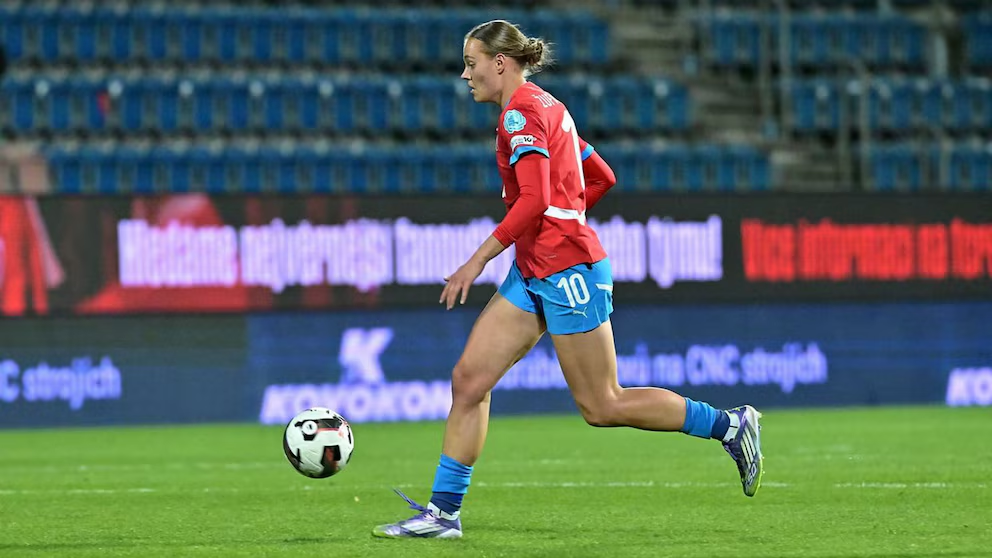
Sport likes stories of resilience because they fit the culture of comeback and endurance. But real resilience in cases like this is not a triumphant montage. It is slower and less cinematic. It is rebuilding trust in everyday spaces, regaining control over one’s body, and learning that vigilance no longer has to govern every routine. That process deserves the same seriousness institutions give to physical rehabilitation, because psychological injury is not secondary damage. It is part of the harm.
This case, if handled with rigor, should force a harder conversation than simple condemnation. It should ask how many sporting environments still rely on hierarchy without accountability, and how many athletes are carrying invisible defensive rituals while institutions continue to call themselves safe. The athlete’s sentence about the shower is not just a personal detail. It is evidence of what abuse leaves behind when the cameras are gone.
Cada silencio habla. / Every silence speaks.