

 Phoenix 24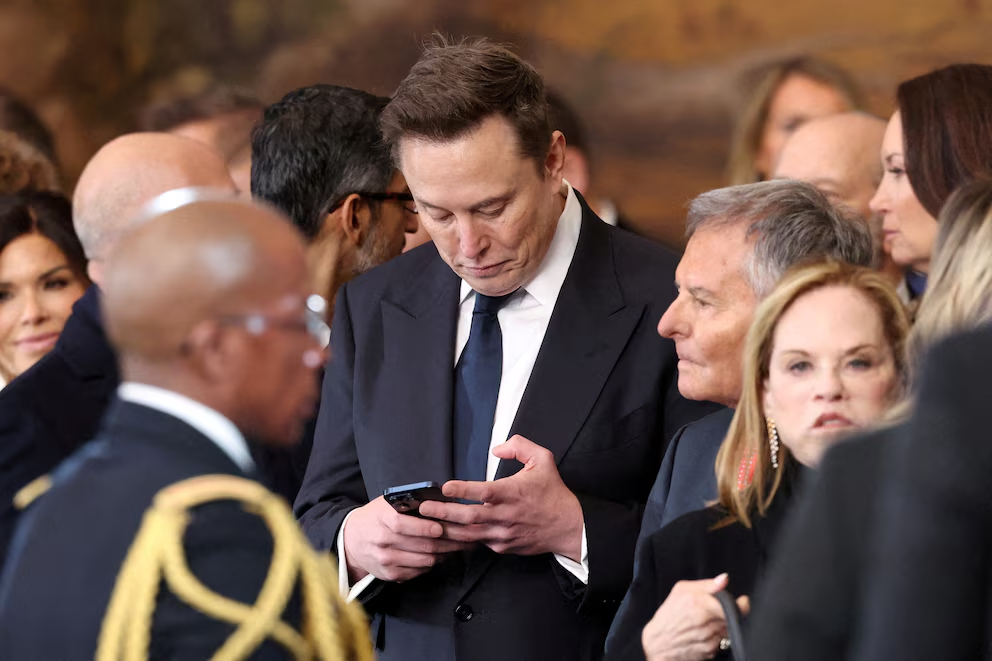
AI could turn today’s most essential device into an obsolete interface.
Austin
Elon Musk predicts that smartphones as we know them could become obsolete within five or six years, replaced by a new generation of devices built primarily around artificial intelligence. The entrepreneur argues that by approximately 2030 or 2031, users may no longer depend on conventional applications, operating systems or the interaction patterns that have defined mobile computing for nearly two decades. Instead, AI would increasingly anticipate what people want and generate information or content dynamically. His prediction points toward a fundamental shift from humans navigating software to intelligent systems interpreting human intent.
Musk envisions future personal devices as simplified edge nodes connected to far more powerful artificial intelligence running on remote infrastructure. Rather than opening individual applications for messaging, entertainment, navigation or information, users could communicate directly with AI and allow it to orchestrate those functions. The hardware could still include familiar components such as a screen, audio capabilities, wireless connectivity and local processing, but the intelligence controlling the experience would become the defining feature. In this model, the traditional smartphone does not necessarily vanish physically; its current software architecture becomes irrelevant.
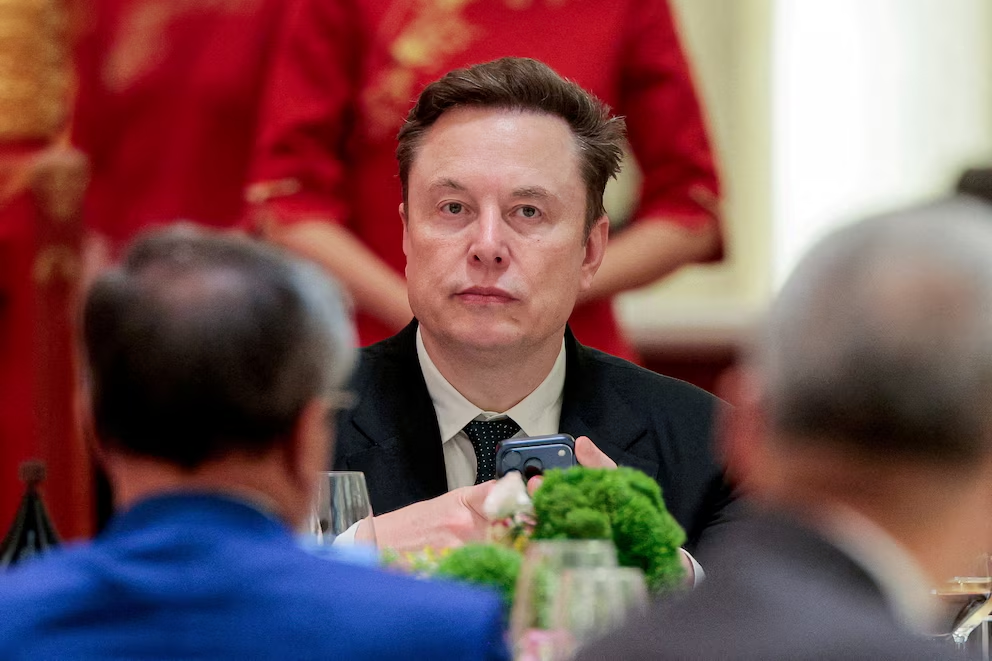
The prediction arrives as technology companies increasingly explore AI-first hardware beyond the conventional smartphone. Wearables, smart glasses and other emerging form factors are attempting to reduce dependence on screens while making artificial intelligence continuously available. Musk himself has fueled speculation about alternative devices, although he has denied recent reports that SpaceX demonstrated a handheld AI prototype to investors. His broader argument is therefore less about announcing a specific product and more about predicting the direction of personal computing.
Whether smartphones can truly disappear within six years remains uncertain. Billions of people depend on mature mobile ecosystems built around applications, payments, cameras, communications and digital identity, creating enormous technological and behavioral barriers to rapid replacement. Yet Musk’s prediction captures an important transition already underway: AI is moving from being another application inside the smartphone toward becoming an interface capable of controlling the entire digital experience. The next technological revolution may not eliminate the device in our hands; it may eliminate the need to tell that device what to do.
Information that anticipates futures. / Información que anticipa futuros.