

 Phoenix 24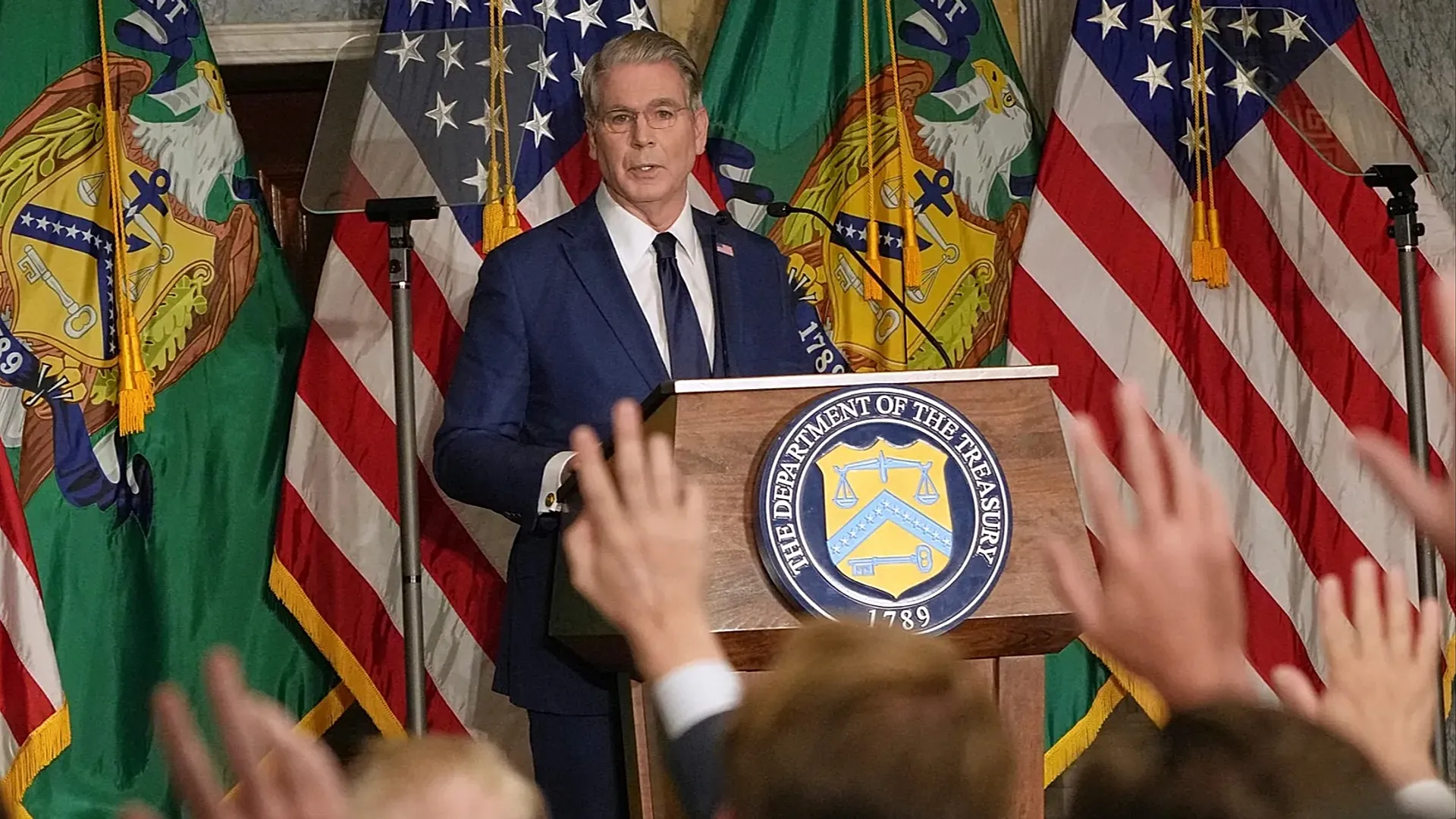
Washington turns financial access into geopolitical leverage.
Washington
The United States has dramatically expanded secondary sanctions against Iran, effectively forcing companies around the world to choose between doing business with Tehran and maintaining access to the US dollar system. Treasury Secretary Scott Bessent presented the measures as part of an economic offensive designed to further isolate Iran financially and warned that additional sanctions against a major financial institution could follow this week. Washington has targeted nearly 60 companies, individuals and vessels across several jurisdictions while suspending licenses that previously allowed limited transactions with Iran. The new framework significantly broadens the economic reach of US pressure beyond companies directly operating inside the country.
The most consequential element is the expansion of secondary sanctions into shipping, aviation, gold, technology and digital assets, adding to existing restrictions on Iran’s oil sector. Foreign businesses that facilitate prohibited transactions or money laundering on Tehran’s behalf could lose access to the dollar-based financial system, a consequence capable of affecting operations far beyond the United States. Bessent has also indicated that the measures could apply to entities connected to China, signaling that major trading relationships will not automatically provide protection. President Donald Trump is simultaneously pressing foreign leaders to reduce commercial ties with Iran.
Europe’s direct commercial exposure appears relatively limited. Trade in goods between the European Union and Iran totaled approximately €3.72 billion in 2025, with European exports accounting for around €2.97 billion, a fraction of the bloc’s overall external trade. Germany represents roughly 32% of EU-Iran commerce, followed by Italy at 16% and the Netherlands at 15%. European financial markets initially reacted calmly, reflecting the relatively small volume of direct trade at risk.
The greater vulnerability lies deeper inside the international financial infrastructure. Banks, insurers, shipping companies and commodity traders routinely process transactions across multiple jurisdictions, meaning exposure to a sanctioned counterparty can create consequences even without substantial direct business in Iran. European companies also face a legal dilemma because EU blocking rules restrict compliance with certain extraterritorial US sanctions, while access to dollar clearing remains indispensable for much of global commerce. Washington’s strategy therefore reaches beyond traditional sanctions: it uses the centrality of the dollar to transform financial access into geopolitical leverage. For global companies, neutrality is becoming increasingly difficult when participation in one market can determine access to another.
The visible and the hidden, in context. / Lo visible y lo oculto, en contexto.