

 Phoenix 24
Pregnancy transformed an icon into intimate human presence.
London, July 2026
In 2002, Kate Moss entered Lucian Freud’s studio as one of the world’s most recognizable models and became the subject of a portrait radically removed from fashion photography. Pregnant with her daughter Lila, she posed nude for the British painter through months of demanding sessions. The resulting work, Naked Portrait 2002, abandoned the lighting, styling and visual control associated with her career. Freud painted a changing body rather than the untouchable image already familiar to millions.
The encounter began after Moss publicly named Freud as the person she most wanted to meet. The introduction was facilitated through Bella Freud, the artist’s daughter, who had an established relationship with the fashion world. What started as a personal meeting soon became an artistic commitment requiring patience and physical discipline. Moss realized that sitting for Freud would involve sustained observation rather than the brief, controlled exposure of a photographic session.

The sittings often extended late into the night and continued several times each week as the pregnancy progressed. Moss maintained the reclining position while her body changed, introducing a tension rarely present in conventional portraiture. Freud worked slowly, building the image through accumulated layers of paint and repeated examination of skin, posture and expression. The process demanded stillness from a woman whose professional life had been built around movement, travel and constant reinvention.
Freud’s mature portraits were known for rejecting idealized beauty. He emphasized weight, texture, veins, shadows and subtle variations in flesh, allowing the body to appear vulnerable rather than perfected. In Moss, he found a subject already burdened with an immense public mythology created by magazines, advertising and celebrity culture. His painting did not erase her beauty, but removed the mechanisms that usually instructed audiences how to interpret it.

The pregnancy became central because it made the body visibly unstable. Moss was no longer presented as the permanently thin and controlled figure associated with the fashion industry, but as a woman experiencing physical expansion, fatigue and transformation. Her face appears distant while the reclining body dominates the composition. Maternity is not romanticized, yet it is treated with an intimacy that converts biological change into psychological presence.

The collaboration also produced an unusual personal bond between two figures separated by age, profession and cultural environment. Freud was approaching eighty and had spent decades resisting the commercial rhythms of celebrity, while Moss represented one of the most powerful images generated by contemporary fashion. Their connection developed through long periods of conversation and silence inside the studio. The relationship gained additional mythology when Freud tattooed two small birds on Moss’s lower back.
The portrait later entered the international art market with extraordinary commercial force. In 2005, Naked Portrait 2002 was sold for approximately £3.9 million, exceeding expectations and confirming the growing value of Freud’s work. The sale transformed an intensely private encounter into a highly prized cultural object. It also reinforced Moss’s position as a muse whose influence extended beyond fashion into contemporary art.

The painting remains compelling because it captures a contradiction at the center of Kate Moss’s public identity. She appears simultaneously famous and unprotected, observed and inaccessible, physically exposed yet psychologically distant. Freud denied viewers the smooth perfection expected from fashion imagery and replaced it with duration, uncertainty and material flesh. The model became less recognizable as a commercial symbol and more present as a human being.
The story has endured because it represents more than a meeting between a painter and a celebrity. It shows what happens when an image controlled by global media is subjected to another form of attention, slower and less forgiving. Freud did not attempt to improve Moss, flatter her or preserve the version already circulating through popular culture. He painted the moment when one of fashion’s most controlled bodies was undergoing a transformation that could not be directed by cameras.
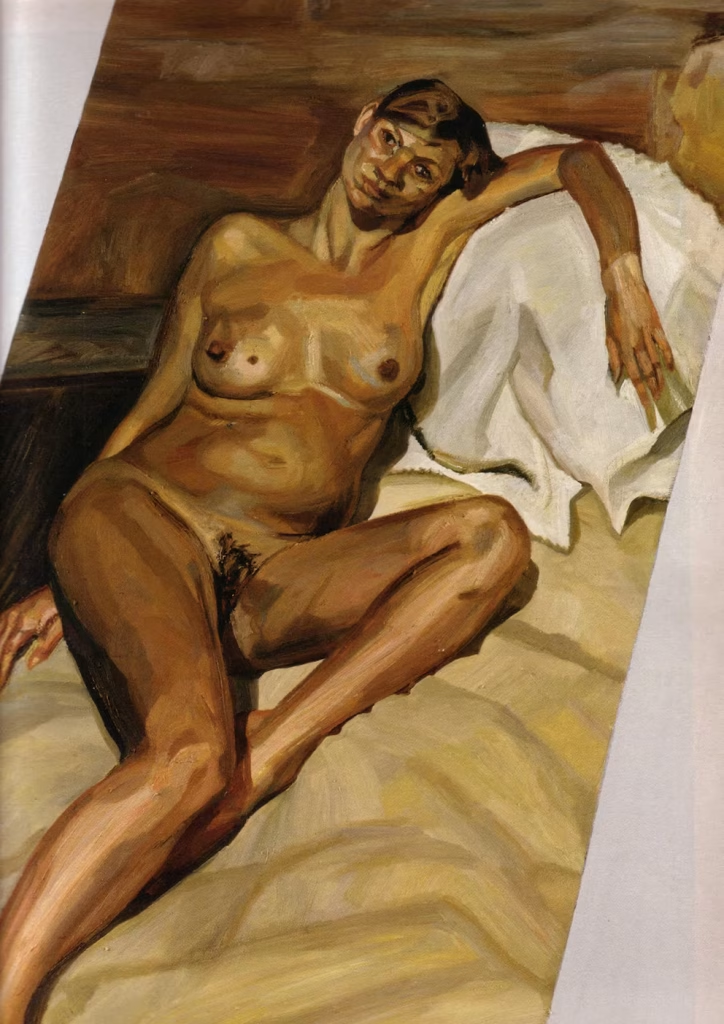
Naked Portrait 2002 ultimately survives as a record of exposure without spectacle. Its power comes from the refusal to turn pregnancy into sentimentality or celebrity into ornament. Moss entered the studio carrying a public identity constructed by countless photographers, but Freud demanded something that fashion rarely allows: time without immediate perfection. What emerged was not the disappearance of the icon, but the revelation of the person beneath it.
Cada silencio habla. / Every silence speaks.