

 Phoenix 24
Shortages are bringing the war’s economic costs home.
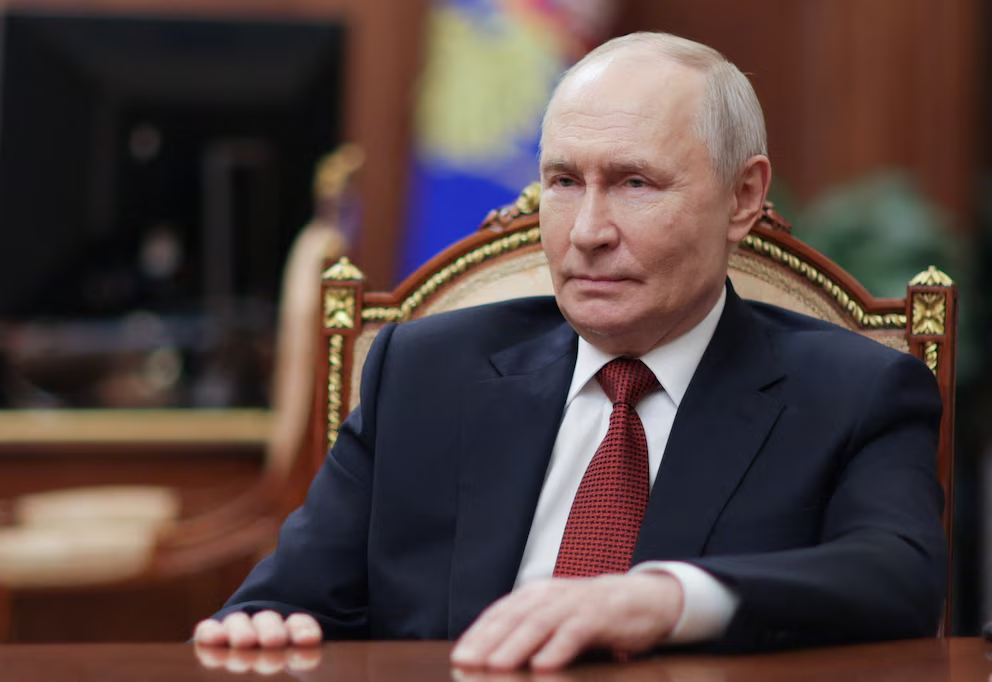
MOSCOW, RUSSIA — July 2026. Vladimir Putin’s public approval has declined for a second consecutive week as severe fuel shortages disrupt daily life across Russia. State-run pollster VTsIOM reported that trust in the president fell one percentage point to 72.3 percent. Approval of his performance also decreased from 66.9 percent to 66 percent.
Putin’s ratings had already fallen sharply between March and April, approaching levels last recorded before Russia’s invasion of Ukraine. VTsIOM subsequently changed its polling methodology to include in-person interviews. The renewed decline coincides with widening petrol shortages and growing frustration among consumers.
Ukrainian drone attacks have forced several major Russian refineries to suspend or reduce operations. Gasoline production is now estimated to cover only about 65 percent of peak seasonal demand, creating long queues and purchasing restrictions across much of the country. The shortages have reportedly affected nearly one-third of Russia’s population.
Deputy Prime Minister Alexander Novak publicly acknowledged that damaged refineries had created a fuel deficit and unstable service at filling stations. Moscow has responded by restricting fuel exports, increasing imports and drawing from domestic reserves. Authorities hope supplies will improve later in July, provided further attacks do not interrupt refinery operations.

The fuel crisis comes alongside economic contraction, internet restrictions and mounting fatigue with the war. Support for the Kremlin’s United Russia party has also weakened ahead of legislative elections. Polling in an authoritarian environment remains difficult to interpret, but the downward trend is becoming harder for the government to conceal.
The war’s consequences are no longer distant when Russians must confront them at the fuel pump.
Putin’s Approval Falls Again as Russia’s Fuel Crisis Deepens
Empezar a escribir