

 Phoenix 24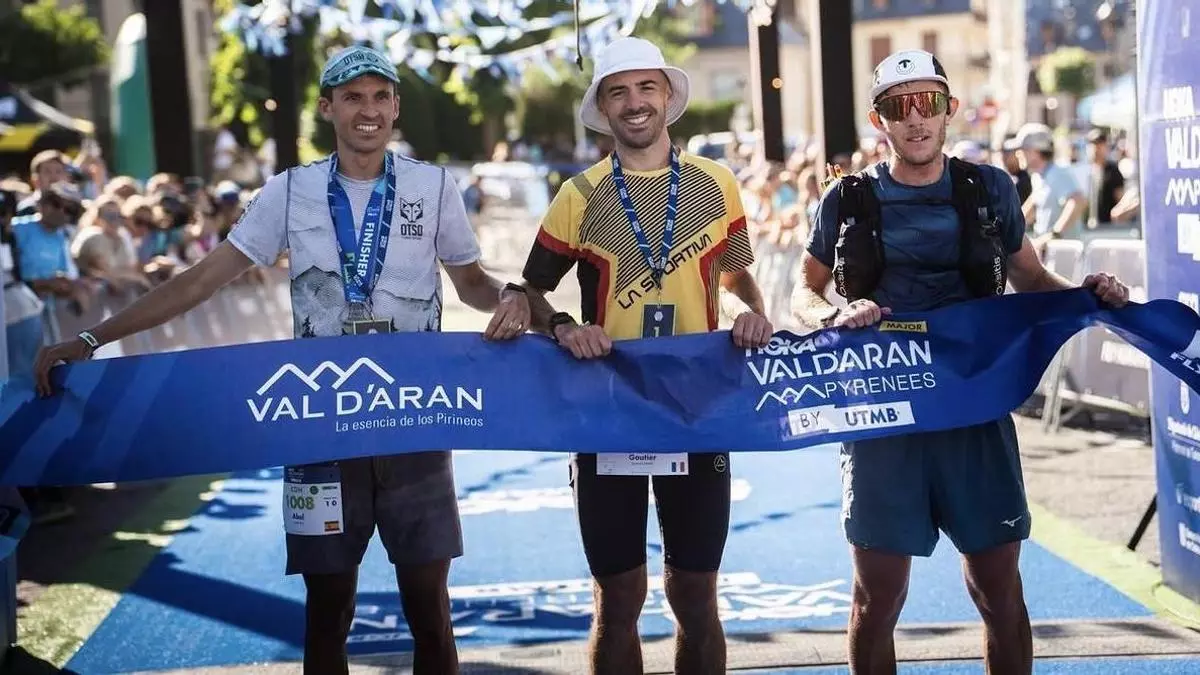
Spanish trail running shines across brutal Pyrenean terrain.
VIELHA, SPAIN — July 2026.
Spanish ultrarunner Abel Carretero delivered one of the standout national performances of the HOKA Val d’Aran by UTMB 2026 by finishing second in the demanding CDH race. The event, formally known as Camins d’Hèr, covered 110.4 kilometers and more than 6,300 meters of positive elevation gain through some of the most technical terrain in the Aranese Pyrenees. French runner Gautier Bonnecarrere won the men’s race in 12:08:55, while Carretero crossed the line in 12:19:21 after a sustained fight at the front. The podium was completed by another French athlete, Matis Leray, who reached Vielha in 12:27:12.
Carretero’s second place confirmed his ability to compete at elite level in long mountain races requiring endurance, tactical discipline and advanced descending skills. The Catalan runner remained among the leading contenders during a race marked by relentless climbing, technical descents and long exposed sections. His performance carried particular value because the CDH attracts international specialists capable of maintaining high intensity for more than twelve hours. For Spanish trail running, his result represented a strong response in one of the country’s most demanding mountain events.
The CDH is considered one of the signature races of Val d’Aran by UTMB because it combines historical identity with alpine difficulty. Its route begins in Les and finishes in Vielha after crossing areas associated with the valley’s mining past, including tunnels, old mining zones and wild landscapes beneath the Mauberme massif. Runners encounter lakes, waterfalls, rivers, forests and high mountain passages that require constant adjustment to terrain and weather conditions. The race is shorter than the 100-mile VDA, but its profile still demands the physical and mental resources of a major ultratrail.
The first half of the course includes major ascents that quickly separate athletes who can climb efficiently from those who started too aggressively. Traditional villages give way to ridgelines, alpine meadows and exposed passes where pace becomes difficult to control. Technical descents punish the quadriceps, ankles and concentration, especially when fatigue begins accumulating after several hours. The second half returns toward the heart of the valley, but it continues to test runners through shorter climbs and long descents that make rhythm management decisive.
Bonnecarrere’s victory was built on consistency and the ability to capitalize on the final decisive phase of the race. The French runner completed the route with enough strength to secure the win after a contest in which leadership and podium positions shifted under pressure. Carretero followed slightly more than ten minutes behind, a narrow margin considering the length, elevation and technical nature of the route. Leray’s third place completed a strong showing for French trail running, but Carretero ensured that the Spanish presence remained central to the men’s podium.
One of the most decisive moments involved Julen Calvo, who had reportedly led from the passage through Mines de Liat around kilometer 23. Calvo later received a one-hour stop-and-go penalty near the final quarter of the race, changing the competitive structure after many kilometers at the front. That situation opened the way for other runners to reorganize the podium fight in the final stretch toward Vielha. The episode also illustrated how ultratrail success depends not only on speed and endurance, but also on regulations, timing controls and race management under pressure.
In the women’s race, Chinese runner Miao Yao confirmed her status as one of the strongest athletes in the field by winning in 13:04:34. Her time placed her among the leading finishers overall and underlined the increasingly international character of elite trail running. Her victory added another global dimension to a festival that already functions as one of the major European stages within the UTMB ecosystem. The result also demonstrated how the strongest women in ultratrail are capable of competing at extraordinary absolute levels on terrain traditionally considered among the hardest in the sport.
For Val d’Aran, the CDH reinforced the region’s position as a world-class destination for mountain endurance events. The race links sport, landscape and local identity by sending runners through terrain that reflects both natural beauty and historical memory. Vielha’s finish line becomes the emotional center of the festival, where elite athletes and amateur runners share the same final objective after hours of isolation in the mountains. This combination explains why Val d’Aran by UTMB continues attracting international attention beyond conventional trail-running audiences.
Carretero’s second place will be remembered as a mature performance in a race where mistakes can become expensive within minutes. He showed resilience, control and the competitive intelligence required to survive a long day in the Pyrenees against high-level opposition. Although Bonnecarrere claimed the victory, Carretero’s result strengthened his profile as one of Spain’s most reliable ultratrail figures over technical mountain distances. In a sport defined by patience, terrain reading and endurance under uncertainty, his silver finish in Vielha carried the weight of a major achievement.
Phoenix24 — Global news with clarity and perspective.