

 Phoenix 24
A national football crisis demands renewal.
BERLIN, GERMANY — July 2026.
Germany’s football crisis deepened after the German Football Association confirmed the immediate departure of Julian Nagelsmann as national team head coach. The announcement followed Germany’s elimination by Paraguay in the round of 32 at the 2026 FIFA World Cup, a result decided through penalties and received as another major failure. Nagelsmann’s tenure had begun in September 2023 and included a quarterfinal exit at Euro 2024 before the latest disappointment. His departure extends a turbulent period for a national team still searching for a convincing identity more than a decade after winning the 2014 World Cup.
The DFB said its corporate representatives and supervisory board unanimously agreed to end the contractual relationship with Nagelsmann. The federation also stated that the coach had requested to be released from his duties after confidential discussions with senior officials. DFB president Bernd Neuendorf thanked Nagelsmann for his commitment, ambition and professionalism, while acknowledging the need for a fresh direction. The decision was presented as respectful and consensual, but its timing underlines the seriousness of Germany’s competitive decline.
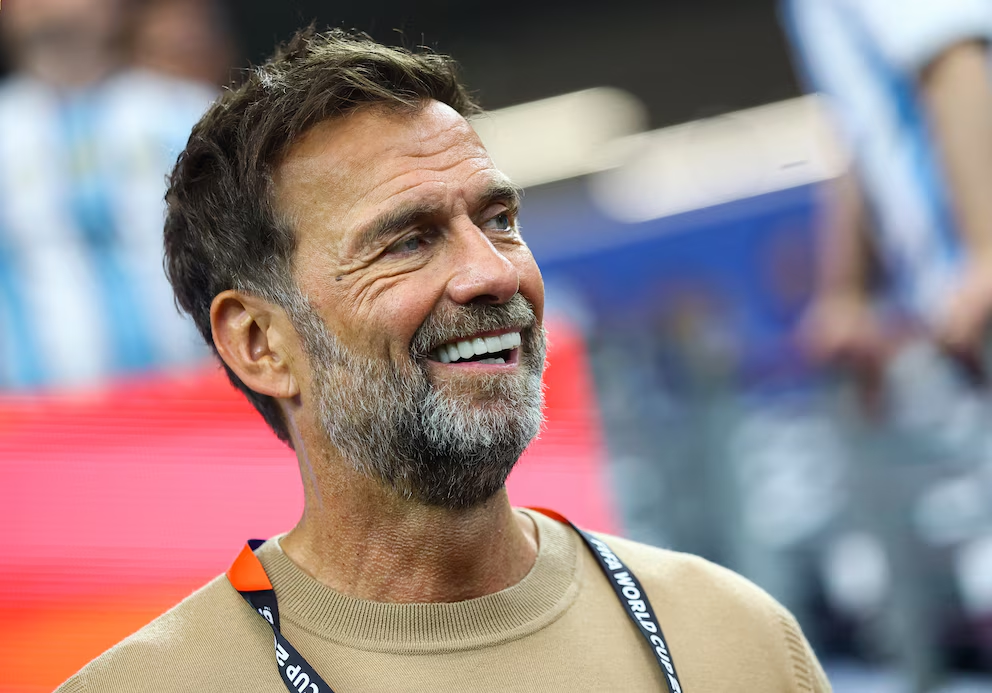
Nagelsmann used his farewell message to express regret and gratitude after a tournament that failed to meet national expectations. He said he had reflected deeply after the elimination and concluded that the team deserved the opportunity to start again. He thanked his coaching staff, support team, federation officials, players and supporters, while admitting the pain of not providing more memorable nights during the tournament. His tone suggested personal responsibility, but it also showed how quickly the pressure surrounding Germany’s national team can consume even highly rated coaches.
The immediate focus has now shifted to Jürgen Klopp, who is the federation’s preferred candidate for the next stage. The DFB confirmed that it intends to begin talks with the former Liverpool manager, who has reportedly shown a general willingness to consider the role. Klopp left Liverpool in 2024 after a transformative period in which he won major domestic and European titles and became one of the most respected coaches in world football. He is currently associated with Red Bull’s global football structure, but the German national team may represent the one position capable of drawing him fully back into coaching.
Klopp’s appeal goes beyond trophies because he carries symbolic value for a German football culture seeking emotional reconnection. His public image combines intensity, communication, tactical clarity and the ability to build strong dressing-room belief around demanding collective principles. Germany’s current problem is not only technical, because supporters also perceive a loss of confidence, personality and continuity. A Klopp appointment would therefore be framed not merely as a coaching change, but as an attempt to restore identity, authority and national enthusiasm.
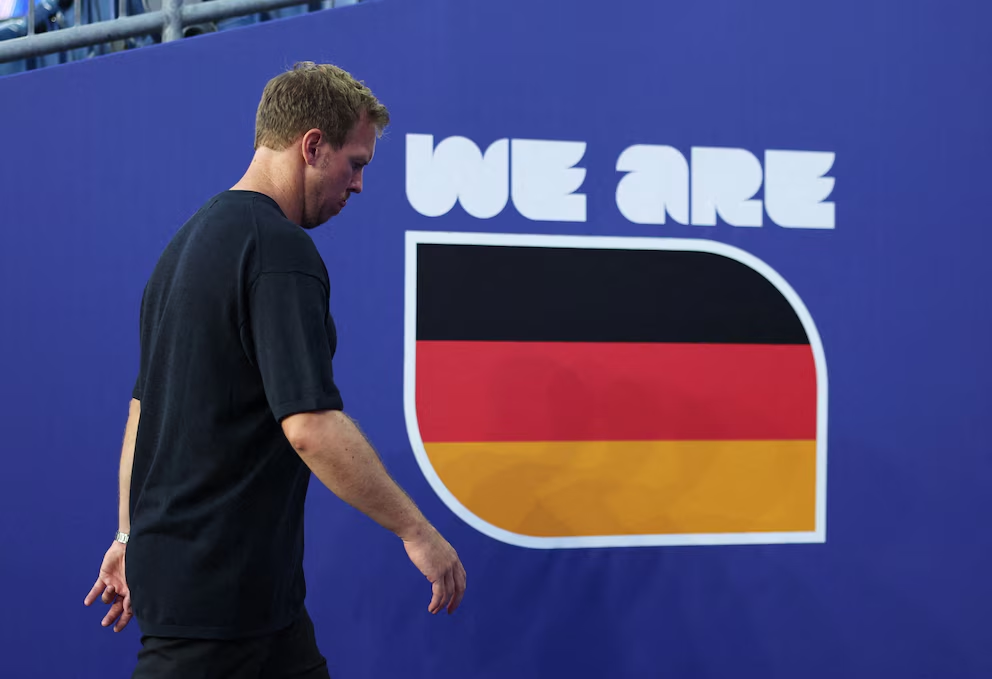
The sporting context makes the task unusually complex because Germany has suffered repeated World Cup disappointments since its triumph in Brazil in 2014. The team exited early in 2018 and 2022, then failed again in 2026 despite the expanded tournament format and expectations of a deeper run. Each failure has generated debate about youth development, leadership, tactical coherence and whether Germany’s elite clubs are producing the right profile of international player. The Nagelsmann exit is therefore part of a broader institutional reckoning rather than an isolated reaction to one match.
Media reports after the Paraguay loss pointed to internal tensions involving leadership, communication, squad roles and the general atmosphere around the camp. Questions also emerged about family access during the tournament, with claims that uneven arrangements created irritation among players. Such reports are difficult to measure from outside the dressing room, but they reinforced the perception that Germany lacked unified focus during a critical phase. When results collapse and internal discipline becomes a subject of public debate, pressure on the head coach normally becomes impossible to contain.
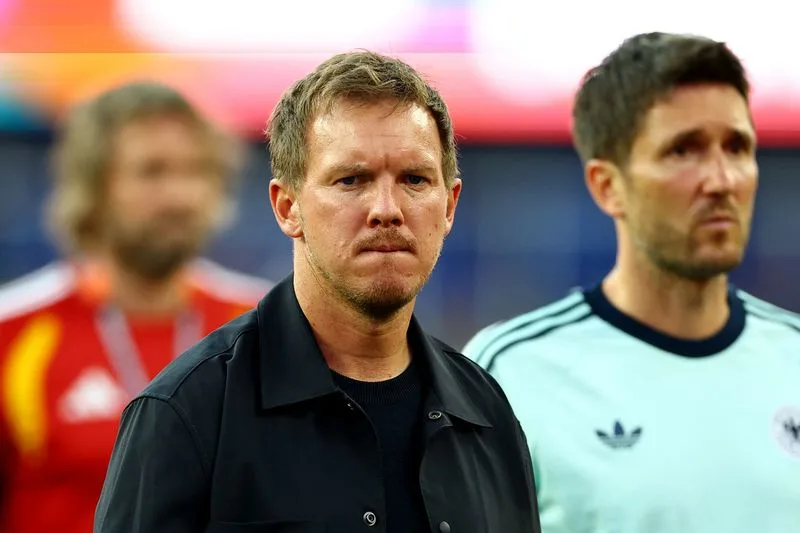
The federation is also facing management change beyond the coaching position. Andreas Rettig, the DFB’s managing director for sport, informed officials before the World Cup that he would not renew his contract when it expires at the end of the year. That decision adds another layer of uncertainty at a moment when Germany must define its next competitive cycle quickly. The new coach will require not only control over the national team, but also alignment with federation leadership, youth development, data structures and long-term tournament planning.
Germany’s next appointment will be judged by whether it can transform frustration into a credible rebuild before Euro 2028. Klopp would bring prestige and emotional force, but even his arrival would not automatically solve structural issues involving selection balance, defensive reliability and the transition between generations. Nagelsmann’s exit closes a chapter that began with promise and ended under the weight of another painful tournament failure. The decisive question now is whether the DFB can turn a moment of humiliation into the beginning of a coherent and durable football project.
Phoenix24 — Global news with clarity and perspective.