

 Phoenix 24
Family support surrounds actor as disease affects daily life
SAN FRANCISCO, United States — July 2026.
Danny Glover has publicly revealed that he is living with Alzheimer’s disease, sharing details about changes affecting his memory, speech and mobility as he approaches his 80th birthday. The actor, widely recognized for playing Roger Murtaugh in the Lethal Weapon film series, discussed the diagnosis alongside members of his family. His disclosure places a deeply personal health challenge alongside a career defined by cinema, activism and humanitarian work.
Glover’s family said noticeable changes in his memory began around 2022, when familiar recollections sometimes appeared incomplete or difficult for him to retrieve. He subsequently received an Alzheimer’s diagnosis in 2023, after medical evaluation clarified that the changes extended beyond ordinary aging. The distinction matters because some initial reports associated the diagnosis with 2022, although his family’s account places the formal confirmation the following year.
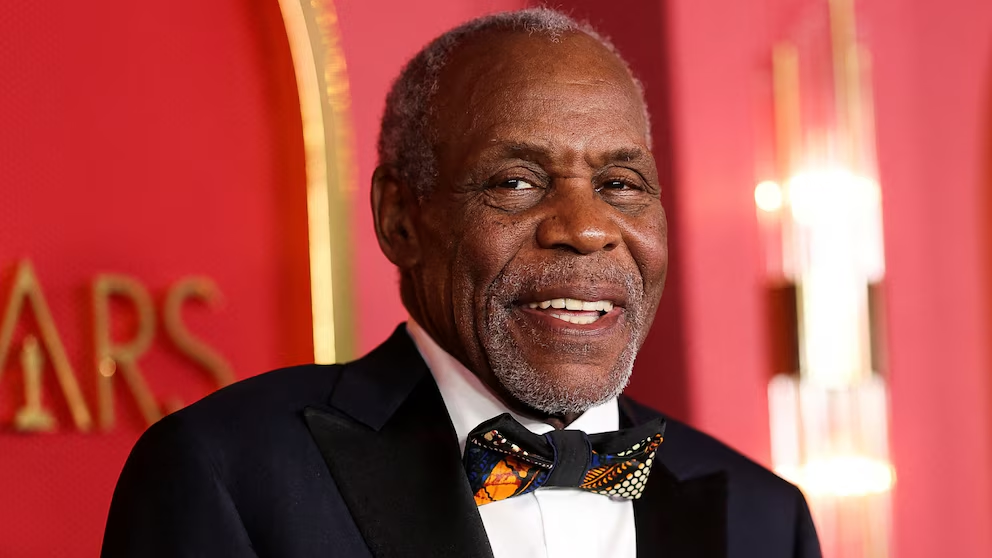
The actor said he has not fully absorbed every aspect of the diagnosis and continues to experience periods of clarity alongside moments of confusion. He acknowledged that the condition has already slowed parts of his movement, communication and ability to recall information. Glover also recognized that his needs are likely to change as the progressive illness advances.
Despite those difficulties, he emphasized that the diagnosis did not erase his identity, relationships or sense of purpose. He continues to spend time with relatives, reflect on his life and engage with people in his San Francisco community when his condition allows. His central message was that life continues after an Alzheimer’s diagnosis, even when routines and expectations must change.
Glover’s daughter Mandisa has become a central figure in his support network and encouraged him to discuss the illness publicly while he could still shape the narrative himself. She described her father as a man who once possessed an exceptional memory and could recall detailed experiences from decades earlier. The gradual loss of some of those connections became one of the first signs that the family needed professional guidance.
His younger brother Marty also provides support at the actor’s longtime home, where family members and caregivers help manage his changing needs. Their approach emphasizes presence, dignity and the preservation of experiences that still bring him comfort. The family has said its priority is not to define Glover solely through the disease, but to help him live as fully as possible.
The disclosure arrives shortly before Glover turns 80 on July 22. Born in San Francisco in 1946, he developed his acting career after working in municipal government and training with local theater organizations. His background in community service remained closely connected to the choices he later made as a performer and advocate.

Glover achieved broad recognition during the 1980s through films including Places in the Heart, Silverado, The Color Purple and Witness. His role opposite Mel Gibson in the Lethal Weapon franchise transformed him into an international star and produced one of action cinema’s most recognizable police partnerships. He later appeared in projects ranging from Predator 2 and Saw to Dreamgirls and The Last Black Man in San Francisco.
His career also extended into producing and supporting filmmakers whose stories were frequently overlooked by major studios. Through Louverture Films, which he co-founded, Glover backed projects connected to social justice, history and underrepresented communities. That work reflected the political and humanitarian commitments visible throughout his public life.
In 2022, the Academy of Motion Picture Arts and Sciences honored Glover with the Jean Hersholt Humanitarian Award. The recognition celebrated decades of advocacy involving civil rights, labor movements, global development and access to education. His diagnosis came after that milestone, during a period when his family was beginning to recognize changes in his cognitive functioning.
Alzheimer’s disease is a progressive brain disorder that gradually damages memory, thinking, language and the ability to complete everyday activities. It is the most common cause of dementia, although symptoms, progression and care requirements differ from person to person. The condition is not considered a normal part of aging, even though age remains its strongest known risk factor.
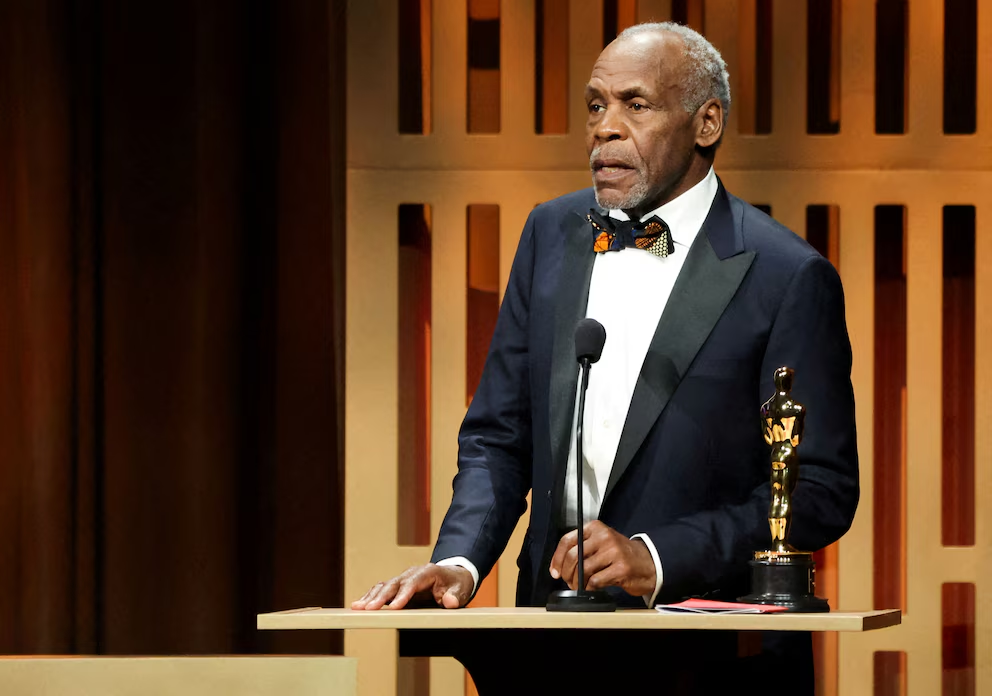
Public disclosure can carry particular significance because families often confront fear, uncertainty and stigma when cognitive symptoms first appear. Glover’s decision allows his experience to be discussed in his own voice rather than through speculation about his health or public appearances. It also highlights the importance of seeking medical assessment when persistent changes in memory or communication begin to affect daily life.
The actor has reduced travel and some professional activities as his condition has progressed, but he has not withdrawn entirely from public engagement. He continues to speak about art, community participation and the responsibility of younger generations to remain involved in social issues. Those themes have remained consistent from his early years in theater to his international recognition as an actor and activist.
Glover’s family has presented the diagnosis as a new stage requiring adaptation rather than a final definition of his life. Their account combines concern about future decline with gratitude for the memories, relationships and moments of recognition that remain. His public message centers on continuity, support and the right of people living with Alzheimer’s to retain dignity as their circumstances change.
Phoenix24 — Global news, clearly told.