

 Phoenix 24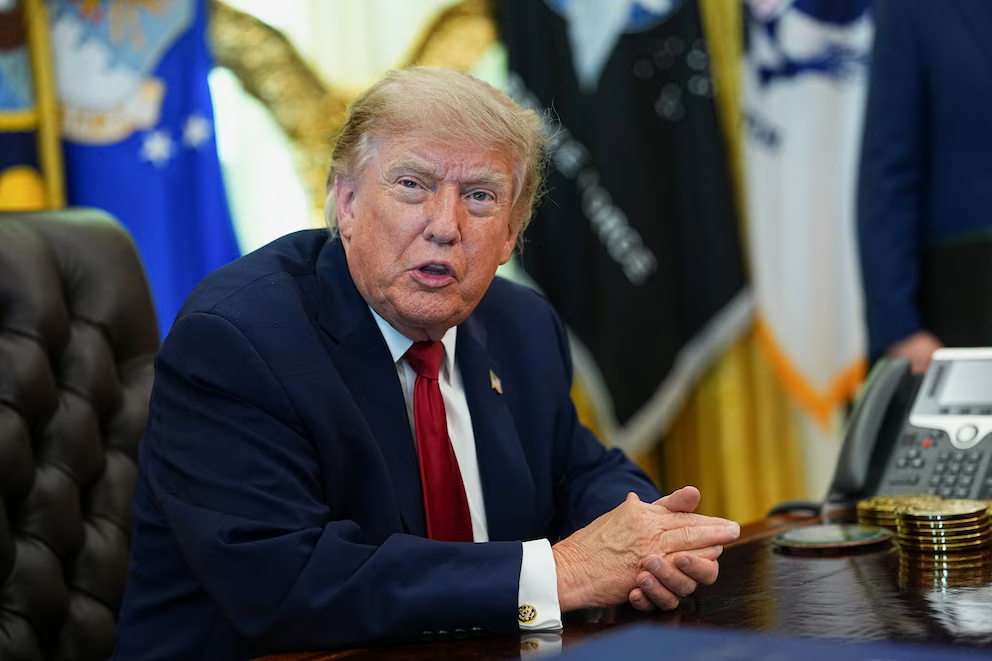
Washington confirms a meeting, while Tehran denies negotiations
Doha, Qatar | June 2026
The United States and Iran have entered a new diplomatic dispute after Washington confirmed that a meeting in Doha would address denuclearization and regional de-escalation, while Tehran publicly denied that any negotiation with the United States was taking place.
The contradiction reflects the fragile state of relations between both countries after weeks of military tension, attacks, reprisals and diplomatic pressure in the Middle East. While the United States presents the Doha meeting as part of a broader effort to restart dialogue, Iran insists that its delegation is not negotiating directly with Washington.
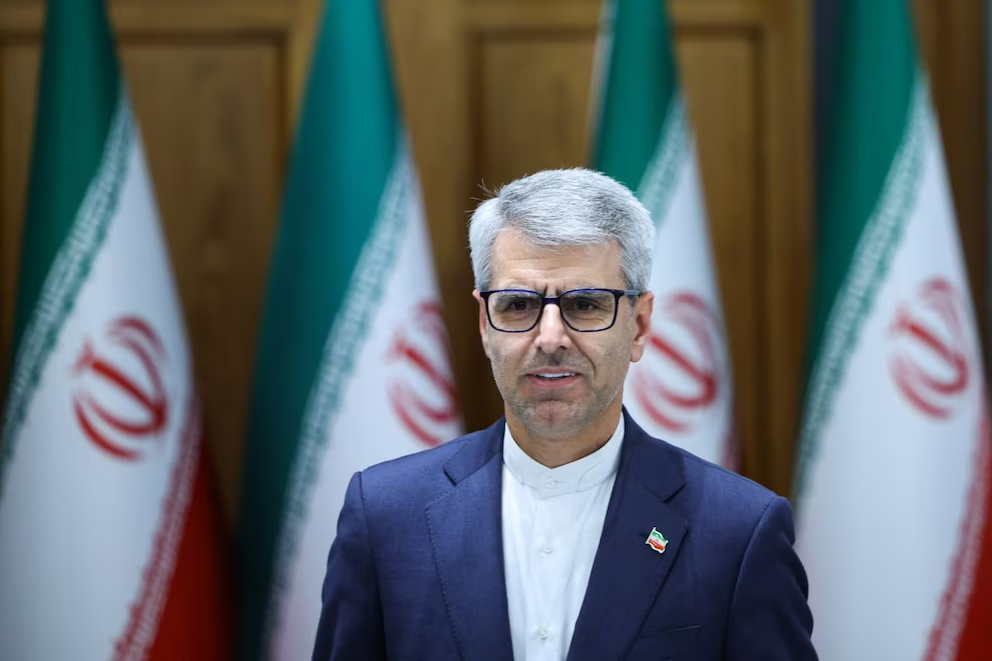
According to the American position, the expected discussions in Qatar would focus on Iran’s nuclear program, sanctions, regional security and mechanisms to reduce the risk of further escalation. Washington has maintained that any long-term stabilization effort must include limits on Iran’s nuclear activity and stronger verification commitments.
Tehran, however, has rejected that interpretation. Iranian officials stated that there is no negotiation with the United States and that any contact in Doha would be related to separate issues, including frozen Iranian assets and Qatar’s role as an intermediary. This public denial suggests that Iran may be trying to avoid appearing politically weakened while maintaining indirect diplomatic channels.
Qatar has again emerged as a key diplomatic platform in the region. Doha has repeatedly acted as a mediator in complex negotiations involving the United States, Iran, Israel, Hamas and other regional actors. Its role is especially important when direct talks become politically difficult or formally denied by one of the parties.
The disagreement also reveals how both governments are trying to manage domestic political audiences. For Washington, announcing diplomatic progress may help show that pressure and negotiations can coexist. For Tehran, denying direct talks may be necessary to protect its internal political position, especially after recent military exchanges and criticism from hardline sectors.
The nuclear issue remains the central point of tension. The United States wants Iran to accept restrictions and monitoring mechanisms that would prevent any move toward nuclear weapons capability. Iran maintains that its nuclear program has civilian purposes and argues that sanctions relief must be part of any meaningful agreement.
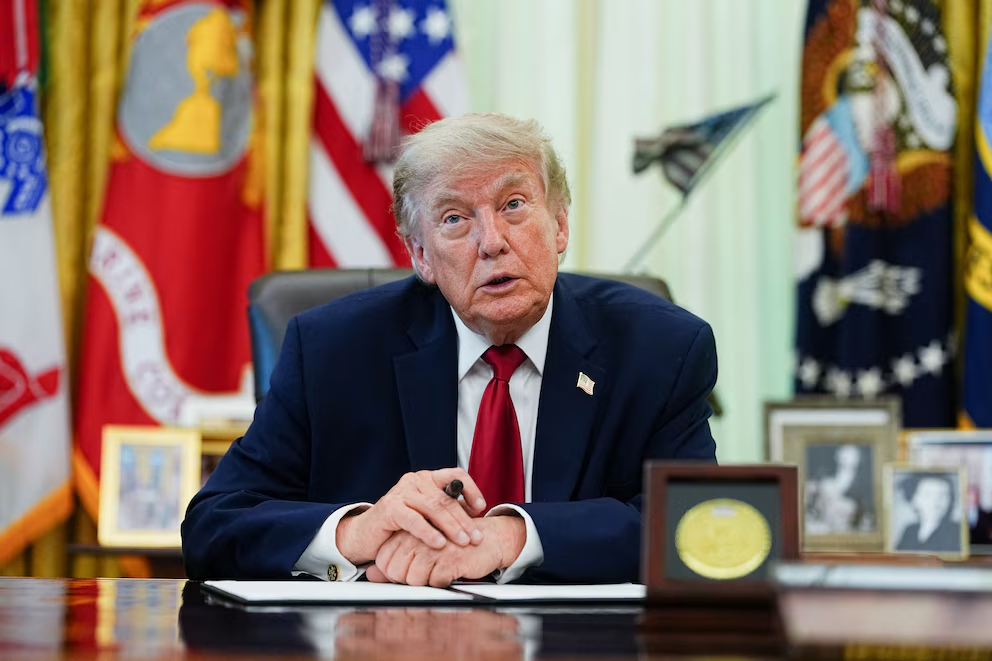
The situation is further complicated by the broader regional context. Recent confrontations around the Strait of Hormuz, Israeli operations in neighboring countries and the presence of American forces in the Gulf have increased the risk of miscalculation. Any diplomatic channel, even indirect, could become essential to preventing another escalation.
Analysts believe the disagreement over whether talks are formally taking place may be less important than the fact that both sides continue communicating through intermediaries. In Middle Eastern diplomacy, governments often deny direct negotiation while still allowing technical contacts, back-channel messages or discussions mediated by third parties.
For now, the Doha episode shows a diplomatic process surrounded by ambiguity. The United States wants to frame the meeting as a step toward denuclearization and regional stability, while Iran prefers to limit the narrative and avoid acknowledging formal negotiations. That gap in public messaging could make progress difficult, but it also suggests that neither side has fully closed the door to dialogue.
The coming days will be decisive in determining whether Doha becomes a real turning point or simply another example of diplomatic confusion between Washington and Tehran. What remains clear is that the nuclear dispute, sanctions and regional security will continue shaping one of the most sensitive geopolitical fronts in the Middle East.
Phoenix24 News | Information with responsibility.