

 Phoenix 24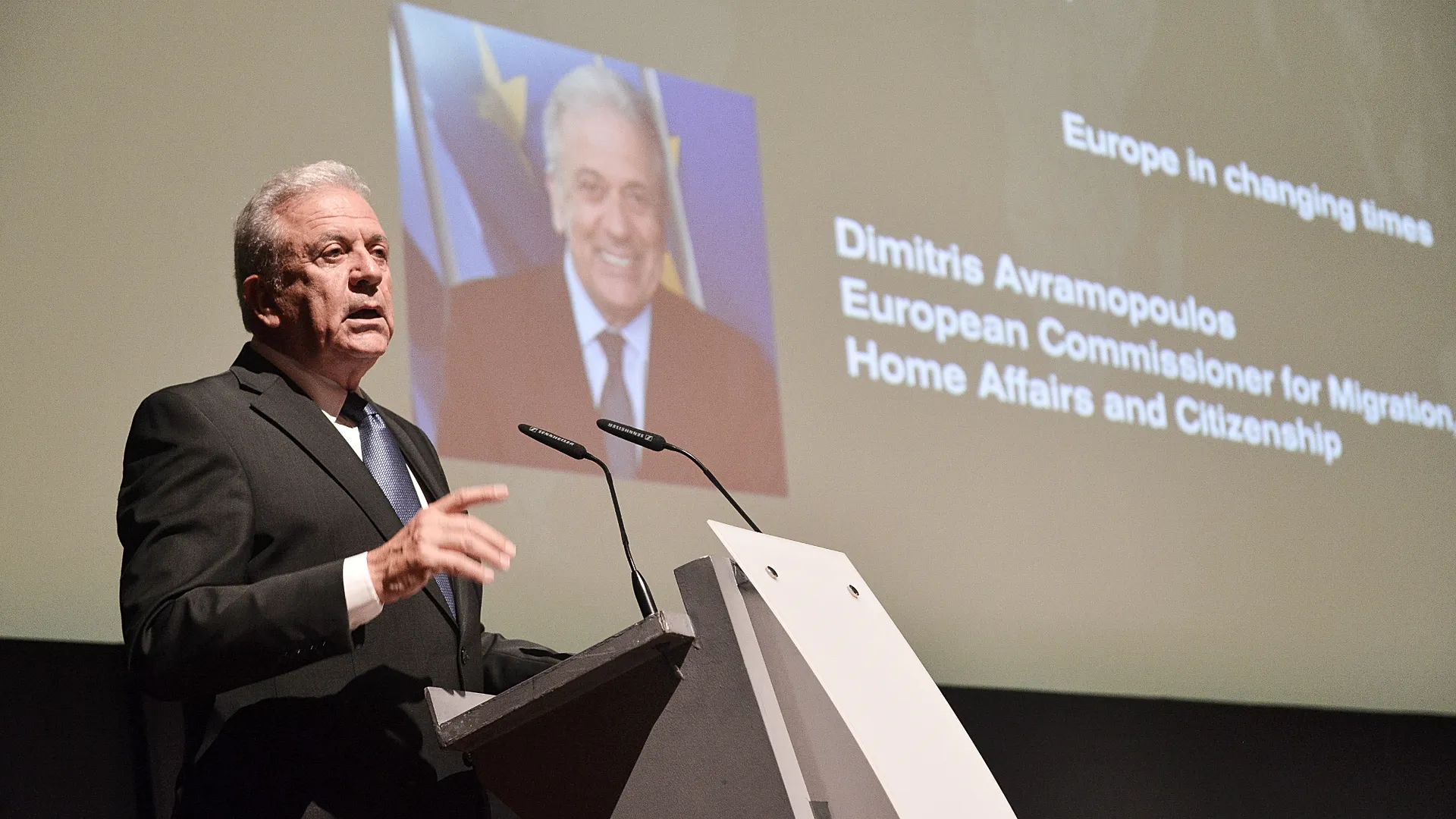
Belgian Court Orders Avramopoulos Arrest in Qatargate Investigation
The former EU commissioner seeks immunity removal to testify.
BRUSSELS, Belgium | June 2026
Belgian judicial authorities have issued an arrest warrant for former European commissioner Dimitris Avramopoulos as part of the expanding investigation into the corruption scandal known as Qatargate. The Greek politician is accused in connection with an alleged influence-buying network that operated around the European Parliament. Avramopoulos has asked for his parliamentary immunity to be lifted so that he can appear before Belgian investigators and defend himself. The warrant does not constitute a conviction, and the allegations remain subject to judicial examination.
The case centers on Fight Impunity, a nongovernmental organization founded by former Italian member of the European Parliament Antonio Panzeri. Belgian investigators allege that the organization formed part of a criminal structure used to channel money and influence connected to foreign governments. Avramopoulos served on its honorary board alongside several prominent European political figures. Authorities are examining whether payments he received were connected to legitimate advisory work or to the wider alleged network.
Avramopoulos has denied participating in any illegal activity. He says his role in Fight Impunity was honorary and did not include executive, administrative or financial responsibilities. According to his account, he joined a committee that also included former European Union foreign policy chief Federica Mogherini, former French prime minister Bernard Cazeneuve and Italian senator Emma Bonino. He maintains that the position was presented as a public-interest role associated with human rights advocacy.
The former commissioner has also emphasized that the European Commission authorized his participation. He said Commission President Ursula von der Leyen approved the arrangement in writing and that the institution’s Independent Ethical Committee issued a favorable opinion in December 2020. These authorizations will likely become an important part of his defense. They may establish that the outside activity was declared, but they do not by themselves determine the origin or legality of the funds under investigation.
Avramopoulos received 5,000 euros per month from February 2021 until February 2022, according to his previous public statement. He said the final amount after deductions was approximately 3,750 euros and that the income was declared and taxed in Greece. He also stated that he requested an end to the payments when the organization’s activity declined. His practical involvement had concluded by March 2022, months before Belgian police publicly exposed the scandal.
Investigators are reportedly examining the allegation that money paid through Fight Impunity originated from what Belgian authorities describe as a criminal network. This distinction is central to the case because legally reported income can still become relevant if prosecutors establish that its underlying source was illicit. Avramopoulos argues that he had no knowledge of any criminal structure. The prosecution will need evidence connecting him personally to the alleged influence operation rather than relying solely on his membership and remuneration.
Greek authorities have received the Belgian judicial documentation and initiated the required domestic procedure. The file is expected to move from the Athens Court of Appeal prosecutor to the Supreme Court prosecutor, the Ministry of Justice and ultimately the Greek Parliament. Avramopoulos appeared voluntarily at the Athens prosecutor’s office after the warrant became known. His request to remove his immunity is intended to allow the Belgian proceedings to continue without constitutional obstacles.
The immunity question is significant because Avramopoulos currently serves as a Greek member of the European Parliament. Parliamentary immunity is designed to protect elected officials from politically motivated prosecution, but it does not create permanent protection from criminal investigation. European institutions have previously lifted immunity in Qatargate-related proceedings. The process usually requires an examination of the request before members vote on whether judicial authorities may proceed.
Qatargate erupted publicly in December 2022 after Belgian police conducted raids and seized large quantities of cash. The investigation alleged that Qatar, Morocco and other foreign actors sought to influence European decision-making through payments, gifts and intermediaries. Several political figures and parliamentary assistants were detained or questioned. The scandal produced one of the European Parliament’s most serious institutional crises.
Former Parliament vice president Eva Kaili was among the most prominent figures placed in preventive detention. Panzeri later entered a cooperation agreement with Belgian prosecutors, agreeing to provide information about the alleged network in exchange for a reduced sentence. His statements became central to the investigation but also generated legal disputes over reliability and procedure. Defense attorneys have repeatedly challenged aspects of the case and the conduct of investigators.
Avramopoulos resigned immediately and irrevocably from Fight Impunity after learning about the raids in Brussels. He also asked the organization to remove his name from its website. His defense is expected to argue that this response was consistent with someone unaware of wrongdoing. Prosecutors may instead focus on whether warning signs should have been apparent before the scandal became public.
The arrest warrant adds a politically sensitive dimension because Avramopoulos has held several senior positions in Greece and the European Union. He previously served as mayor of Athens, foreign minister, defense minister and European commissioner for migration, home affairs and citizenship. His institutional experience and international profile make the allegations particularly consequential. They also intensify scrutiny of the ethical safeguards governing former commissioners and elected officials.
The case raises broader questions about paid honorary positions. Such roles can provide prestige to organizations while offering influential figures compensation without clearly defined operational duties. When governance and funding lack transparency, honorary boards can become vulnerable to misuse. European institutions may face renewed pressure to strengthen disclosure requirements and verify the financial sources behind external appointments.
Belgian authorities must now determine whether Avramopoulos’s payments were simply authorized professional income or part of a prohibited system of foreign influence. His voluntary request to testify may accelerate that assessment, but it does not guarantee a rapid conclusion. Investigators will need financial records, communications and corroborating testimony. The final legal outcome must rest on evidence tested before an independent court.
The warrant shows that Qatargate remains active more than three years after the first arrests. Its continued expansion demonstrates the complexity of tracing political influence through organizations, consultants and cross-border financial arrangements. It also underlines the reputational damage created when public officials receive money from entities later linked to alleged corruption. For Avramopoulos, the next stage will determine whether he becomes formally prosecuted or successfully separates his declared role from the suspected network.
Accountability becomes credible when influence and money remain transparent. / La rendición de cuentas se vuelve creíble cuando la influencia y el dinero permanecen transparentes.