

 Phoenix 24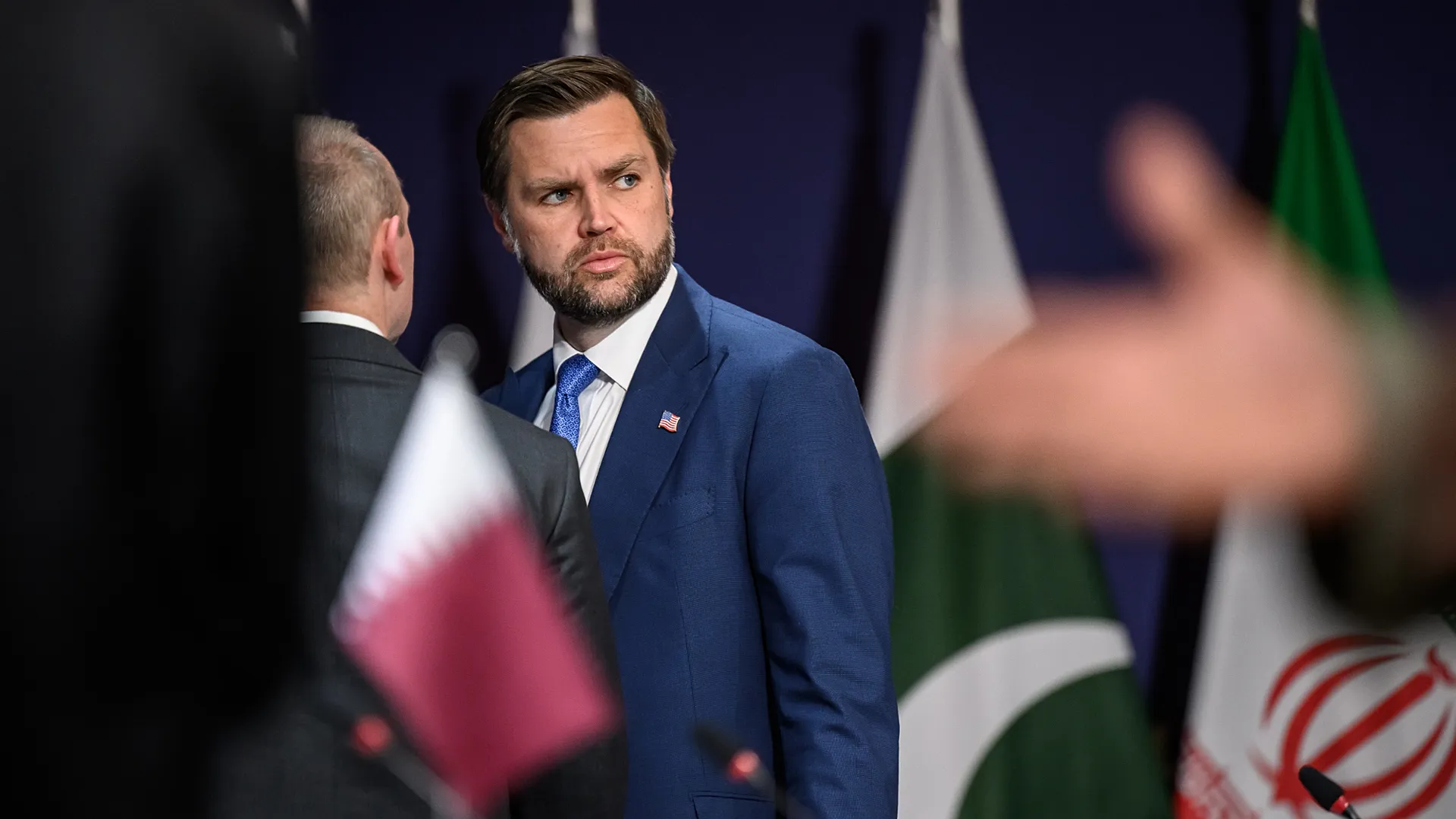
Eighteen hours of talks produced progress despite renewed threats.
BÜRGENSTOCK, Switzerland | June 2026
Iran and the United States have reported significant progress toward keeping the Strait of Hormuz open and preserving the ceasefire in Lebanon after 18 hours of negotiations in Switzerland. Vice President JD Vance said the discussions established a solid foundation for a broader agreement, although he acknowledged that a final settlement had not yet been completed. Iranian officials confirmed that the delegations had agreed on a safe-passage mechanism for the strategic waterway. The diplomatic advance came despite new threats from President Donald Trump that risked destabilizing the talks.
The negotiations were supported by Qatar and Pakistan, which have taken central roles as mediators between Washington and Tehran. Pakistani Prime Minister Shehbaz Sharif welcomed what he described as concrete progress and praised both governments for implementing elements of their existing memorandum of understanding. Iranian President Masoud Pezeshkian is expected to continue the diplomatic process during discussions in Islamabad. The sequence suggests that mediation will remain essential as both sides attempt to convert preliminary commitments into enforceable arrangements.
Vance described the meeting as a very positive day and said the first objective had been to establish a mechanism capable of maintaining navigation through Hormuz. He confirmed that the strait remained open after previous Iranian threats to restrict transit. His comments presented the result as an important achievement for international energy security. At the same time, he avoided claiming that the wider dispute had been resolved.
Iranian Foreign Ministry spokesperson Esmail Baghaei also confirmed the safe-passage understanding but did not provide operational details. The absence of public information leaves important questions concerning monitoring, enforcement and the response to future incidents. A mechanism may reduce the risk of accidental escalation, but its credibility will depend on how quickly violations are identified and addressed. Commercial shipping companies will also judge the agreement through insurance costs and actual conditions at sea.
The Strait of Hormuz remains one of the most sensitive maritime routes in the world. Large volumes of oil and liquefied natural gas pass through the narrow corridor from Gulf exporters toward international markets. Even a temporary disruption can increase energy prices, raise shipping costs and create wider inflationary pressure. Its continued operation is therefore a central concern for governments far beyond the Middle East.
The talks also addressed the fragile ceasefire in Lebanon. Washington wants Iran to restrain Hezbollah and prevent further attacks against Israel, while Tehran argues that the United States must limit Israeli military operations. This disagreement creates a difficult structure in which each government holds the other responsible for actions taken by regional partners. Neither side exercises complete control over those actors, yet both treat their behavior as evidence of compliance or betrayal.
Trump intensified that tension by threatening to strike Iran again if Tehran failed to stop Hezbollah’s activities. He warned that future attacks would be more severe than previous operations and linked Iran directly to instability in Lebanon. The president also made hostile remarks about the consequences Iran would face if it closed Hormuz. Iranian officials responded angrily, insisting that the strait was not subject to American control.
Ebrahim Azizi, who leads the Iranian Parliament’s national security and foreign policy committee, rejected the threats and emphasized Iran’s sovereignty over its territorial waters. His response showed that the diplomatic delegation must negotiate while facing strong pressure from domestic institutions. Public concessions can be portrayed as weakness when Washington’s language becomes confrontational. The same dynamic affects American negotiators whenever Iran uses military pressure to strengthen its position.
Vance attempted to minimize the damage caused by Trump’s statements. He argued that the president was responding to provocations and clarifying the consequences of escalation. According to the vice president, the remarks did not eliminate the progress achieved during the meeting. His defense suggested that Washington wants to preserve a strategy combining negotiation with visible military pressure.
Iranian media linked to the Revolutionary Guard claimed that Tehran had secured a future role in Lebanon’s security framework. Under that version, Iran, the United States and the Lebanese government would participate in major decisions, while Israel would remain outside the mechanism. Washington and Lebanese officials did not confirm the claim. The disagreement demonstrates that both sides may present the same negotiation differently to domestic audiences.
A senior American diplomat indicated only that progress had been made on mechanisms concerning Hormuz and the Lebanese ceasefire. That cautious language reflects the preliminary character of the understandings. Important disputes remain unresolved, including Iran’s nuclear program, sanctions, regional armed groups and the limits of Israeli operations. The current progress reduces immediate risk but does not settle the causes of confrontation.
The timing of the talks also revealed how diplomacy, military pressure and national symbolism have become interconnected. Iranian officials used their national football team’s World Cup draw against Belgium to reinforce messages of resistance and unity. Foreign Minister Abbas Araghchi connected the result with Iran’s diplomatic and military struggles. Such rhetoric helps governments frame negotiations as part of national defense rather than compromise.
The negotiations in Bürgenstock therefore produced a practical but fragile achievement. Maintaining safe navigation through Hormuz can prevent an immediate economic shock, while supporting the Lebanese ceasefire may reduce the risk of a wider regional war. However, both mechanisms remain exposed to missile launches, airstrikes, maritime incidents and inflammatory political statements. A single major event could rapidly erase the trust created during 18 hours of discussion.
The next phase will require precise technical arrangements rather than broad declarations. Shipping routes must remain open in practice, military forces need clear communication channels and ceasefire violations must be investigated quickly. Mediators will also need to prevent public threats from replacing direct communication. Without those safeguards, the agreement may become another temporary pause between confrontations.
Washington and Tehran have demonstrated that progress remains possible even under extreme pressure. Their delegations continued negotiating despite public insults, military warnings and disputes involving regional allies. That persistence matters because the alternative would involve greater danger for Lebanon, Gulf shipping and global energy markets. The foundation has been established, but its strength will depend on whether political leaders choose to protect it.
Diplomacy advances when practical safeguards survive political threats. / La diplomacia avanza cuando las garantías prácticas sobreviven a las amenazas políticas.