

 Phoenix 24
A simple installation can improve daily rides and long journeys.
BUENOS AIRES, Argentina | June 2026
Installing a USB charging port on a motorcycle can provide a constant source of power for smartphones, navigation devices, action cameras and other essential equipment. The modification is not limited to expensive or technologically advanced motorcycles, since most models with a conventional battery can support an appropriate charging kit. With basic tools and careful cable routing, riders can complete the installation without making major changes to the vehicle. Electrical safety, however, must remain the priority throughout the process.
The main reason for adding a USB port is to prevent mobile devices from running out of battery during a ride. Navigation applications consume substantial power because they continuously use the screen, mobile data and location services. A phone that begins the journey fully charged may lose much of its battery during several hours of active guidance. A motorcycle-mounted charger allows the device to remain operational throughout the route.
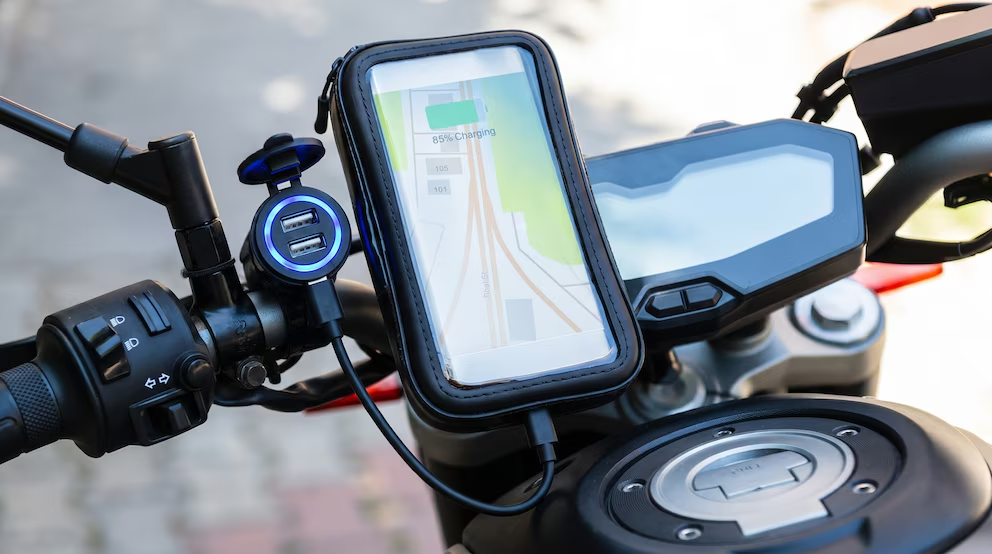
The accessory is particularly useful for delivery workers, couriers and app-based drivers who depend on their phones during the entire working day. These users need permanent access to maps, customer messages, order platforms and digital payment services. Losing power can interrupt work, reduce earnings and leave the rider without directions. A reliable charging source therefore becomes a practical work tool rather than a luxury.
Travelers can also use the port to power action cameras, helmet communication systems and other compatible devices. On long-distance routes, access to electricity can be limited for extended periods. Keeping communication and navigation equipment charged improves convenience and can also support safety during emergencies. The port provides standard five-volt power after converting the motorcycle battery’s higher electrical output.
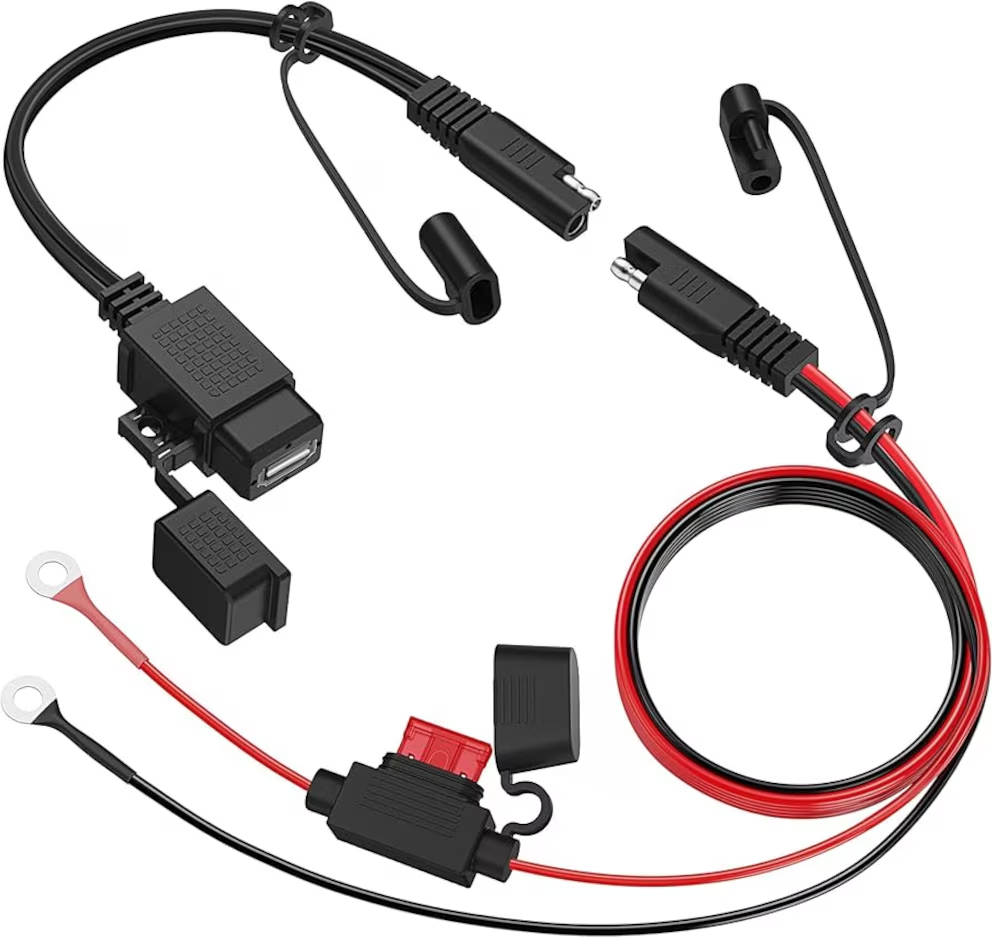
The central component is a motorcycle-specific USB charging kit. Waterproof models are preferable because the accessory will be exposed to rain, humidity, dust and changing temperatures. A built-in on-and-off switch helps prevent unnecessary battery consumption when the motorcycle is parked. An integrated fuse is also essential because it protects the wiring and connected devices if an electrical fault occurs.
Basic installation tools usually include a screwdriver and socket wrenches appropriate for the motorcycle’s battery terminals. Plastic cable ties help secure the wiring along the frame, while electrical tape can reinforce and protect sensitive connections. Riders should inspect the complete kit before beginning and confirm that the cable length is sufficient. Improvised extensions or poorly insulated connections can increase the risk of failure.
The motorcycle must be completely turned off before any electrical work begins, and the ignition key should be removed. The battery is commonly located beneath the seat or behind a side panel, although its position varies by model. Reaching it may require removing screws, trim pieces or part of the seat. The owner’s manual can help identify the correct access procedure without damaging plastic components.
The charger is normally mounted on the handlebar or close to the instrument panel. Its position should make the USB port easy to reach while preventing interference with the controls, fuel tank or steering movement. Riders must turn the handlebar fully in both directions before fixing the mount permanently. A cable that becomes tight during steering could disconnect, break or affect safe handling.
The clamp included with the kit should be tightened enough to resist road vibration without damaging the handlebar or surrounding components. The port should face a direction that reduces direct exposure to rain whenever possible. A protective rubber cover provides an additional barrier when the charger is not being used. The installation must remain stable over uneven roads and repeated use.
Cable routing requires particular care because motorcycles expose wiring to heat, motion and vibration. The wires should follow the frame without crossing sharp edges or moving parts. They must remain away from the engine, exhaust system and other sources of high temperature. Excessive heat can damage insulation and create the possibility of a short circuit.
Plastic ties can secure the cable approximately every 15 or 20 centimeters, depending on the motorcycle’s structure. The wiring should remain firm but not excessively stretched. Leaving a small amount of controlled flexibility helps accommodate vibration and steering movement. Loose cable ends should never hang near the chain, suspension, wheels or braking components.
Once the cable reaches the battery, the electrical terminals must be connected according to the kit instructions. The black cable is attached to the negative terminal, while the red cable containing the fuse is connected to the positive terminal. The fasteners must be tightened securely because vibration can loosen poor connections over time. Exposed metal should be protected from accidental contact with surrounding parts.
The charger must be tested before the seat and covers are reinstalled. When the switch is activated, an indicator light or voltage display should confirm that power is reaching the unit. Connecting a phone or another compatible device verifies whether charging begins normally. Any unusual heat, smell, flickering or intermittent charging should be investigated before the motorcycle is used.
A direct battery connection has one important disadvantage: the charger may remain powered even when the motorcycle is turned off. Its standby consumption is usually low, but leaving it active for several days can gradually discharge a small motorcycle battery. The risk increases when the charger includes an illuminated display or when a device remains connected. Riders should turn off the unit whenever the motorcycle will not be used for an extended period.
A more advanced installation can connect the charger to a switched electrical circuit that receives power only when the ignition is on. This configuration reduces the possibility of accidental battery drain but requires greater electrical knowledge and sometimes an additional relay. Incorrectly tapping into factory wiring may damage the motorcycle’s electrical system or affect warranty coverage. Professional installation is advisable when the rider is unfamiliar with circuits or the vehicle uses complex electronic controls.
The USB port should not encourage unsafe phone use while riding. The device must be held in a secure mount that does not obstruct the instruments or reduce visibility. Routes should be programmed before departure, and adjustments should be made only when the motorcycle is safely stopped. Charging maintains access to navigation, but it does not make screen interaction safe during movement.
Weather resistance also depends on maintenance. Protective covers should remain closed when the port is not connected, and the interior should be checked periodically for moisture, dirt or corrosion. Cables and terminals should be inspected after long trips or exposure to heavy rain. A small defect can become more serious when constant vibration weakens the installation.
Adding a USB port is a relatively simple modification, but its value can be considerable. It supports navigation, communication and professional tools without requiring riders to depend entirely on portable power banks. A properly fused, waterproof and securely mounted charger can remain useful for both urban work and long-distance travel. The key is combining convenience with careful installation and responsible electrical management.
Technology becomes useful when mobility stays connected safely. / La tecnología se vuelve útil cuando la movilidad permanece conectada con seguridad.