

 Phoenix 24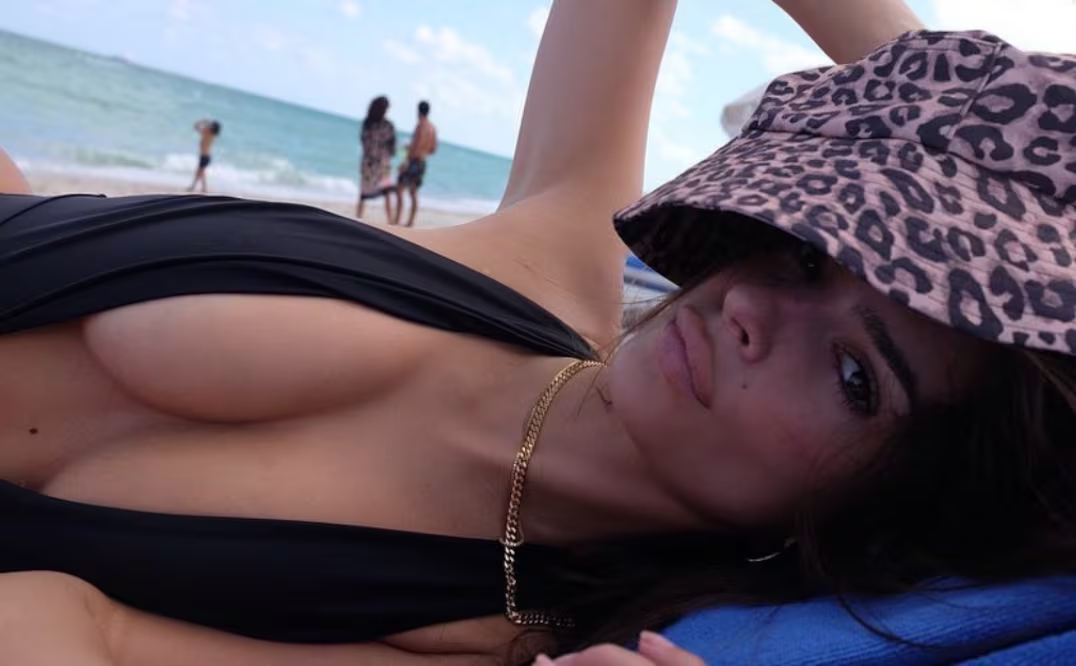
A summer escape becomes another debate over public image.
MALLORCA, Spain | June 2026
Emily Ratajkowski has reappeared on social media with a new collection of photographs from Mallorca, where she modeled several bikinis and summer outfits days after drawing criticism for a provocative topless photo shoot. The model, actress and entrepreneur shared images from beaches, restaurants and coastal locations while documenting a European trip that also included time in Greece. Her latest publication presents a more relaxed holiday atmosphere, but it arrives within an ongoing debate about how she uses sexuality, motherhood and personal exposure in her public work. The images once again place her body at the center of a conversation she has spent years trying to control on her own terms.
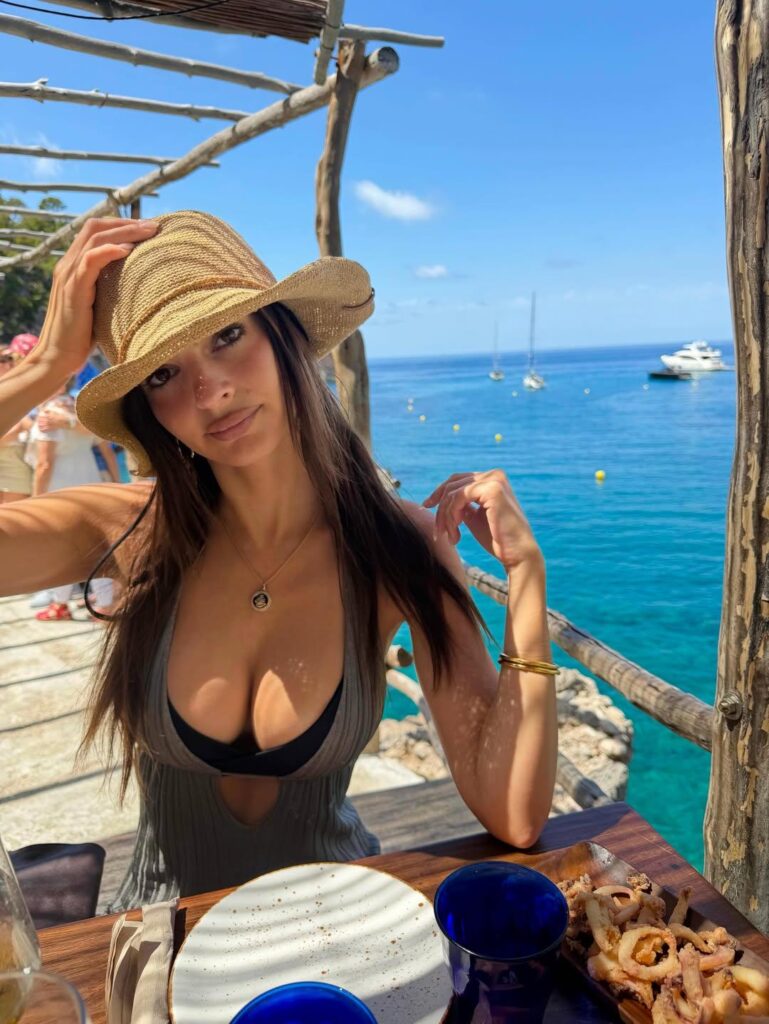
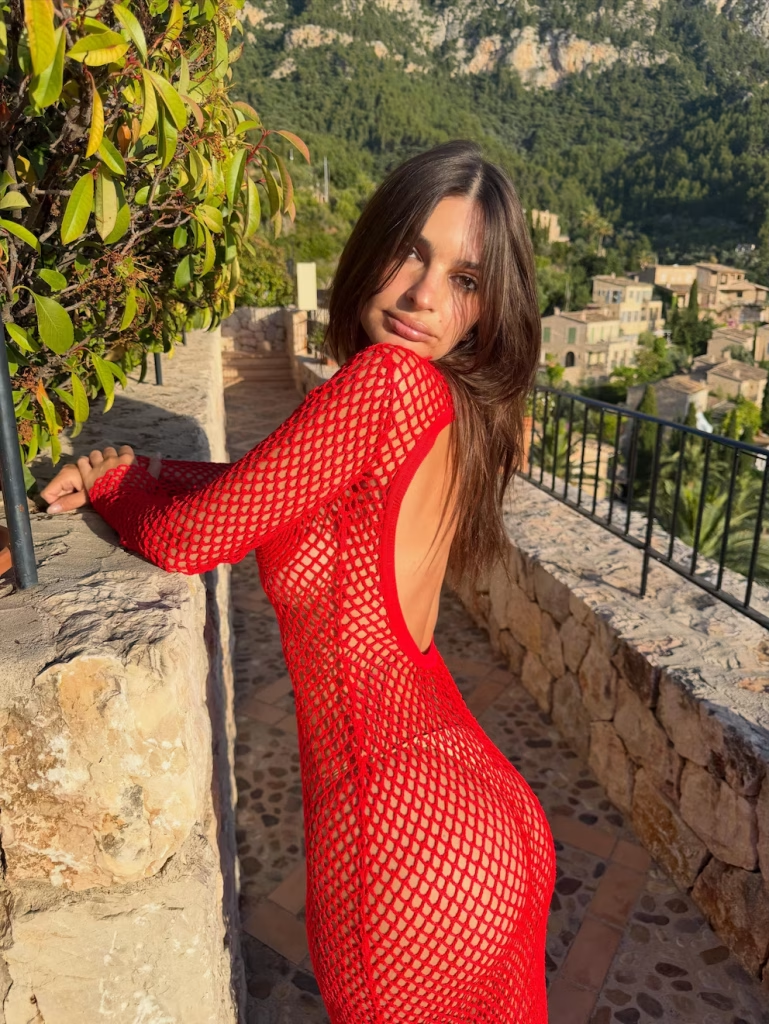
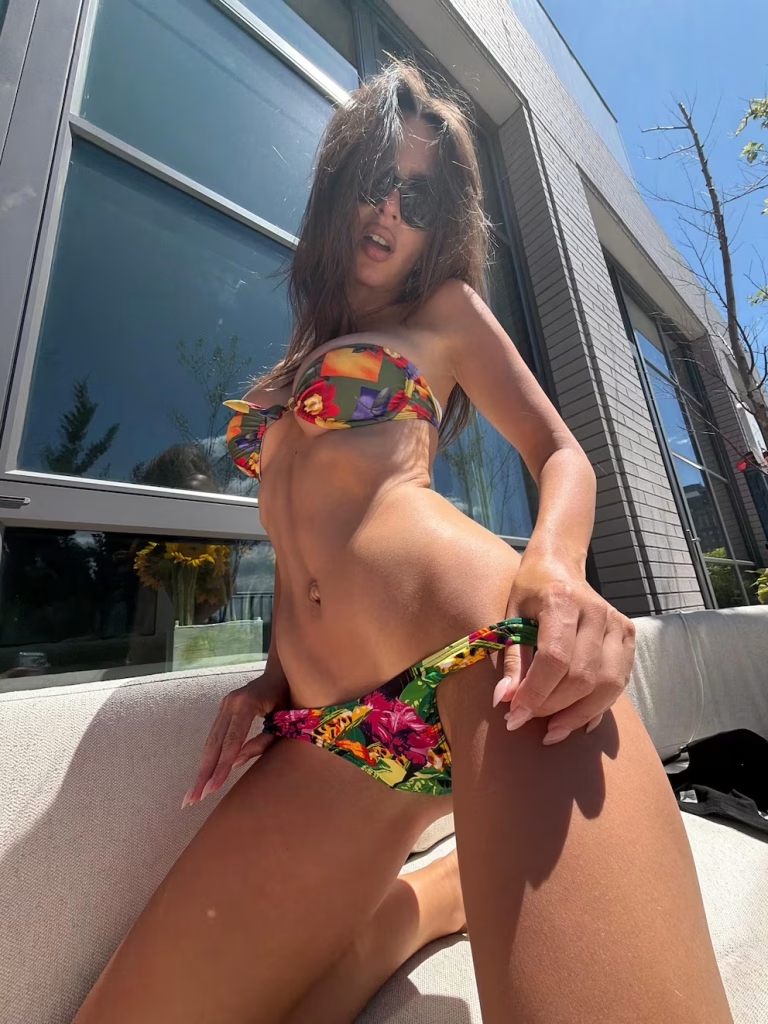
Among the photographs, Ratajkowski appears in a colorful floral bandeau bikini while posing near the Mediterranean coast. Other images show her wearing a black bikini beneath a silver cover-up, a leopard-print bodysuit and a red open-knit dress that revealed a white swimsuit underneath. The publication also included a playful video in which she briefly lost her balance while posing on a stone ledge before quickly recovering. The moment added humor to a carefully styled sequence built around fashion, travel and the informal intimacy of a personal photo album.
Her five-year-old son, Sylvester Apollo Bear, also appeared in one of the quieter images from the trip. Mother and child were photographed standing together in shallow water, introducing a family dimension into a publication otherwise dominated by swimwear and vacation styling. Ratajkowski has increasingly incorporated motherhood into the way she discusses identity, relationships and public perception. That combination has become central to the latest controversy surrounding her image.
Days earlier, she had participated in a deliberately provocative photo session accompanying a personal essay about sexuality, divorce and life as a single mother. The images included topless poses and a plastic baby doll used in a simulated breastfeeding scene, producing intense criticism and thousands of reactions online. Some viewers considered the concept disturbing or unnecessarily explicit, while others defended it as a confrontation with cultural expectations imposed on mothers. The disagreement demonstrated how quickly symbolic imagery can become detached from the argument it was designed to support.
In the accompanying essay, Ratajkowski explored the collapse of her marriage, her experiences with dating and the difficulty of reconciling sexual autonomy with the social role of motherhood. She argued that women are often expected to become less visibly sexual after having children, as though desire and maternal responsibility cannot coexist. Her work challenged that separation by placing both identities within the same visual and written project. Critics, however, questioned whether the imagery complicated the discussion or simply relied on shock to attract attention.
The Mallorca photographs do not directly answer that criticism, but their timing inevitably connects them to it. Ratajkowski returned to familiar territory by presenting her body through fashion and swimwear, a form of self-representation that has defined much of her career. Rather than withdrawing after the backlash, she continued publishing images according to her own aesthetic and commercial language. The decision reinforces her longstanding position that criticism should not determine when or how women display themselves.
Her relationship with public exposure has always contained contradictions. Ratajkowski became internationally recognized after appearing in the controversial music video for Blurred Lines, where her topless performance generated both fame and accusations of objectification. She later built a career in modeling, acting and fashion while also writing extensively about consent, ownership and the commercial use of women’s images. Her central argument has been that visibility does not automatically eliminate agency, but agency can be undermined when others control the context or profit.

That distinction has shaped her evolution from model to author and entrepreneur. She has repeatedly defended a woman’s right to use sexuality without surrendering ownership of her body or public identity. At the same time, she has acknowledged the difficulty of separating empowerment from industries that reward exposure and physical desirability. Her work often operates inside that tension rather than resolving it.
The new images also function as promotion for a carefully constructed lifestyle brand. Ratajkowski is not simply sharing private holiday memories because each garment, location and pose contributes to her commercial identity. Her social media presence supports fashion partnerships, her swimwear business and her broader position as a cultural figure. Personal expression and professional strategy therefore remain closely connected.
Mallorca carries an additional emotional meaning for Ratajkowski because she has previously spoken about spending family holidays on the island during childhood. Returning there allows her to combine nostalgia with the visual language of contemporary celebrity travel. The landscape becomes both a personal setting and a recognizable backdrop for fashion content. That dual function helps explain why the publication feels intimate while remaining highly produced.
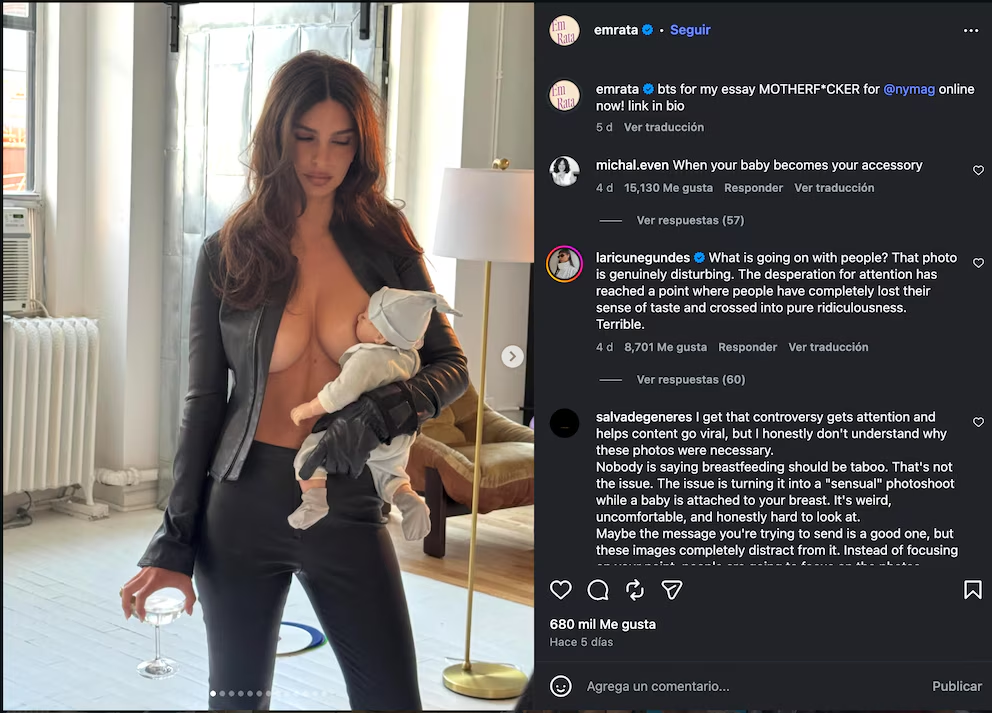
The reaction to her photographs reflects the polarized way female celebrity is consumed online. Admirers praised her confidence, styling and physical appearance, while critics returned to debates about attention, motherhood and the limits of self-objectification. The same audience that condemns sexualized imagery often rewards it with enormous visibility. This contradiction ensures that controversy remains part of the economic system surrounding celebrity culture.
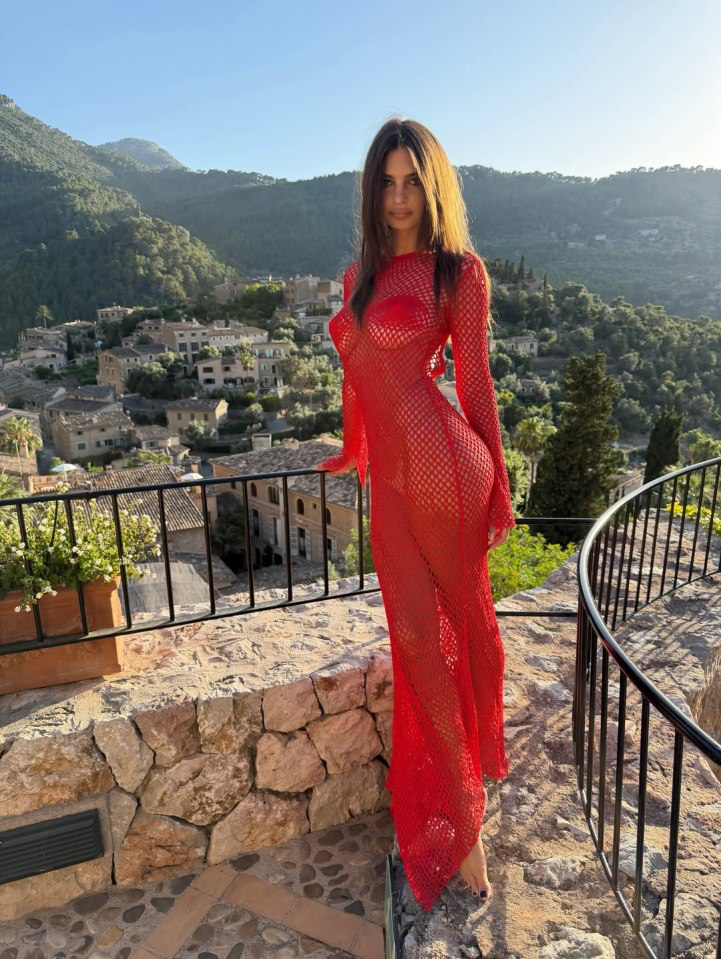
Ratajkowski has increasingly used that contradiction as material rather than attempting to escape it. Her essays, interviews and visual projects examine what happens when a woman’s body becomes both personal property and public commodity. The topless session pushed that debate into uncomfortable territory by connecting sexuality with motherhood. The Mallorca publication offers a lighter surface, but it remains part of the same argument about who controls the meaning of an image.
Her latest reappearance is therefore more than another celebrity vacation album. It demonstrates how Ratajkowski moves between criticism, commerce and personal narrative without abandoning the visual identity that made her famous. Whether the images are interpreted as confidence, provocation or strategic branding depends largely on the viewer. What remains constant is her insistence on occupying the frame rather than allowing others to define it from outside.
Hechos que no se doblan. / Facts that do not bend.