

 Phoenix 24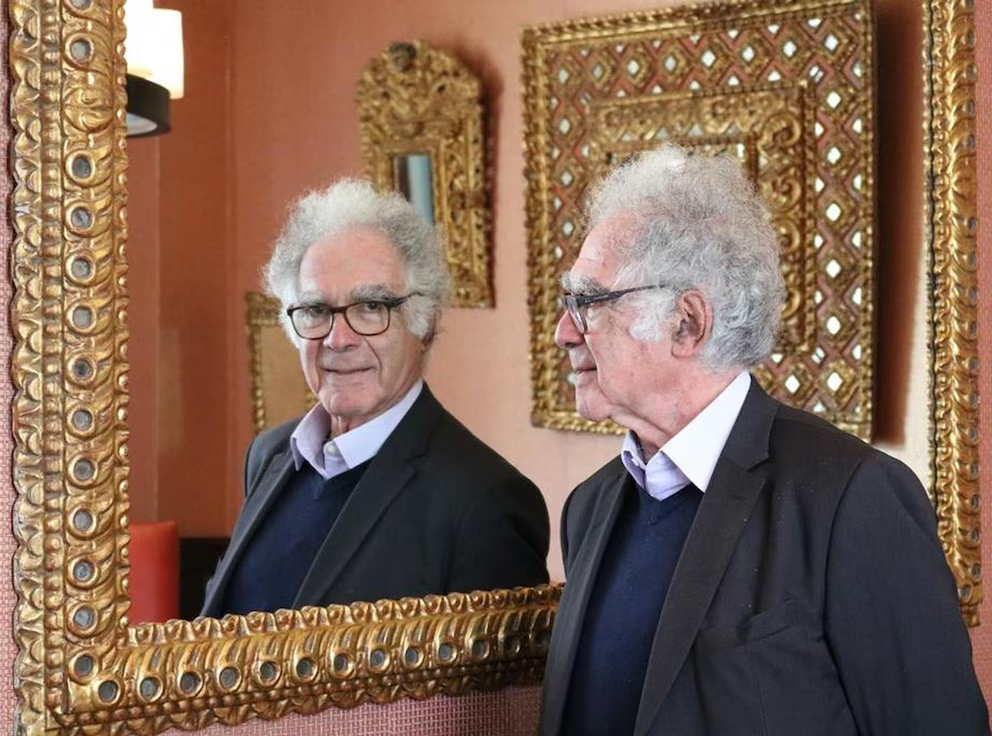
The Italian scholar transformed small clues into universal historical narratives.
BOLOGNA, ITALY — June 2026. Carlo Ginzburg, the Italian historian whose work transformed the study of the past by placing ordinary people, persecuted communities and overlooked evidence at the center of historical research, has died at the age of 87. The Scuola Normale Superiore in Pisa, where he studied and later served as professor emeritus, confirmed that he died in Bologna.
Ginzburg became one of the principal founders of microhistory, an approach that examines a person, community or seemingly minor event to reveal wider social and cultural structures. Instead of beginning with monarchs, governments or major institutions, he searched archives for fragmented traces of people traditionally excluded from historical narratives. His work demonstrated that a carefully reconstructed individual life could illuminate an entire period.
His most influential book, “The Cheese and the Worms,” was published in 1976 and became an international reference across history, anthropology, literature and cultural studies. The work reconstructed the intellectual universe of Domenico Scandella, known as Menocchio, a 16th-century miller from the Friuli region who was prosecuted by the Roman Inquisition for heresy.
Drawing from judicial records, Ginzburg revealed how Menocchio combined oral traditions, religious ideas and the books available to him into a personal explanation of the universe. The miller imagined that the world had emerged from chaos in a process comparable to cheese producing worms. Through this apparently isolated belief, Ginzburg examined the circulation of ideas between popular culture, printed texts and religious authority.
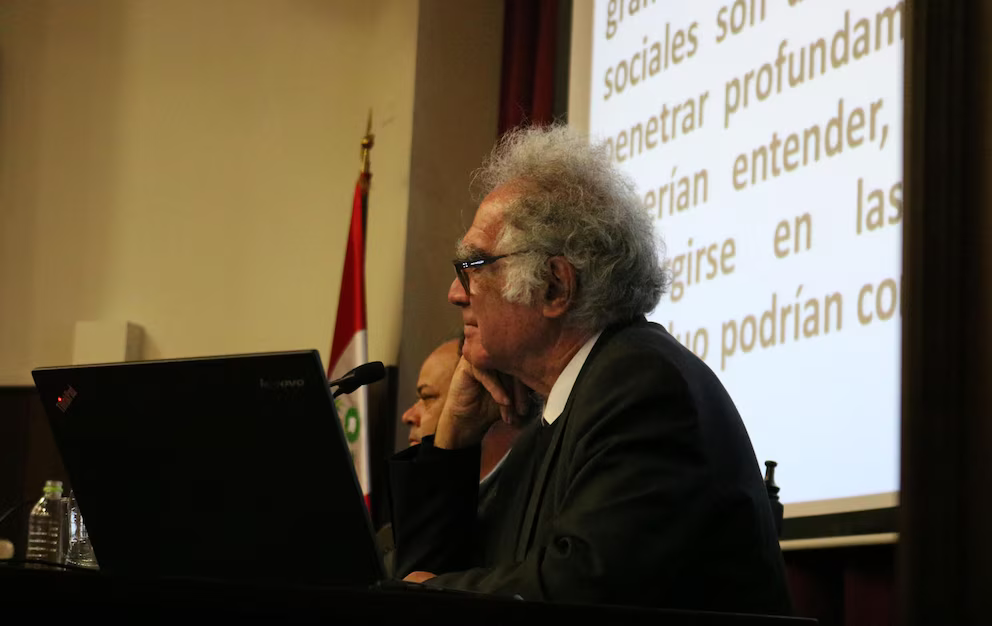
The book challenged the assumption that peasants without extensive written records could not become the subjects of rigorous intellectual history. Ginzburg showed that inquisitorial documents, despite being produced by institutions of persecution, could preserve fragments of language, imagination and resistance. His method required reading those records critically, distinguishing the voices of the accused from the categories imposed by their interrogators.
Before “The Cheese and the Worms,” Ginzburg had already attracted attention with research into the benandanti, rural visionaries and healers who lived in northeastern Italy during the 16th and 17th centuries. They believed their spirits traveled outside their bodies to fight witches and protect agricultural fertility. Inquisitors gradually reinterpreted those traditions through the official concept of witchcraft, transforming local beliefs into evidence of heresy.
That investigation established several themes that would define Ginzburg’s career: persecution, cultural conflict, oral traditions and the recovery of voices distorted by powerful institutions. He treated apparent anomalies not as marginal curiosities but as clues capable of exposing the relationship between dominant systems and subordinated communities.
Ginzburg also developed what became known as the evidential or conjectural paradigm. He compared the historian’s work with the practices of physicians, detectives and psychoanalysts, all of whom reconstruct hidden realities through symptoms, traces and details that may initially appear insignificant. For him, historical knowledge depended on the disciplined interpretation of evidence rather than the simple accumulation of documents.
His defense of evidence became especially important during debates over postmodernism and historical relativism. Ginzburg rejected the idea that history and fiction were interchangeable forms of narrative. Although he recognized that historians construct accounts through language, he insisted that their arguments remain accountable to verifiable traces and that the distinction between truth and falsehood carries intellectual, political and moral consequences.
Born in Turin in 1939, Ginzburg grew up in one of Italy’s most prominent intellectual families. His mother was the celebrated writer Natalia Ginzburg, while his father, Leone Ginzburg, was a writer, editor and committed antifascist. Leone was arrested and tortured by fascist forces and died in a Roman prison in 1944, when Carlo was still a child.
That family history profoundly influenced Ginzburg’s intellectual development. As a Jewish child living under fascism, he experienced persecution and displacement at an early age. He later acknowledged a connection between those experiences and his decision to investigate people pursued, silenced or misrepresented by institutions of power.
Ginzburg studied at the Scuola Normale Superiore in Pisa and developed an academic career extending across Europe and the United States. He taught at the University of Bologna and the University of California, Los Angeles, while also holding positions or delivering lectures at institutions including Harvard, Yale and Princeton. His scholarship reached audiences far beyond conventional academic circles.
His research crossed disciplinary boundaries and addressed subjects including witchcraft, Renaissance art, literary interpretation and historiographical methodology. Works such as “The Night Battles,” “Ecstasies,” “Clues, Myths and the Historical Method” and “History, Rhetoric, and Proof” expanded his analysis of how historians reconstruct worlds that survive only through incomplete evidence.
Ginzburg received numerous international distinctions, including the Balzan Prize and the Humboldt Research Award. His books were translated into more than 30 languages, making him one of the most widely read historians of his generation. His influence extended across Latin America, where microhistory became an important approach for investigating local communities, colonial societies and marginalized populations.
He remained an active public intellectual who addressed fascism, antisemitism, democracy and the ethical responsibilities of historical research. His scholarship was never separated from the political implications of deciding whose experiences deserve investigation. Recovering the lives of the forgotten was, in his work, both a methodological choice and a form of historical justice.
Carlo Ginzburg leaves behind a way of reading the past based on patience, skepticism and attention to apparently insignificant details. He taught generations of scholars that a miller’s testimony, a rural ritual or a contradiction in an archive could reveal structures hidden from conventional history. His legacy rests not only in the creation of microhistory, but in demonstrating that the smallest traces can transform humanity’s understanding of itself.
At Phoenix24, history endures through the voices once condemned to silence.