

 Phoenix 24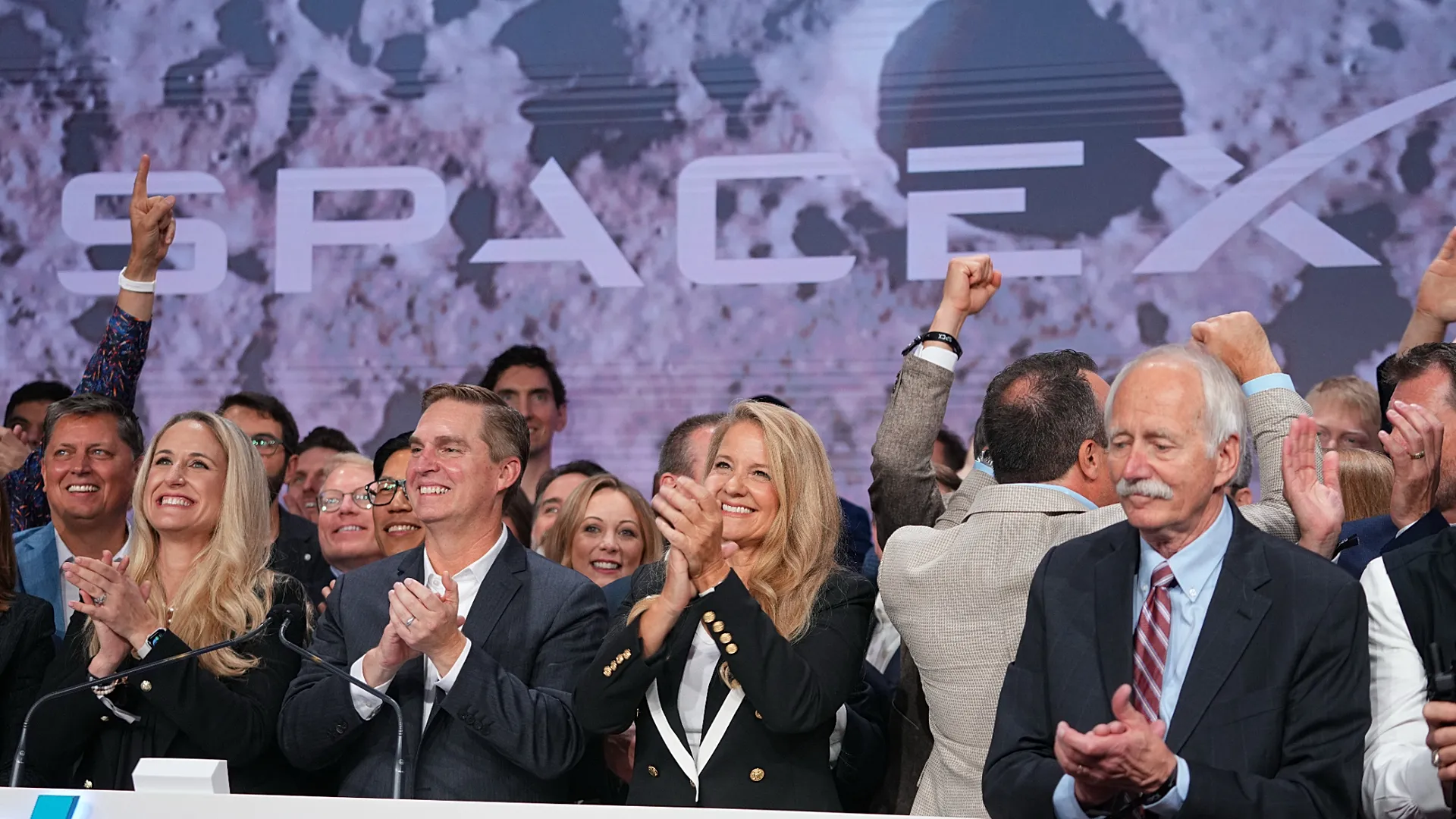
The “FAB 10” reflects a broader race for technological dominance
NEW YORK | JUNE 2026
Wall Street is beginning to look beyond the “Magnificent Seven,” the group of technology giants that dominated the first phase of the artificial intelligence investment boom. A new label—the “FAB 10”—is now circulating among investors as markets attempt to identify the companies most likely to shape the next decade of technological expansion.
The expression stands for “Frontier AI & Big Tech 10” and adds SpaceX, OpenAI and Anthropic to the original group formed by Nvidia, Apple, Microsoft, Alphabet, Amazon, Meta and Tesla. The concept, promoted by the British financial firm Vanda Research, reflects an important shift in market perception: artificial intelligence is no longer viewed solely as a software or semiconductor story, but as an ecosystem involving computing infrastructure, advanced models, satellite connectivity, cloud platforms, energy and massive capital investment.
SpaceX’s record-breaking stock market debut has accelerated that change. After closing above $192 per share, Elon Musk’s aerospace and artificial intelligence company became the world’s sixth-largest publicly traded corporation by market capitalization. Its arrival on Wall Street expanded the range of strategic assets investors associate with the AI economy.
SpaceX contributes more than rockets and space exploration to the new grouping. Through Starlink, the company operates a global satellite communications network capable of supporting connectivity, data transmission, defense systems and future computing architectures. Its inclusion suggests that markets increasingly see space infrastructure as part of the technological foundation upon which advanced artificial intelligence may depend.
OpenAI and Anthropic represent another dimension of the expansion. Both companies are leading developers of frontier artificial intelligence models and have become central players in the competition to build systems capable of increasingly complex reasoning, content generation and autonomous operation. Although neither company is currently publicly traded, both have taken steps toward potential listings later in 2026.
Their possible valuations—potentially exceeding $1 trillion each—could transform the structure of equity markets. An initial public offering by either company would likely attract enormous demand from institutional and retail investors seeking direct exposure to the model-development layer of the AI industry.
The “FAB 10,” however, is still more a narrative framework than an investable portfolio. OpenAI and Anthropic remain privately held, meaning investors cannot yet purchase all ten companies through public markets. The label therefore functions primarily as a way of organizing expectations about where technological leadership and capital concentration may move next.
The original Magnificent Seven remain extraordinarily powerful. Together, they are valued at approximately $22.6 trillion, while Nvidia alone has surpassed $5 trillion in market capitalization. The seven companies still account for roughly one-third of the S&P 500, giving their share-price movements an outsized influence over the broader American market.
Investors are therefore not abandoning the original group. They are expanding the definition of leadership. The first stage of the AI rally rewarded companies that possessed dominant cloud platforms, semiconductor capacity, consumer ecosystems and large-scale data resources. The next stage may favor firms controlling frontier models, satellite networks, energy-intensive infrastructure and new channels for distributing intelligence globally.
This evolution also reveals growing discomfort with the extreme concentration of market returns. When a small number of companies generates much of an index’s performance, investors face a paradox. The strongest corporations provide growth and stability, but their dominance makes portfolios increasingly dependent on a narrow group of stocks.
Adding new companies to the market narrative does not necessarily solve that concentration problem. The “FAB 10” may simply extend the same logic to a slightly larger collection of megacapitalization firms. If OpenAI and Anthropic enter public markets at valuations above $1 trillion, the influence of technology companies over major indices could become even greater.
Other financial institutions are already proposing alternative classifications. Bank of America has introduced the idea of an “AI Big 10,” incorporating semiconductor manufacturers Broadcom, Advanced Micro Devices and Micron. That approach emphasizes the hardware layer supporting AI development rather than concentrating exclusively on consumer technology and frontier models.
Another label, “MANGOS,” combines Meta, Anthropic, Nvidia, Google, OpenAI and SpaceX. Its composition reflects an even more selective interpretation of the companies believed to possess the models, computing resources and infrastructure required to dominate the emerging AI economy.
The proliferation of acronyms is not merely a marketing exercise. Wall Street uses these classifications to simplify complex investment narratives and direct capital toward identifiable themes. The danger is that catchy labels can encourage investors to treat fundamentally different companies as though they formed a coherent and equally attractive group.
Apple’s consumer hardware ecosystem, Nvidia’s semiconductor dominance, SpaceX’s aerospace infrastructure and Anthropic’s model-development business operate under different regulatory, financial and competitive conditions. Their growth prospects, capital requirements and risk profiles cannot be evaluated through a single narrative.
The “FAB 10” also raises questions about valuation. Artificial intelligence companies are benefiting from expectations of extraordinary future revenue, but many of the investments required to support that growth are equally extraordinary. Data centers, semiconductor fabrication, energy generation, cloud computing and model training demand hundreds of billions of dollars.
High valuations assume that future productivity gains and commercial adoption will justify those expenditures. Any slowdown in revenue growth, regulatory intervention or technological disruption could force markets to reconsider the prices assigned to these companies.
At the same time, the broader grouping captures a genuine structural change. Artificial intelligence is moving beyond individual applications and becoming embedded in telecommunications, defense, transportation, finance, healthcare and industrial production. The corporations controlling the models, chips, networks and data centers will possess influence extending far beyond conventional technology markets.
Wall Street’s transition from the Magnificent Seven to the “FAB 10” therefore reflects more than the search for a new acronym. It marks an attempt to map the emerging architecture of technological power.
The market is widening its focus, but it is not necessarily becoming less concentrated. The names may change and the group may expand, yet the central question remains: how much economic and strategic power should be concentrated in a handful of corporations capable of shaping both global markets and the future of artificial intelligence?
Analysis that transcends power. / Análisis que trasciende al poder.