

 Phoenix 24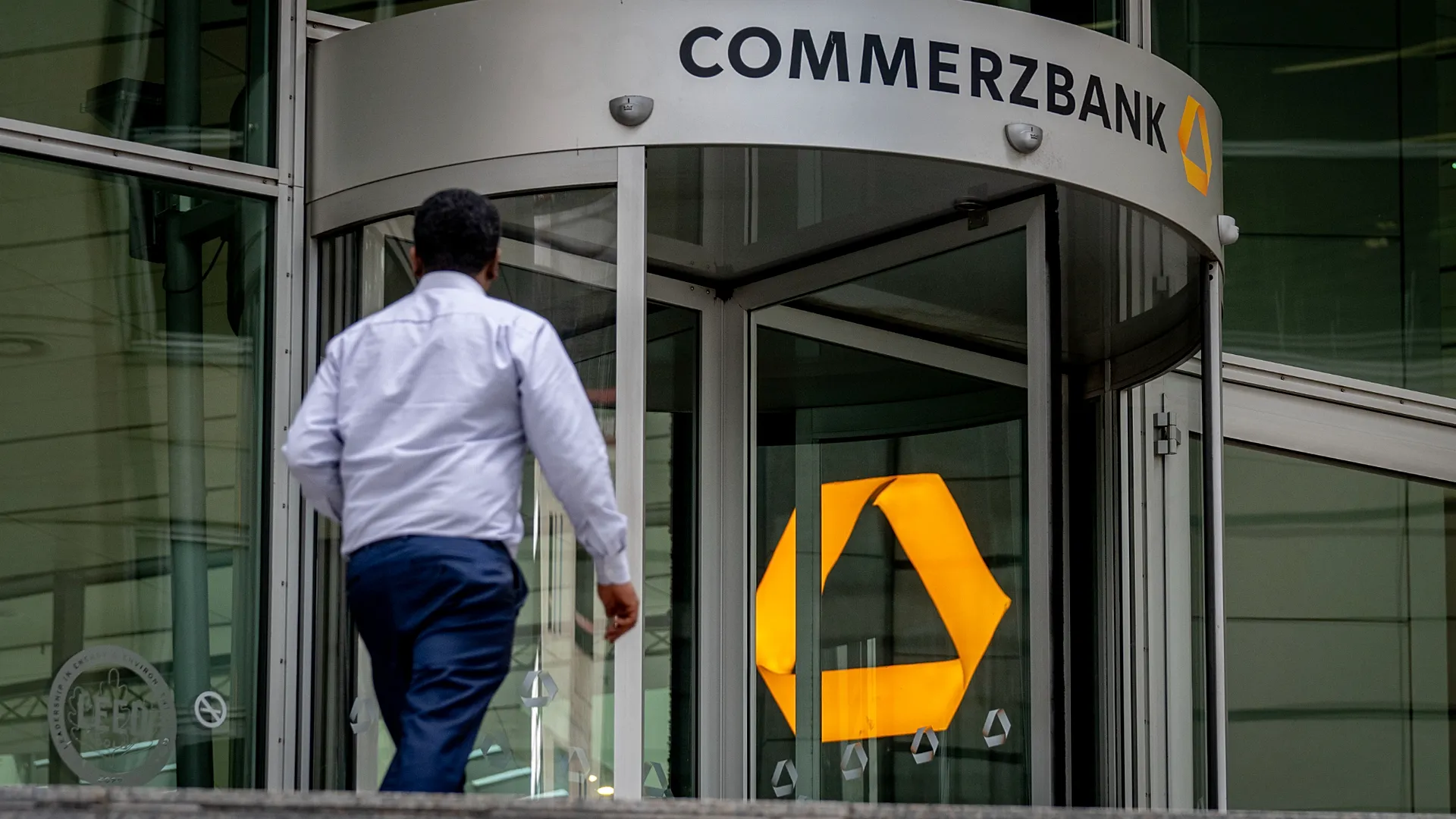
Markets reward expansion while Germany defends financial sovereignty
FRANKFURT | JUNE 2026
Germany has rejected UniCredit’s hostile bid for Commerzbank, transforming a major banking transaction into a broader confrontation over national sovereignty, European consolidation and control of strategic financial infrastructure. The German federal government, which retains approximately 12% of Commerzbank, has declared that it will not tender its shares to the Italian group, arguing that the offer is economically insufficient and politically unacceptable.
Berlin’s opposition does not appear to have discouraged financial markets. UniCredit shares rose sharply after the German announcement, gaining around 3.7% and becoming one of the strongest performers on Milan’s FTSE Mib index. The reaction suggests that investors continue to believe the Italian bank can extract value from the transaction—or benefit strategically even if it fails to obtain complete control.
The conflict centers on Commerzbank’s position within the German economy. The institution is not merely another listed financial company. It plays a critical role in financing the Mittelstand, the network of small and medium-sized industrial and export-oriented companies that forms the backbone of Germany’s economic model. It is also a major employer and one of the pillars of Frankfurt’s financial center.
For Berlin, allowing Commerzbank to fall under foreign control would therefore involve more than transferring ownership. It could affect lending priorities, employment, corporate governance and the availability of credit for German companies. The government fears that decisions concerning one of its most important commercial banks could ultimately be made according to the strategic interests of a foreign group.
UniCredit, however, views the operation through a different lens. The Italian institution already holds close to 27% of Commerzbank and says it has crossed the 30% acceptance threshold established for its public exchange offer. When physical shares, derivatives and voting rights are considered, its potential exposure is substantially higher.
This financial architecture gives UniCredit significant influence even without a complete acquisition. Its total potential position reportedly exceeds half of Commerzbank’s capital and voting rights when derivative instruments are included. Such exposure strengthens its ability to pressure management, influence governance and potentially seek changes within the bank’s supervisory and executive structures.
German authorities have described UniCredit’s approach as aggressive. Reports indicate that the Italian group may seek to replace members of Commerzbank’s supervisory and management boards if it secures sufficient shareholder support. Commerzbank has reportedly raised concerns with Germany’s financial regulator about the use of shares and derivative positions connected to institutions that maintain commercial relationships with UniCredit.
The Italian bank rejects those accusations and argues that its strategy would create a stronger European financial institution. It has also proposed simplifying Commerzbank’s international operations and concentrating the bank more heavily on the German market. From UniCredit’s perspective, the transaction could eliminate inefficiencies, generate synergies and improve profitability.
The confrontation exposes one of the European Union’s central financial contradictions. European policymakers have repeatedly called for deeper banking integration, stronger cross-border institutions and a more competitive capital market capable of challenging American and Asian financial groups. Yet national governments remain reluctant to surrender control over banks they regard as strategically essential.
Germany’s resistance demonstrates that the concept of a European banking union remains incomplete. Cross-border consolidation may be supported in principle, but political tolerance decreases when the target is a major national institution with deep connections to domestic industry. The same governments that call for integrated European markets frequently intervene when foreign ownership threatens sensitive assets.
The market’s positive response to UniCredit also reflects confidence in Chief Executive Andrea Orcel’s disciplined acquisition strategy. Investors may believe that the bank will avoid overpaying, maintain capital strength and withdraw if the transaction no longer creates value. Berlin’s refusal to sell its stake could even reduce the risk of UniCredit pursuing full control at an excessive price.
At the same time, the offer has entered a legally sensitive phase. Frankfurt prosecutors have opened preliminary proceedings related to allegations of possible market manipulation. The investigation follows a criminal complaint connected to the takeover process, although the existence of an inquiry does not establish wrongdoing.
The accusation adds another layer of uncertainty to an already complex operation. Regulatory authorities will need to examine whether the structure of the shareholdings, derivative instruments and voting rights complies with market rules and transparency obligations. Any adverse finding could affect the bid’s credibility and alter the balance between UniCredit, Commerzbank and the German state.
The calendar now becomes decisive. The initial offer period is approaching its conclusion, followed by an additional window during which shareholders who initially declined may reconsider. Final participation figures will reveal whether UniCredit possesses enough direct support to intensify pressure on Commerzbank’s leadership.
Even without the German government’s shares, UniCredit could emerge as the dominant shareholder. That would create an unusual situation in which Berlin opposes the takeover politically while the Italian group exercises substantial influence economically. The result could be a prolonged struggle over board appointments, strategic plans and the future structure of the bank.
The dispute is therefore larger than the price of a single transaction. It raises fundamental questions about who controls credit, how Europe defines strategic autonomy and whether financial integration can advance when national interests collide.
Berlin is defending Commerzbank as an instrument of economic policy and industrial stability. UniCredit is presenting consolidation as the logical response to fragmented European banking. Markets, meanwhile, are rewarding the possibility of greater scale and profitability.
The outcome will reveal whether Europe’s banking system is moving toward genuine cross-border integration or returning to a model in which national governments preserve control over their most important financial institutions.
Truth is structure, not noise. / La verdad es estructura, no ruido.