

 Phoenix 24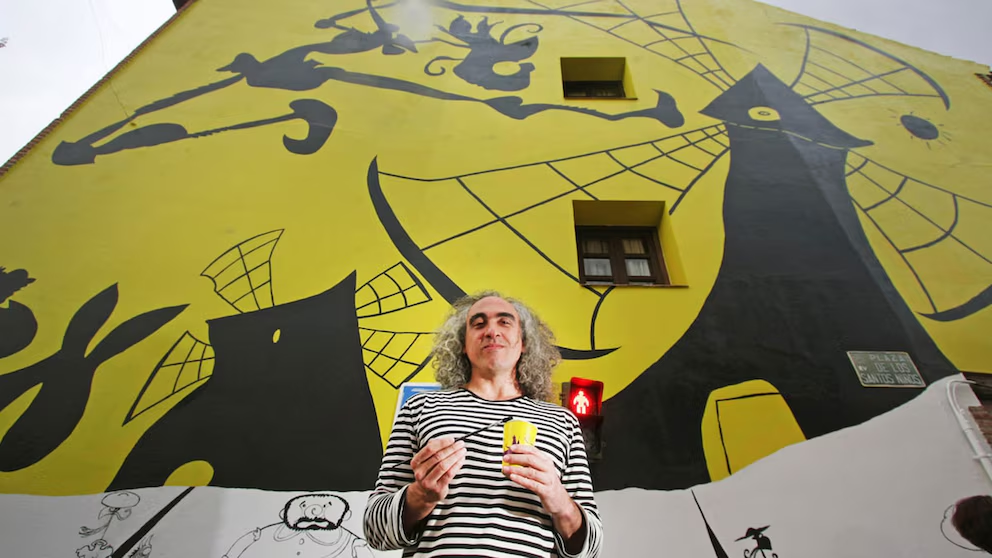
Heritage, authorship and political negligence
Alcalá de Henares — June 2026
The demand to restore Miguel Rep’s Mural del Hermanamiento in Alcalá de Henares is not only a cultural protest. It is a dispute over memory, authorship and institutional responsibility.
More than 170 artists, writers, cervantists and intellectuals from Spain and Argentina have called for the restitution of the mural, created in 2011 as a symbol of the bond between Alcalá de Henares and Azul, Argentina. Its theme was not accidental: Cervantes, Don Quixote and the shared cultural imagination between both cities.
The controversy deepened because the mural was not merely removed after sudden damage. Critics argue that it was allowed to deteriorate for years, then replaced without proper dialogue with the artist. That sequence turns a maintenance problem into a political question: when public art is neglected, who is responsible for its disappearance?
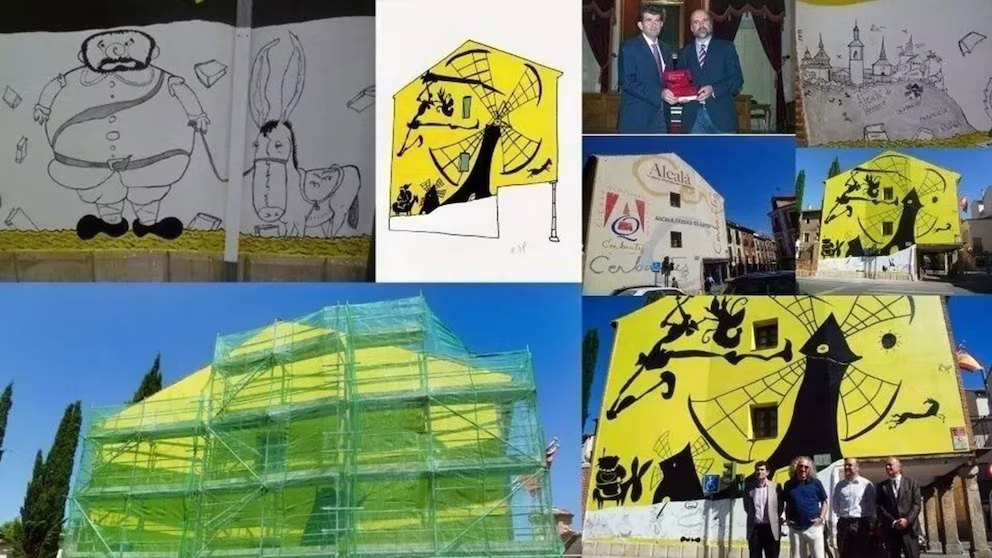
The case also raises a legal and ethical issue. A mural in public space is not disposable decoration. It carries authorship, symbolic value and community meaning. If authorities remove or replace such a work without consultation, they risk treating cultural heritage as administrative surface rather than intellectual creation.
The contrast with Azul is powerful. While the Argentine version of the fraternal mural has been preserved, the Alcalá version was erased. That asymmetry wounds the very idea of hermanamiento. A cultural bridge cannot survive if one side protects memory while the other paints over it.
This is why the campaign matters. It is not nostalgia for a wall. It is a defense of the principle that cities must care for the artistic signs that form their civic identity. Alcalá de Henares, birthplace of Cervantes, carries a special obligation. Its public space is not ordinary urban inventory; it is part of a global literary geography.
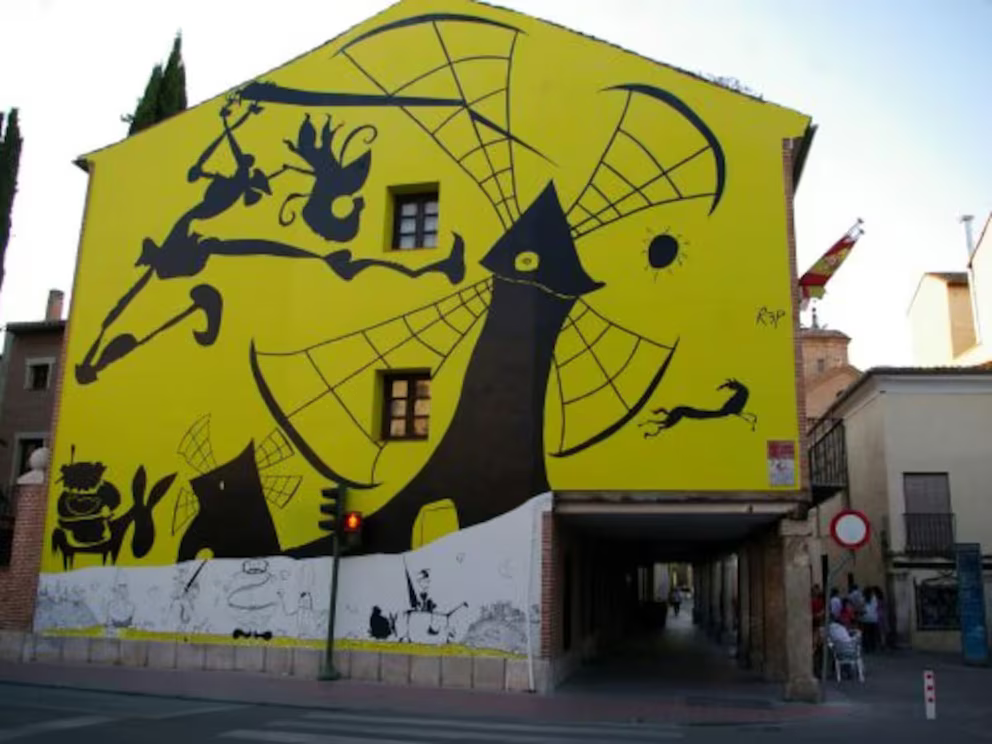
Restoring the mural would not be an act of surrender by the local government. It would be an act of institutional maturity. Public authorities can correct cultural errors when they understand that heritage is larger than political cycles.
The destruction of a mural may appear minor in a world saturated by crisis. But culture often disappears precisely through small acts of neglect: a wall abandoned, a work ignored, an author not consulted, a symbol replaced without debate.
Alcalá now faces a simple test. It can treat the controversy as an inconvenience, or it can recognize that cultural memory demands repair.
La verdad no grita: estructura el poder.