

 Phoenix 24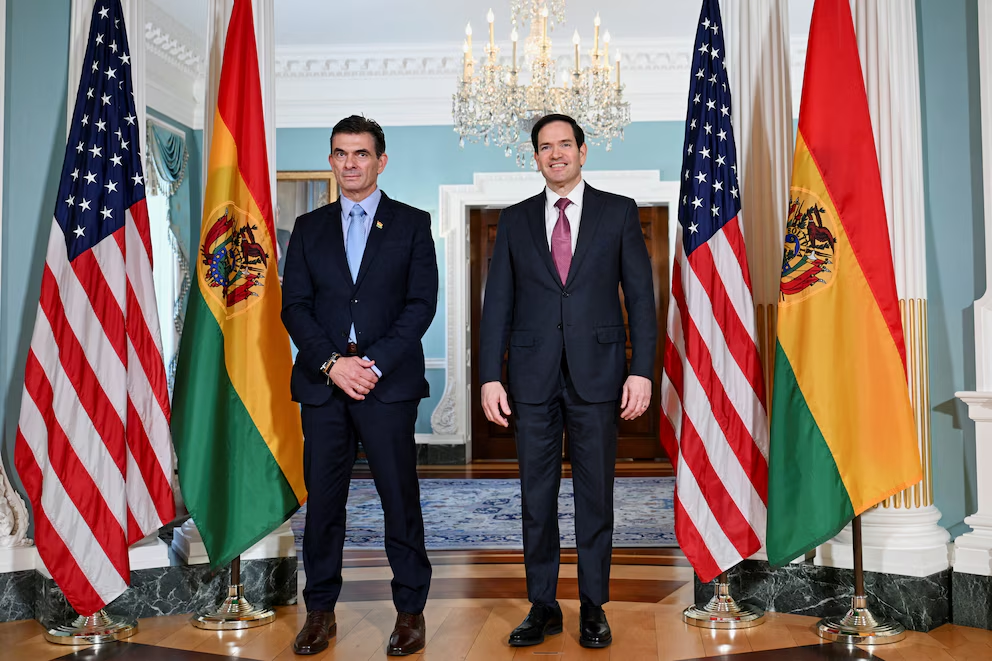
Humanitarian aid now carries strategic weight.
La Paz, June 2026
The United States will increase emergency assistance to Bolivia as protests, roadblocks and supply shortages deepen one of the country’s most serious political crises in recent years. Washington’s decision comes as President Rodrigo Paz faces sustained unrest, economic paralysis and mounting pressure from movements that have used blockades to isolate key urban centers and disrupt the flow of food, fuel and medical supplies.
The announcement was delivered after a call between U.S. Secretary of State Marco Rubio and Paz, in which Washington reiterated support for Bolivia’s stability, security and democratic continuity. The aid is expected to focus on urgent needs created by the blockades, including food shortages and medical supply constraints. In political terms, however, the gesture goes beyond humanitarian relief.
Bolivia’s crisis has already moved from domestic turbulence into regional concern. Weeks of protests and nearly a month of roadblocks have affected La Paz, El Alto and several departments, generating deaths, economic losses and rising social frustration. The blockade strategy has transformed political confrontation into logistical pressure, forcing the government to respond not only as a political administration, but as an emergency management authority.

For Washington, the opportunity is clear. Supporting Paz allows the United States to strengthen a government under pressure while positioning itself as a stabilizing actor in a country historically marked by suspicion toward U.S. influence. Humanitarian aid becomes a diplomatic instrument, especially in a context where regional alignments remain contested and Bolivia’s internal fractures have international resonance.
The unrest also reflects a deeper struggle over the post-Morales political order. Bolivia remains divided between institutional actors seeking continuity, social movements demanding rupture and political forces attempting to convert economic hardship into regime-level pressure. The result is a crisis in which roads, markets and supply chains become extensions of political power.
The most dangerous dimension is not only the protest itself, but the erosion of state functionality. When blockades prevent medicine, fuel and food from circulating, the crisis stops being symbolic and becomes material. Citizens begin to experience governance through scarcity, queues and uncertainty, which can rapidly weaken trust in institutions regardless of who formally controls the presidency.
The U.S. decision to increase aid may ease immediate shortages, but it will not resolve Bolivia’s structural conflict. The country is facing a collision between political legitimacy, economic fragility and territorial pressure from organized social movements. Washington can send supplies, but only Bolivia can rebuild the internal agreements needed to prevent humanitarian relief from becoming a recurring substitute for governability.
Phoenix24: clarity in the grey zone. / Phoenix24: claridad en la zona gris.