

 Phoenix 24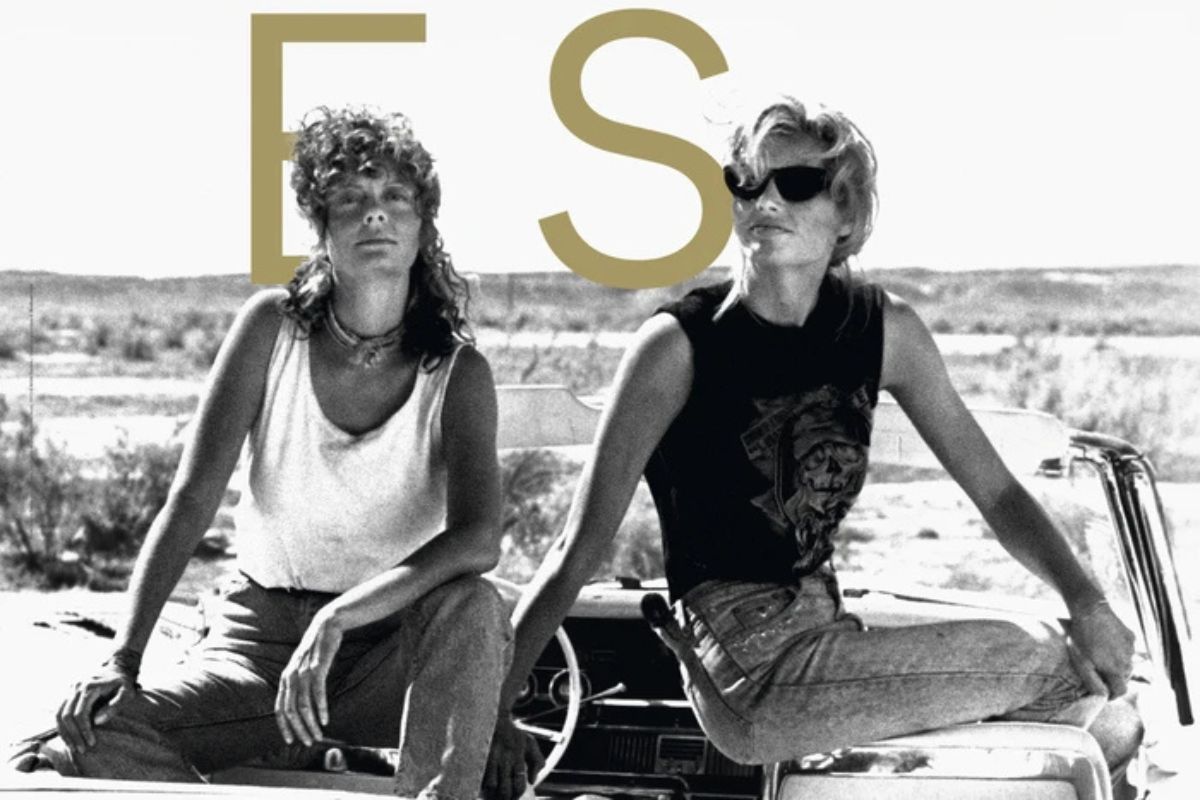
A poster cannot replace structural change.
Cannes, May 2026. The presence of women became one of the central controversies at the 79th Cannes Film Festival after organizers chose an image from Thelma & Louise as the official poster. The gesture was designed as a symbolic tribute to female rebellion, cinematic memory and the enduring cultural power of a film that challenged Hollywood’s gender codes more than three decades ago.
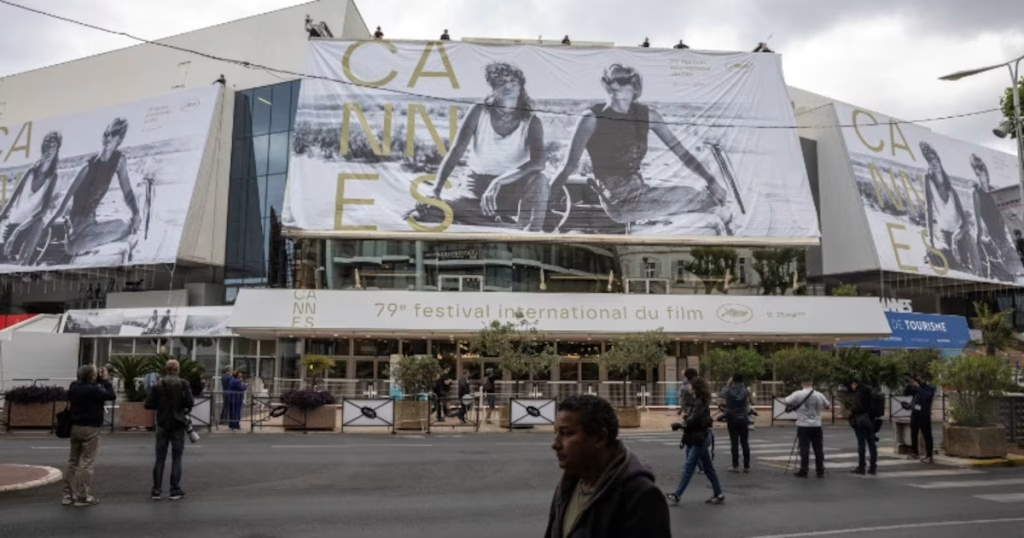
The problem was not the image itself, but the distance between symbolism and institutional reality. Critics argued that celebrating Thelma & Louise on the festival’s visual identity did not erase the limited number of women directors in the main competition. The poster projected feminist memory, but the selection process still exposed an old imbalance inside one of cinema’s most influential stages.

That contradiction made Cannes a mirror of the broader film industry. Female visibility often advances faster in communication campaigns than in budgets, jury power, distribution pipelines and elite programming decisions. The red carpet can celebrate women as icons while the institutional machinery continues to restrict how many of them direct, compete and define cinematic prestige.
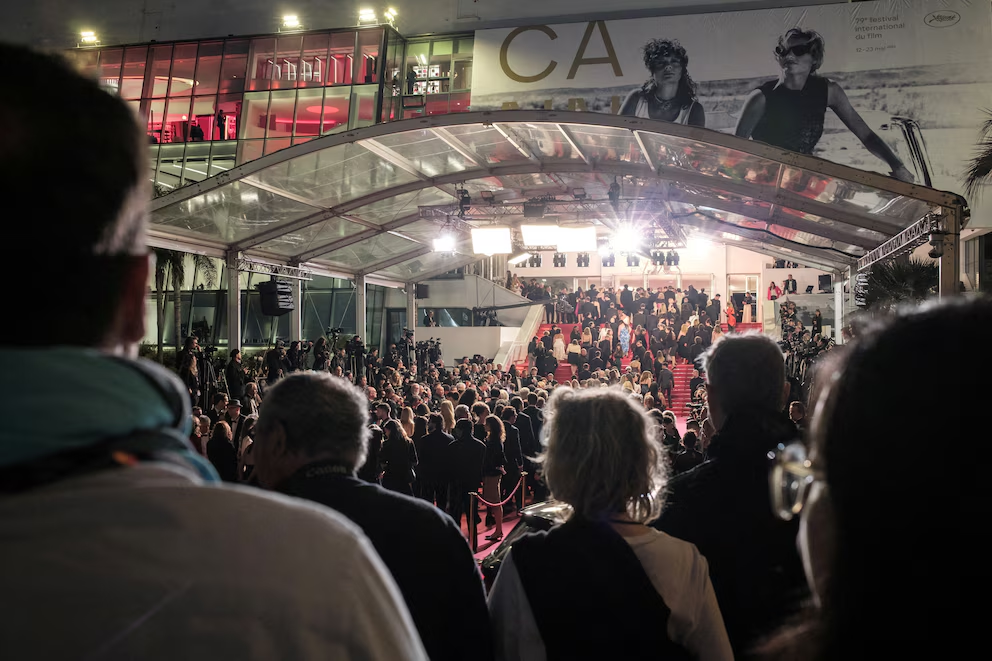
The debate also revealed the limits of symbolic feminism in cultural markets. A festival can invoke a rebellious image, select a historic reference and present itself as aligned with contemporary equality demands. Yet without transparent selection criteria, stronger representation in competition and deeper access to production power, the gesture risks becoming decoration rather than transformation.

Thelma & Louise still matters because it disrupted the grammar of female characters in mainstream cinema. But Cannes 2026 showed that memory alone cannot repair the present. The real question is no longer whether women can occupy the poster, but whether they can occupy the structures that decide which films become part of history.
Narrative is power too. / La narrativa también es poder.