

 Phoenix 24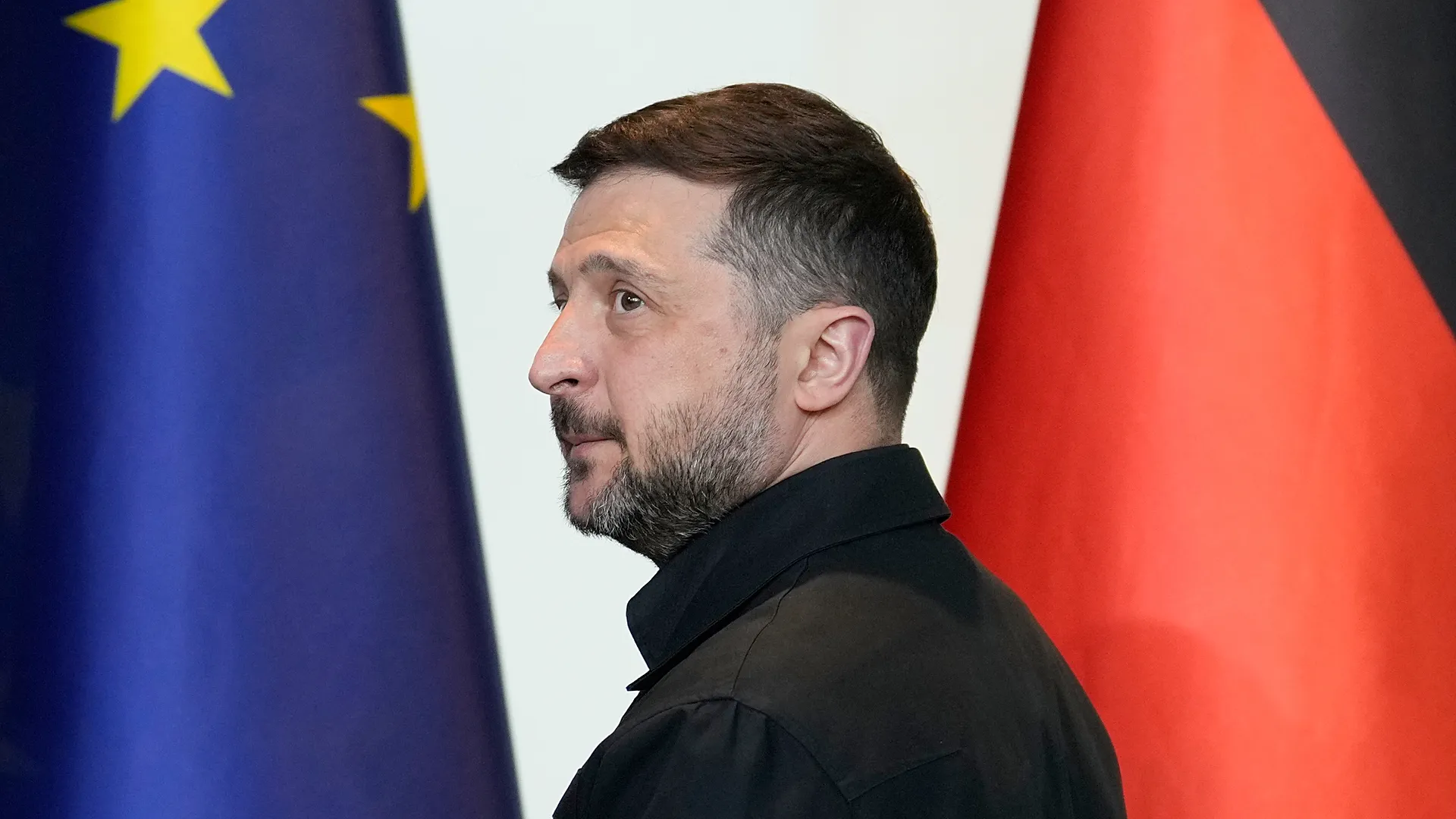
Kyiv refuses symbolic integration.
Kyiv, May 2026. Ukrainian President Volodymyr Zelensky rejected German Chancellor Friedrich Merz’s proposal to grant Ukraine a form of associate European Union membership without voting rights, arguing that Kyiv deserves full integration into the bloc. The disagreement reveals a deeper fracture inside Europe over whether Ukraine is being incorporated as an equal partner or managed as a geopolitical buffer against Russia.
Merz’s proposal attempted to create an intermediate formula that would allow Ukraine to participate in European institutions, attend summits and access portions of the EU budget while full accession negotiations continue. However, the model would exclude Kyiv from full decision-making authority inside the Union. For Berlin, the initiative reflects institutional caution. For Ukraine, it represents the risk of permanent second-tier status.
Zelensky’s rejection carried strategic symbolism beyond diplomatic protocol. Since the Russian invasion in 2022, Ukraine has framed its war effort not only as a national defense campaign, but as a broader defense of Europe’s political order, territorial stability and security architecture. From Kyiv’s perspective, sacrificing thousands of lives while remaining outside Europe’s core political mechanisms is increasingly difficult to justify domestically.
The dispute also exposes the structural anxiety surrounding EU enlargement. Ukraine obtained candidate status shortly after the invasion and formally opened accession negotiations in 2024, yet full membership remains politically sensitive across several European capitals. Concerns persist regarding corruption reforms, agricultural competition, institutional balance and the long-term economic impact of integrating a large country still at war.
Germany’s position reflects the balancing act now shaping European strategy. Supporting Ukraine militarily and financially has become politically necessary for much of Europe, but granting rapid full membership could fundamentally reshape the Union’s internal equilibrium. An associate model offers flexibility and strategic ambiguity, though it simultaneously reinforces Ukrainian suspicions that Europe wants Ukraine’s security value more than its political equality.
The debate ultimately reaches beyond accession procedures. It touches the credibility of Europe itself. If Ukraine continues to serve as the eastern shield of the continent while remaining outside the Union’s full power structure, the symbolic contradiction will become increasingly difficult to sustain. Europe now faces a defining question: whether its promises to Ukraine represent a future destination or an indefinitely postponed horizon.
Truth is structure, not noise. / La verdad es estructura, no ruido.