

 Phoenix 24
The red carpet became cultural diplomacy.
Riviera Maya, May 2026. The 13th Platino Awards opened at Parque Xcaret with a red carpet that confirmed the growing symbolic power of Ibero-American cinema and television. The ceremony brought together actors, directors, producers and musicians from across Latin America, Spain and Portugal, transforming the Mexican Caribbean into a showcase for an audiovisual industry seeking global visibility without losing regional identity.
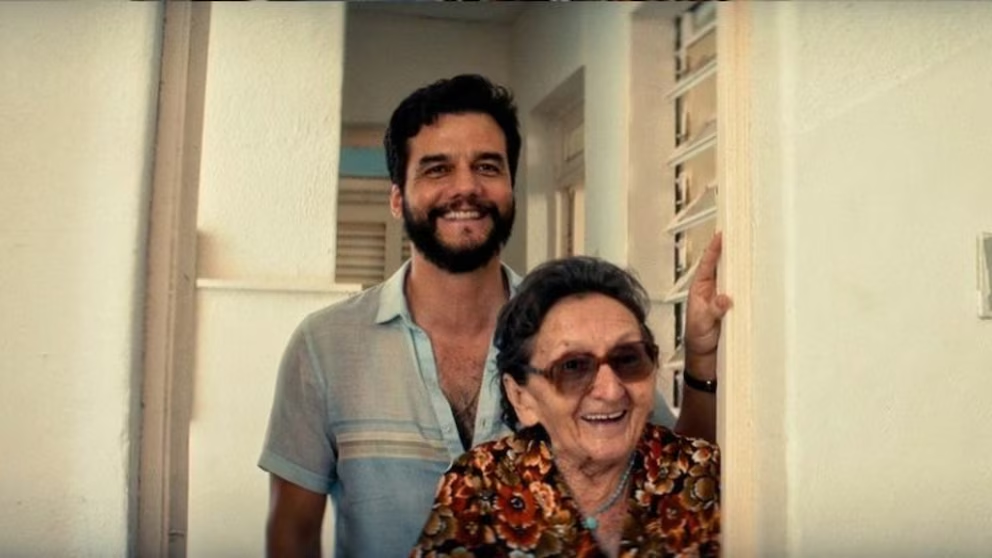
The event’s location mattered. Holding the gala in Riviera Maya placed Mexico at the center of a cultural map that is increasingly competitive, transnational and platform-driven. The Platino Awards are no longer only an industry celebration. They function as a meeting point for markets, streaming ecosystems, public recognition and soft power across the Spanish- and Portuguese-speaking world.
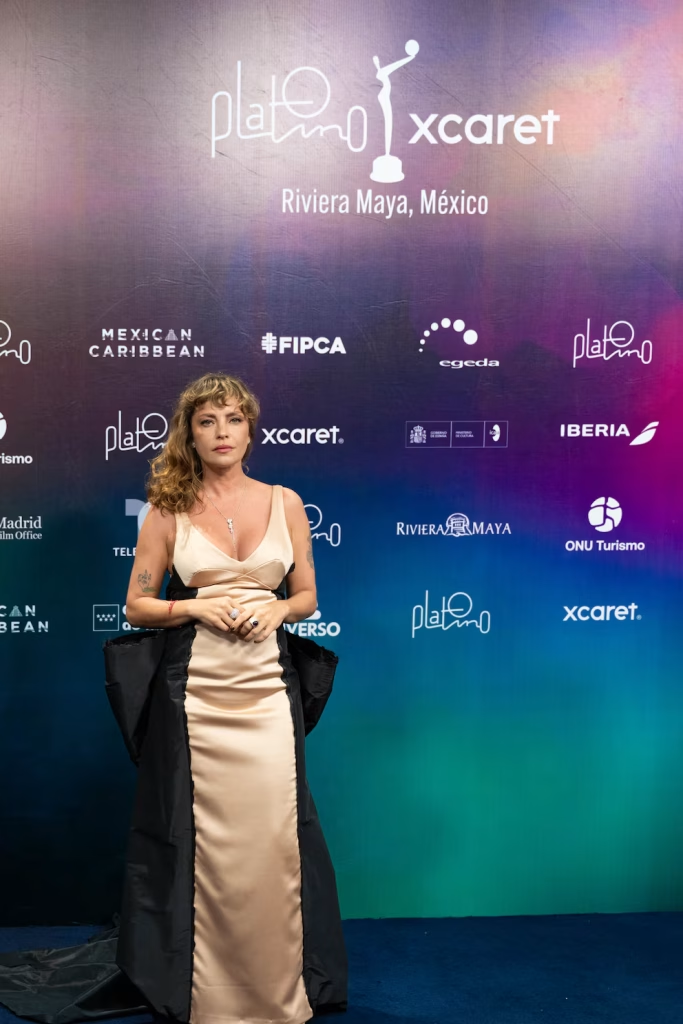
The red carpet offered the visible layer of that machinery. Celebrities, presenters and nominees moved through a space designed for glamour, but also for positioning. Every interview, image and appearance helped reinforce the idea that Ibero-American entertainment is not secondary to Hollywood. It has its own stars, franchises, auteurs, audiences and export capacity.

This year’s edition also reflected the expansion of the awards structure. With more categories and a wider recognition of film, series and technical craft, the Platino Awards are adapting to an audiovisual ecosystem where cinema and television increasingly overlap. Streaming has changed the hierarchy of prestige, making series, miniseries and platform productions central to the region’s cultural economy.

The gala was hosted by Carlos Torres and Cayetana Guillén Cuervo, a pairing that reinforced the event’s cross-border identity. Their presence connected Colombian television, Spanish performance tradition and the broader Ibero-American audience that follows these awards across multiple platforms. The ceremony’s cultural message was clear: the region’s audiovisual industry is fragmented by markets, but unified by language, memory and production networks.

The tribute to Guillermo Francella added historical depth. Honoring a figure with decades of work in film and television positioned the ceremony as more than a showcase of current popularity. It also recognized continuity, career-building and the long arc of performers who shaped mass culture before streaming made regional content globally accessible.

The deeper significance lies in the timing. Ibero-American cinema and television now compete in a world where attention is global, algorithms are unforgiving and cultural identity must be constantly translated for wider audiences. The Platino Awards serve as a counterweight to that pressure by giving the region a shared institutional stage.

The red carpet was therefore not just a prelude to trophies. It was a declaration of audiovisual presence. In Riviera Maya, the industry gathered to celebrate itself, but also to remind the world that Ibero-American storytelling is no longer waiting to be discovered. It is already building its own center of gravity.
Phoenix24: journalism without borders. / Phoenix24: periodismo sin fronteras.