

 Phoenix 24
Consoles are no longer getting cheaper with time.
Tokyo, May 2026. The gaming industry is entering a phase many players considered almost unthinkable a decade ago: rising console prices after launch. Nintendo has increased the price of the Switch 2, while Sony is adjusting PlayStation production to protect profitability amid growing hardware costs. Behind both decisions lies the same pressure point: memory components, chips and storage systems have become more expensive in an industry squeezed by artificial intelligence demand and global manufacturing volatility.
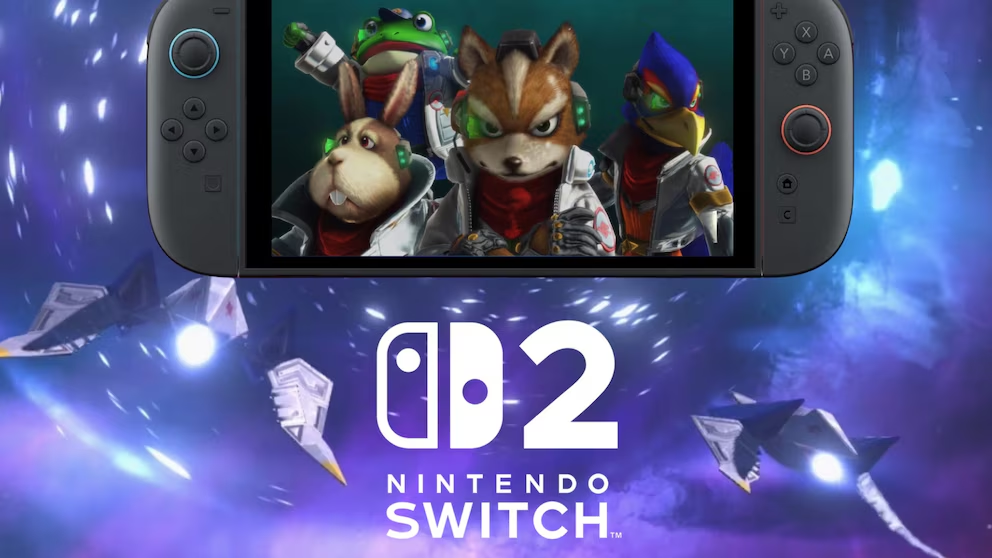
Nintendo’s move is particularly symbolic because the company historically built its success on accessibility and mass adoption. The Switch ecosystem thrived by combining portability, recognizable franchises and relatively controlled prices. Raising the cost of the Switch 2 only months after launch signals that the economics of gaming hardware have shifted dramatically. The company is now facing the same structural pressure affecting the wider technology sector: expensive components, volatile supply chains and consumers increasingly sensitive to price.
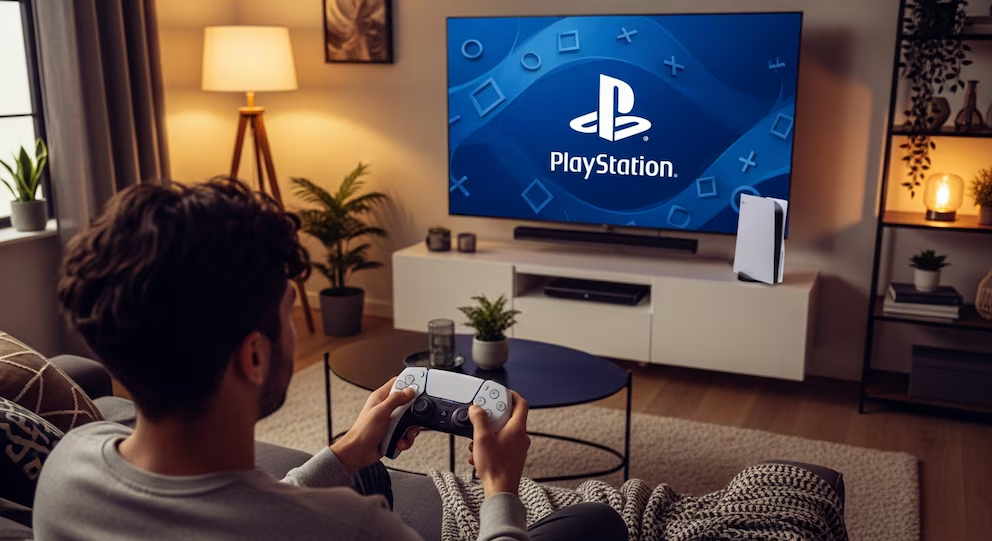
Sony’s position reflects a different but connected pressure. PlayStation operates in the high-performance segment, where graphical power, memory capacity and advanced processors generate enormous production costs. Adjusting production volumes suggests that Sony is prioritizing margin discipline over aggressive hardware expansion. That represents a structural shift from the old strategy of expanding console bases first and recovering profits later through games, subscriptions and digital stores.
Artificial intelligence is now indirectly reshaping gaming economics. The global race for AI infrastructure has intensified demand for memory chips, processors and data-center hardware, pushing component prices upward across multiple industries. Consoles are therefore competing for technological resources against cloud computing, AI companies and enterprise systems with much larger budgets. Gaming hardware is no longer operating in its own industrial bubble.
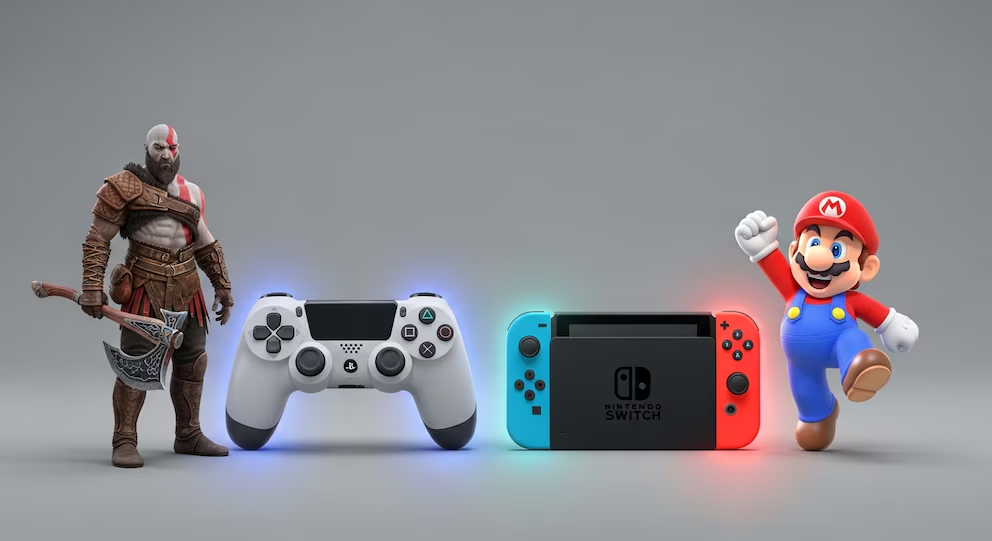
For consumers, the psychological impact may be as important as the financial one. The traditional expectation was simple: consoles launched expensive and gradually became cheaper over time. That pattern is weakening as hardware, subscriptions and accessories face upward price pressure. Players are beginning to realize that gaming is becoming a premium infrastructure market rather than a permanently accessible entertainment category.
The consequence could reshape player behavior. Consumers may hold onto older hardware longer, prioritize subscriptions over new consoles or become more selective about game purchases. Physical ownership itself could weaken as companies push digital ecosystems, cloud gaming and recurring revenue models that reduce dependence on traditional console cycles.
There is also a strategic risk for the industry. Gaming expanded globally partly because consoles became culturally accessible consumer technology. If prices continue climbing while software costs also rise, the market could become more stratified between premium users and occasional players. Nintendo, Sony and Microsoft therefore face the same dilemma: protect profitability without breaking the emotional accessibility that made gaming global.
The current crisis is not simply about consoles becoming more expensive. It is about the collision between entertainment hardware and the wider technological economy. Gaming now depends on the same supply chains feeding artificial intelligence, cloud infrastructure and geopolitical tech competition. The result is a new reality where even leisure devices are being shaped by the global struggle for computational power.
Más allá de la noticia, el patrón. / Beyond the news, the pattern.