

 Phoenix 24
Markets are rewriting the hierarchy of power.
New York, May 2026. Forbes’ latest ranking of the world’s 10 richest people shows how strongly global wealth remains tied to technology, financial markets and corporate concentration. After a powerful April rebound, led by gains in the S&P 500 and Nasdaq, the combined fortune of the top 10 reached roughly USD 2.7 trillion.
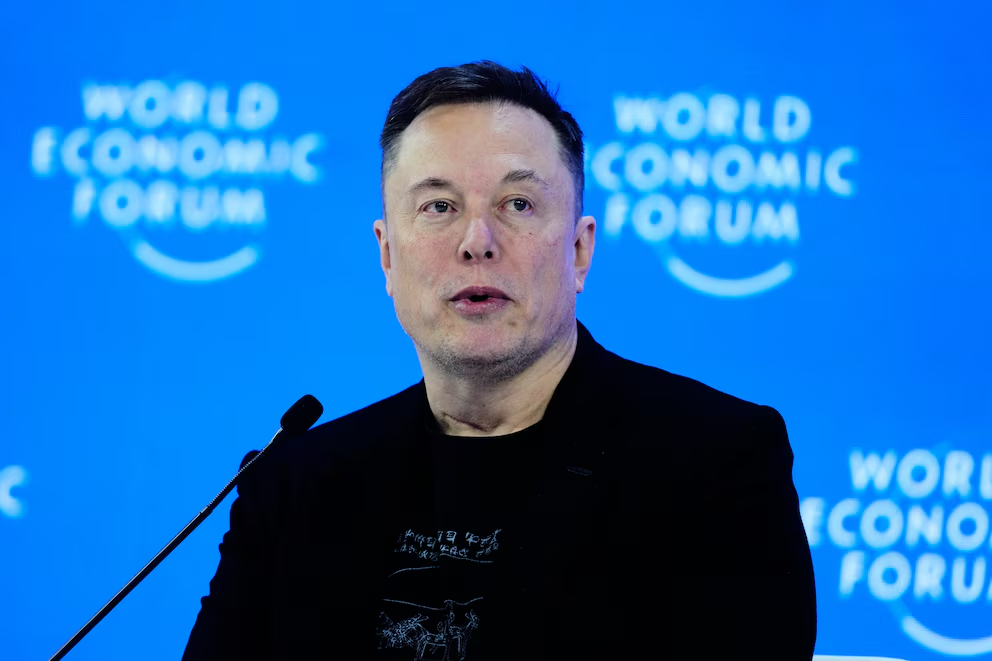
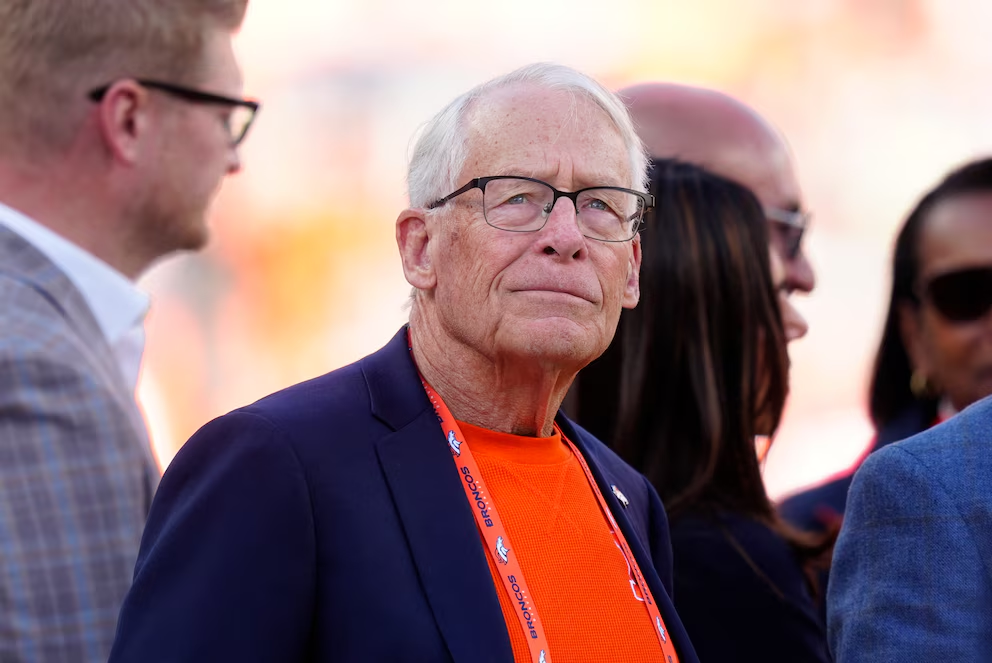
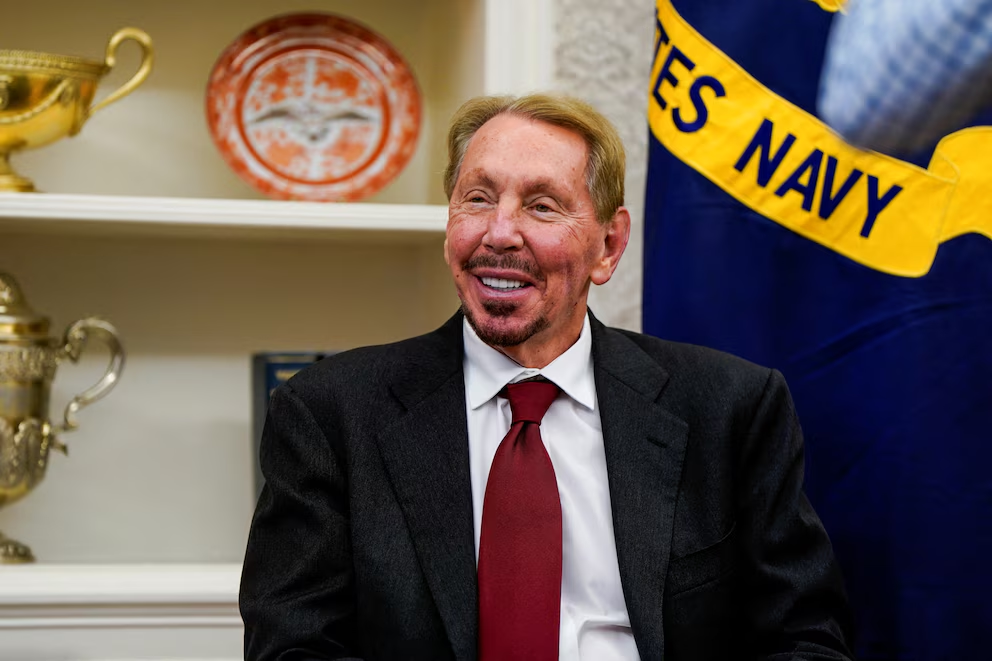
Elon Musk remains at the top, followed by Larry Page, Sergey Brin, Jeff Bezos, Mark Zuckerberg, Larry Ellison, Michael Dell, Jensen Huang, Rob Walton and Jim Walton. The list is striking not only because of its scale, but because of its concentration: most of the names are linked directly to technology platforms, artificial intelligence, cloud infrastructure, semiconductors, e-commerce or data-driven business models.
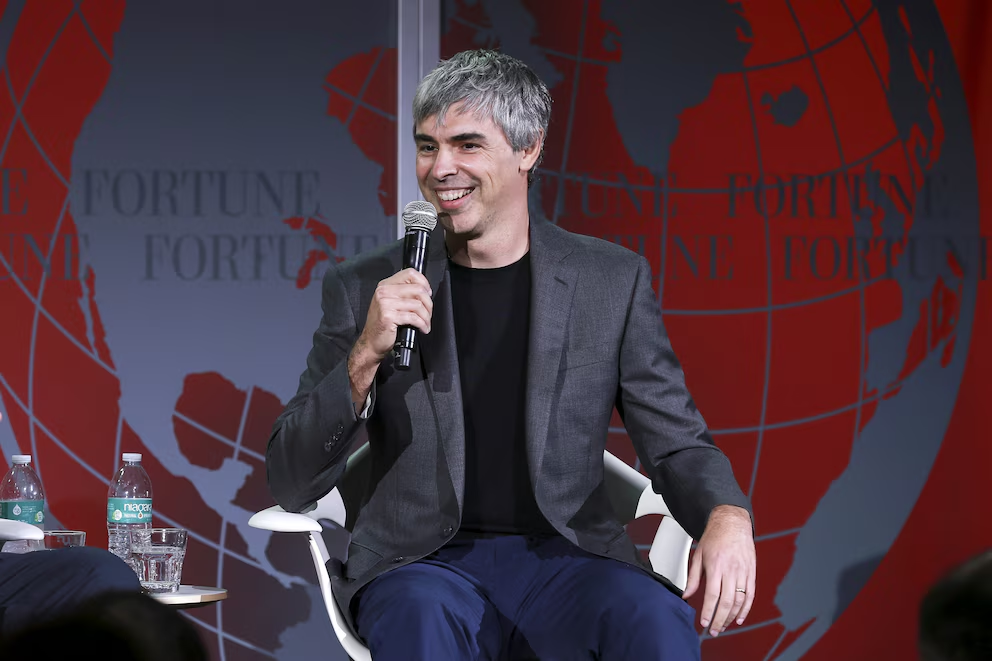
The ranking also exposes a deeper structural shift. Wealth is no longer built only through ownership of physical assets, retail empires or industrial production. It increasingly emerges from control over digital ecosystems, computational infrastructure and the platforms that organize work, consumption, advertising, logistics and information.
Artificial intelligence is now central to that wealth cycle. The rise of figures tied to chips, cloud computing and advanced digital infrastructure shows that the next phase of billionaire power is not merely about apps or consumer technology. It is about the invisible architecture that makes automation, prediction and algorithmic scale possible.
The Walton family’s presence adds another layer. Their position reminds the market that traditional retail power has not disappeared, but it now coexists with a more aggressive technological elite. The new hierarchy is hybrid: old distribution systems, digital platforms and AI infrastructure are converging into a tighter map of economic influence.
The political implication is clear. When individual fortunes approach the economic scale of entire countries, wealth rankings stop being lifestyle trivia and become indicators of structural power. These fortunes shape innovation, media ecosystems, labor markets, space ambitions, philanthropy, lobbying capacity and even geopolitical narratives.
The Forbes list is therefore not just a ranking of billionaires. It is a snapshot of where global capitalism is concentrating its command centers.
Análisis que trasciende al poder. / Analysis that transcends power.