

 Phoenix 24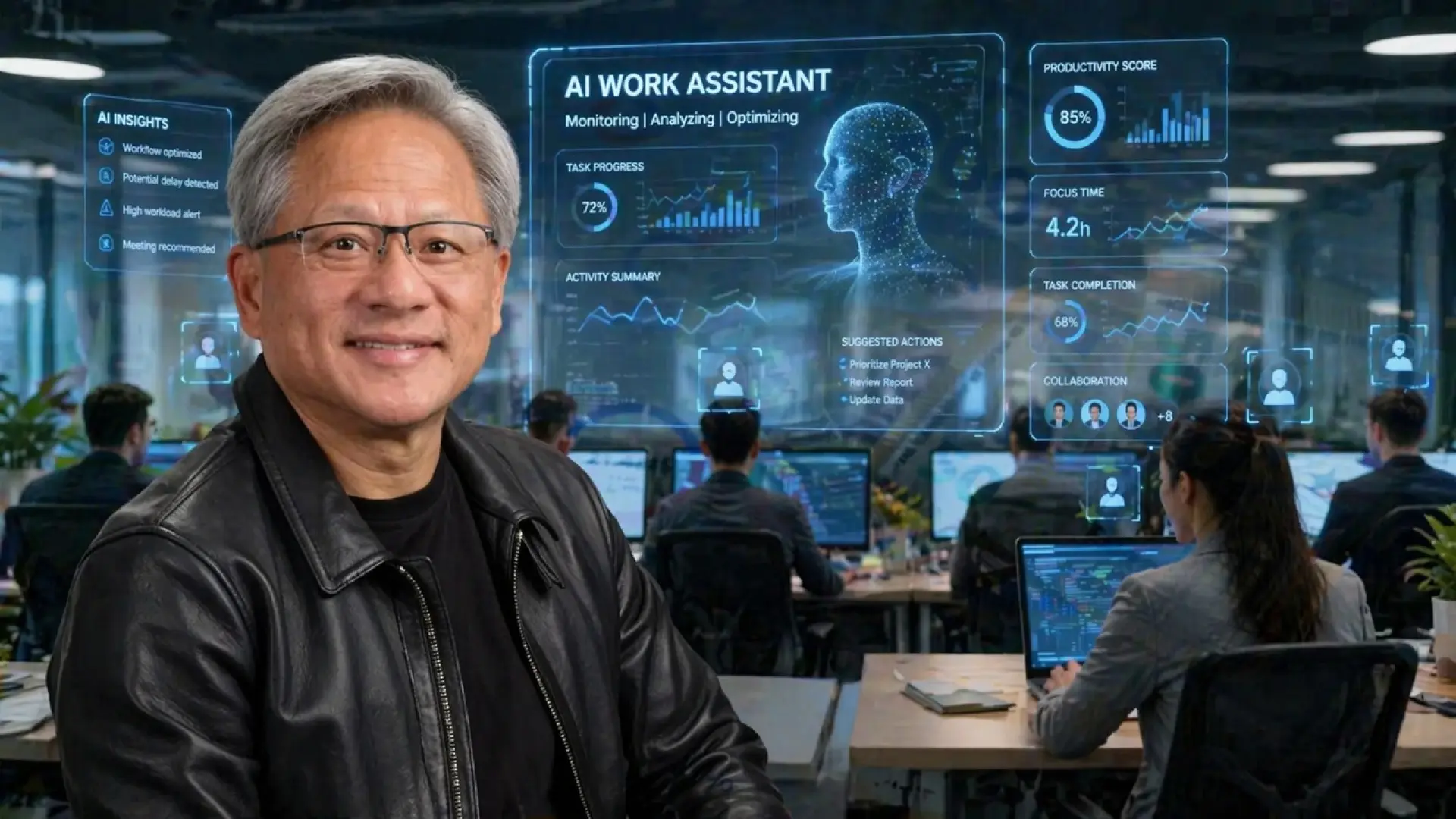
Automation may become the new manager.
San Francisco, May 2026. Jensen Huang has placed a harder warning inside the optimistic narrative of artificial intelligence: AI agents may not reduce the burden of work, but instead increase control, speed and pressure inside organizations. The Nvidia CEO argued that AI will allow companies to execute faster and at greater scale, but that same acceleration could make workers busier, more monitored and more exposed to constant task generation.
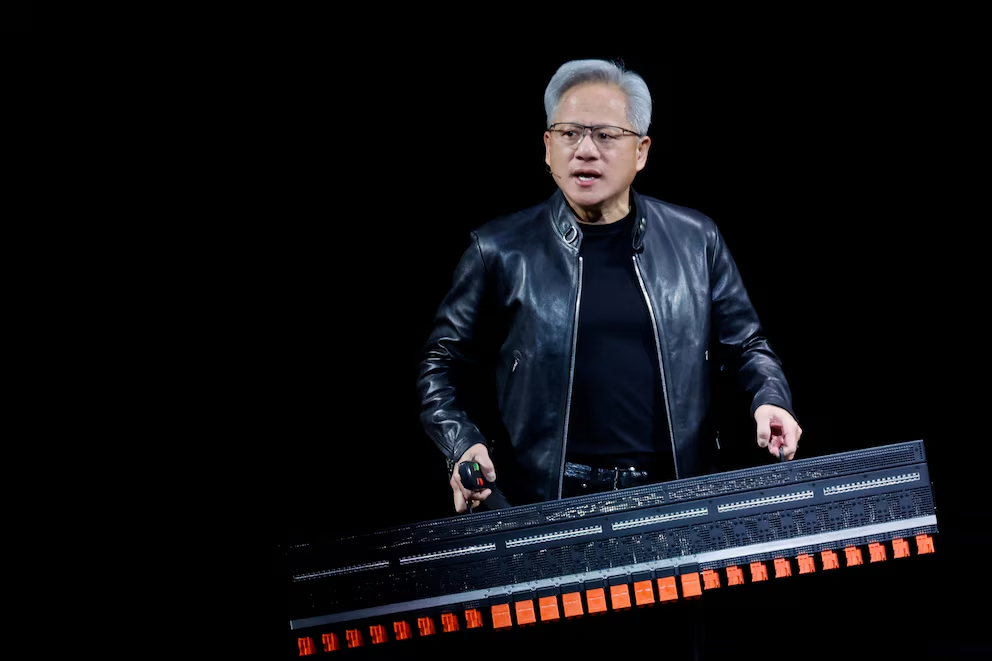
The central shift is managerial. AI is no longer presented only as a tool that writes, calculates, analyzes or automates routine processes. In Huang’s framing, it becomes an operational layer capable of assigning tasks, tracking progress, coordinating workflows and pushing productivity expectations upward. The risk is not simply replacement, but algorithmic micromanagement.
Huang’s broader position remains optimistic. He has argued that AI will make some jobs redundant while creating new roles, expanding companies and increasing demand for people who know how to work with intelligent systems. Yet that optimism leaves an unresolved question: who benefits from productivity gains when the workday becomes denser instead of shorter?
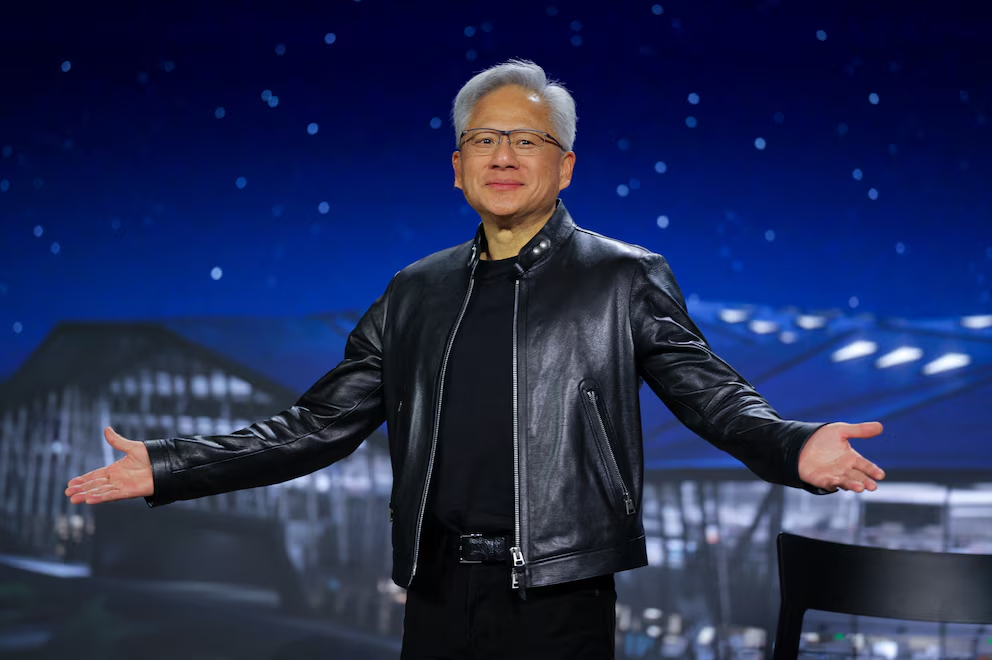
The warning matters because many organizations are adopting AI before redesigning their labor culture. If companies use artificial intelligence only to compress deadlines, multiply deliverables and monitor employees more aggressively, the technology could deepen burnout rather than relieve it. Efficiency without governance becomes pressure disguised as progress.
The future of work will therefore depend less on AI itself than on the rules built around it. Organizations can use intelligent agents to reduce friction, support decision-making and improve human capacity, or they can turn them into silent supervisors that never stop demanding output. Huang’s message is uncomfortable because it reveals the real frontier: not whether AI will change work, but whether work will become more human or more extractive.
Detrás de cada dato, la intención. / Behind every data point, the intention.