

 Phoenix 24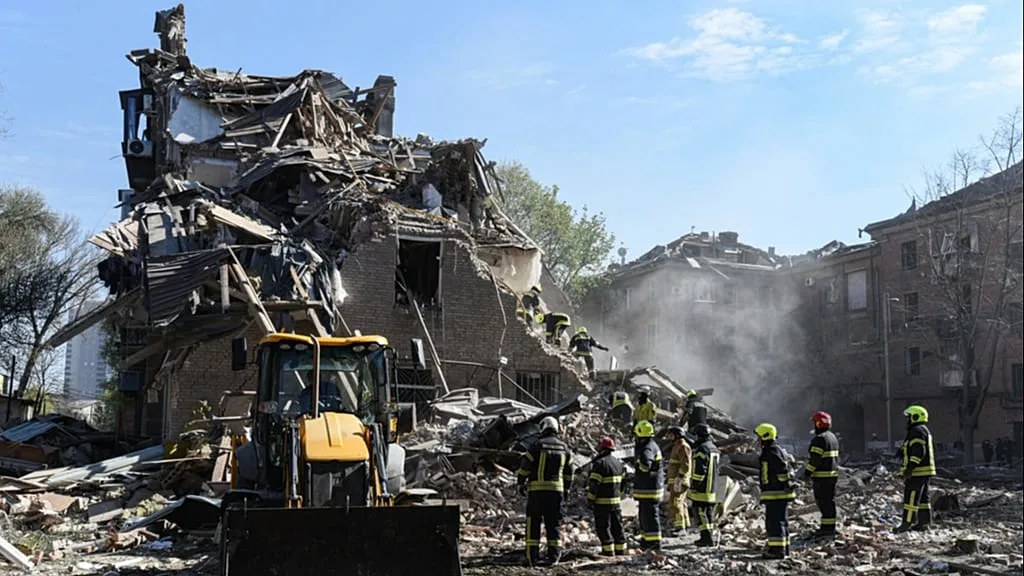
A 24-hour offensive reshapes the war’s tempo.
Kyiv, May 2026. A new wave of Russian drone and missile attacks across Ukraine has left at least 10 people dead and more than 70 injured in just 24 hours, according to Ukrainian authorities. The strikes hit multiple regions simultaneously, reinforcing a pattern of sustained pressure not only on military targets but on civilian infrastructure and urban centers. What emerges is not a single escalation, but a continuation of a strategy built on dispersion, frequency and psychological impact.
Ukrainian air defenses reported intercepting a significant portion of incoming projectiles, yet several still penetrated and caused casualties and damage across the country. In total, hundreds of drones and missiles were launched, illustrating both the scale and persistence of Russia’s operational capacity. This imbalance between interception success and residual impact defines the current phase of the conflict: Ukraine can reduce damage, but not fully prevent it.
The geography of the attacks is equally significant. Strikes were reported across more than ten regions, signaling a deliberate effort to stretch defensive systems and create uncertainty across the national territory. Rather than concentrating on a single front, the offensive disperses pressure, forcing Ukraine to defend everywhere at once while managing limited resources and international support dependencies.
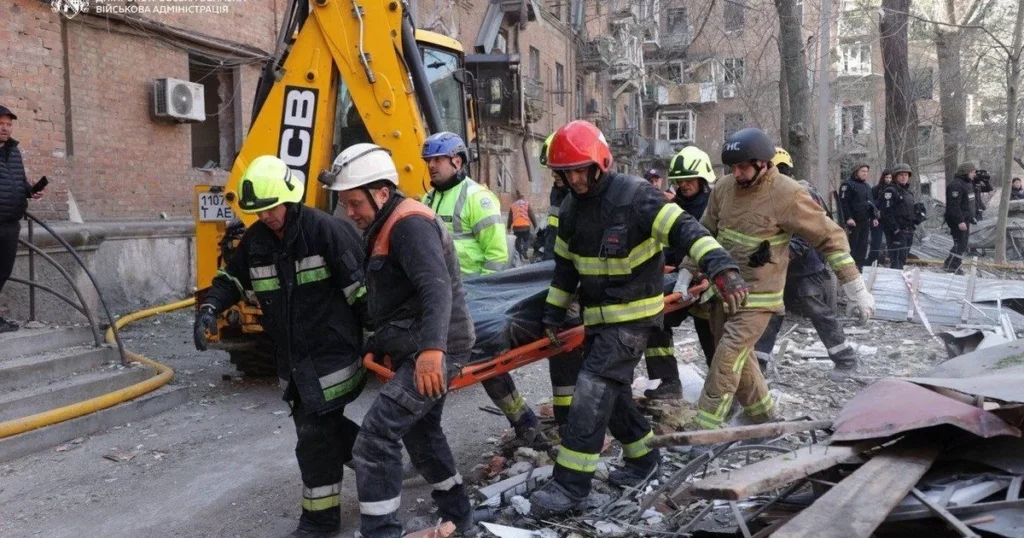
From a strategic perspective, the use of drones—particularly long-range and low-cost systems—continues to redefine the war’s operational logic. These platforms allow Russia to maintain constant pressure at relatively low cost, targeting infrastructure, logistics and civilian morale. The cumulative effect is not only physical destruction, but systemic fatigue in a country already under prolonged wartime conditions.
The attacks also reinforce a broader trend observed since the early phases of the invasion: the targeting of civilian infrastructure as a lever of strategic coercion. Energy systems, transportation networks and residential areas have repeatedly been affected in previous waves, shaping a war that extends far beyond the battlefield into the daily life of the population.
At the same time, Ukraine continues to respond with its own operations, including strikes on Russian assets and infrastructure, signaling that the conflict remains dynamic rather than one-sided. However, the asymmetry in scale and repetition favors Moscow’s ability to sustain pressure over time, particularly through drone-based saturation tactics.
This latest offensive does not mark a turning point, but it consolidates a pattern: high-frequency attacks, distributed targets and sustained civilian exposure. In that pattern lies the evolving nature of the war itself, where victory is not defined only by territorial gains, but by endurance, disruption and narrative control.
Hechos que no se doblan. / Facts that do not bend.