

 Phoenix 24
Crime discourse is becoming foreign policy.
Washington, April 2026. U.S. senators intensified pressure on Mexico by warning that “impunity for narco-terrorists is over” following the Rocha Moya case, signaling a shift in how Washington is framing organized crime: no longer only as a security issue, but as a cross-border political threat.
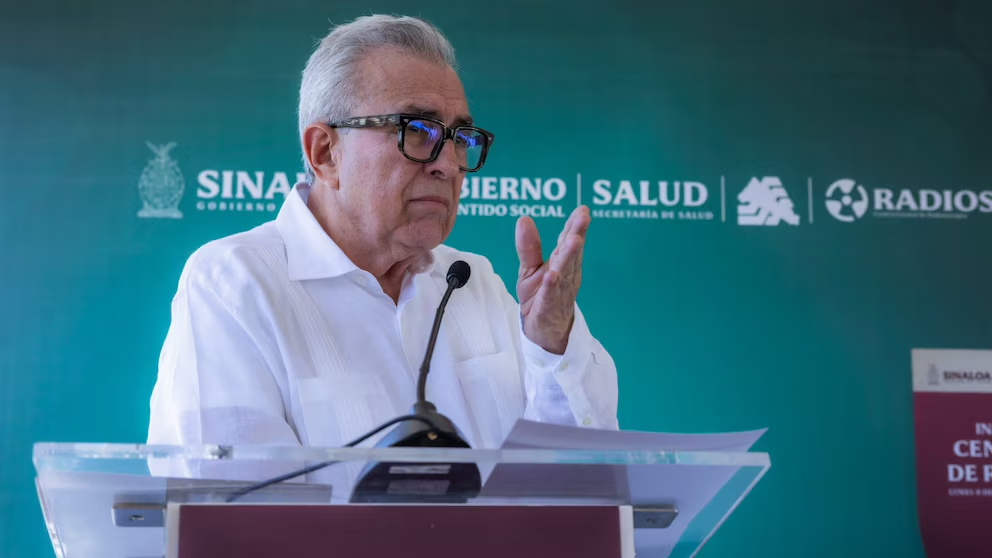
The warning emerges amid U.S. allegations involving Sinaloa’s political sphere and alleged cartel protection networks. Rocha Moya has denied wrongdoing, while Mexican federal authorities have demanded concrete evidence before any legal or political action is considered.
What makes this moment different is not only the accusation, but the language. By introducing the term “narco-terrorism,” U.S. political actors elevate the narrative from organized crime to a category that can justify expanded pressure, intelligence escalation, sanctions or deeper security demands.
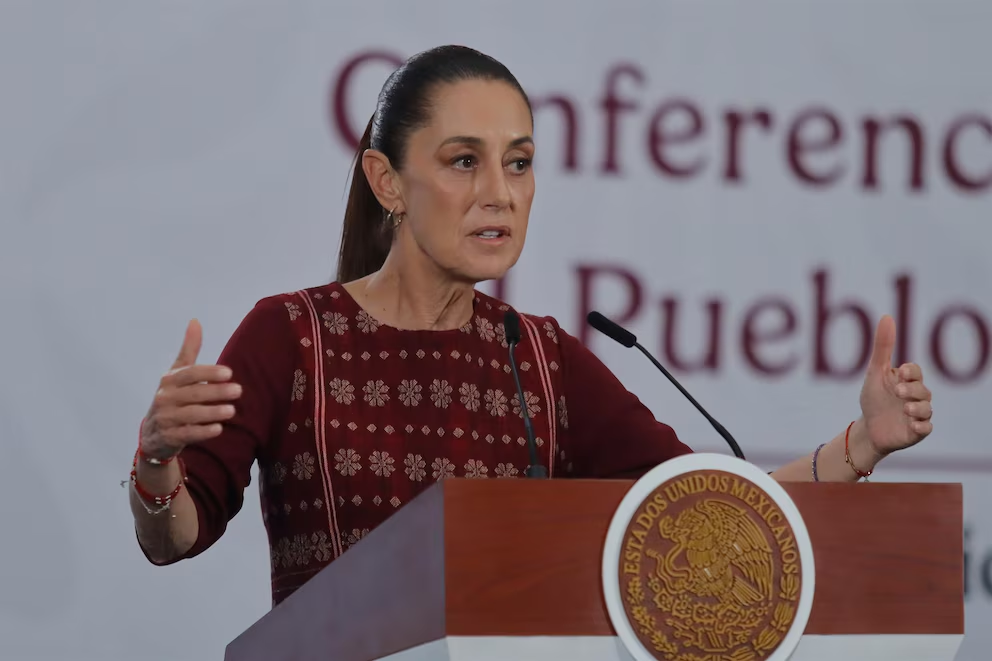
Inside Mexico, the case has triggered institutional tension. Opposition figures have used the allegations to pressure Sinaloa’s government, while the federal administration insists on sovereignty, due process and formal proof. The result is a dual-pressure system: external judicial escalation and internal political destabilization.
The deeper signal is structural. Washington is testing a new threshold in its anti-cartel strategy by targeting political authority, not only criminal leadership. That recalibration alters the rules of engagement because it places state actors themselves inside the operational scope of U.S. enforcement logic.
This is where the risk expands. Labeling cartels or their alleged political links as “terrorist” phenomena transforms cooperation into conditional alignment. It opens the door to unilateral interpretations of threat, where legal jurisdiction, intelligence operations and diplomatic pressure begin to overlap.
What follows is not only a legal dispute. It is a redefinition of how power, crime and sovereignty intersect across the U.S.-Mexico corridor. The Rocha Moya case is not just about one governor; it is about whether the boundary between domestic governance and transnational enforcement is beginning to dissolve.
Contra la propaganda, memoria. / Against propaganda, memory.